

By Mark Esposito, Guest Blogger
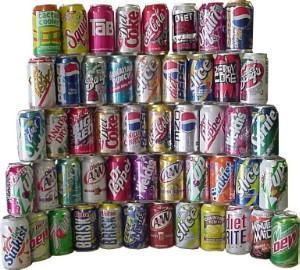
- Weight Increase. Using high fructose corn syrup as a sweetener, a 20 oz can of soda contains the equivalent of anywhere between 17 (Coke) and 20 (Pepsi) teaspoons of sugar per can. Drinking just one regular 20 oz soda per day adds about 225 calories to our daily diet or about 7000 calories a month which, without concomitant exercise, translates to 2 pounds a month of 24 pounds of weight gain per year. And that’s just one per day. Many American teens average 3 per day. Since 1978, the consumption of sugary drinks has skyrocketed. Back then we soda was a puny 3% of our caloric intake and milk chimed in at 8%. The numbers are now almost reversed with soda making up about 7% of our daily caloric intake. If you’re interested, here’s the sugar content of many popular drinks.
- Insulin Blaster. Americans with type 2 diabetes has tripled from 6.6 million in 1980 to 20.8 million today. Why? One major reason might be soda. Researchers at Brigham and Women’s Hospital in Boston and Harvard Medical School analyzed the data from the Nurses Heath Study II. They concluded that “women who drank one or more sugary drinks a day gained more weight and were 83% more likely to develop type 2 diabetes than those who imbibed less than once a month.” The researchers also noted that, “rapidly absorbed carbohydrates like high fructose corn syrup put more strain on insulin-producing cells than other foods.” When sugar enters the bloodstream quickly, the pancreas has to secrete large amounts of insulin for the body to process it. Some scientists believe that the unceasing demands that a soda habit places on the pancreas may ultimately leave it unable to keep up with the body’s need for insulin.
- Tooth Dissolver. Soda is a known enemy of tooth enamel due to its high acidity. In a series of studies, Professor Poonam Jain, director of community dentistry at Southern Illinois University School of Dental Medicine, tested various sodas by measuring their pH–an indication of acidity. Battery acid, for example, has a pH of 1; water scores a 7. Jain found that sugar-sweetened sodas came in at about 2.5, while diet sodas scored 3.2. “The acidity can dissolve the mineral content of the enamel, making the teeth weaker, more sensitive, and more susceptible to decay,” he contends.
- Bone Dissolver. In the 1950s we drank 3 cups of milk for every one cup of soda. Now those numbers are reversed and we’ve seen an increase in osteoporosis as a result. In 2000, research at the Harvard School of Public Health disclosed that brittle bones were a particular problem for soda drinking adolescent girls. The study of 460 high schoolers found that girls who drank carbonated soft drinks were three times as likely to break their arms and legs as those who consumed other drinks. And the problem continues into advanced age. Grace Wyshak, PhD, a biostatistician and the study’s lead researcher, believes something in colas is interfering with the body’s ability to use calcium. This is a big problem, she says, “because girls will be more susceptible to fractures later in life if they don’t acquire optimal bone mass in adolescence.”
- Caffeine Addiction. Many in the medical community consider caffeine a psychoactive substance. In fact, almost 90% of Americans consume it daily. It reacts with the central nervous system and stimulates the body. The caffeine in just one can of sugar-free diet soda ” is associated with a 48 percent increased risk of ‘metabolic syndrome,’ which plays a major role in heart disease and diabetes.”
Diet soda fairs no better with new research indicating its sugar less formula may well trigger food cravings and thus leads to weigh gain. It contains equal or more amounts of acid and caffeine and provides little in the way of nutritional benefits.
Bloomberg’s proposal then makes sense both from a public health perspective and from the point of view of logic. Why then all the resistance? Are we like spoiled children refusing to “eat our vegetables” because we just don’t want to eat them? Are we afraid of government depriving us of the products we take for granted and really, really like? Or are we just rationalizing our own indulgences under the banner of freedom of choice?
Basically, are we endowed by our Creator with the unalienable right to harm ourselves for our own pleasure and increase the costs to our fellows and our future generations as they are forced to pay for all the bad health choices we make?
What do you think?
Sources: Prevention Magazine; ABC News; Healthy Resources
~Mark Esposito, Guest Blogger