

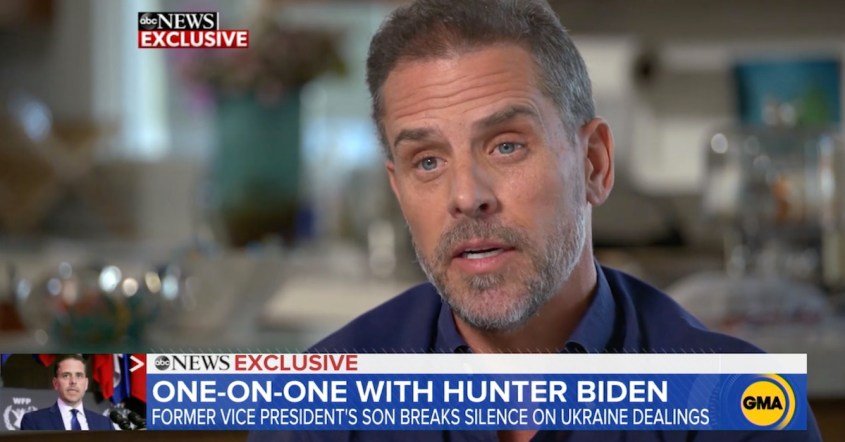

Nadler insisted on Face the Nation that all “relevant witnesses must be heard” — meaning their witnesses. Yet, if allowing witnesses meant Hunter Biden being called, he suggested that they would reject any deal — and any witnesses. He dismissed any negotiation as a cover up: “Any Republican senator who says there should be no witnesses, or even that witnesses should be negotiated, is part of the cover-up.”
As I previously noted, under Federal Rule of Evidence 401, courts will often review possible testimony under the standard of whether “it has a tendency to make a fact more or less probable than it would be without the evidence.” Even before the adoption of the Bill of Rights, Congress enacted a statute reaffirming the right of the “defense to make any proof that he can produce by lawful witnesses” in cases of treason and capitol cases. This right to present a defense has been repeatedly reaffirmed by the Supreme Court including in the 1967 opinion in Washington v. Texas, where the Court ruled that “the right to offer the testimony of witnesses and to compel their attendance, if necessary, is in plain terms the right to present the defense, the right to present the defendant’s version of the facts . . . Just as an accused has the right to confront the prosecution’s witnesses for the purpose of challenging their testimony, he has the right to present his own witnesses to establish a defense.”
Of course, if Biden is called, the House managers would be allowed to cross examine as well as argue their claim of a cover up.
Nadler suggested that Chief Justice John Roberts should make the decision on relevance. He may want to be careful on such an option. Roberts might rule that Biden is a relevant defense witness or, alternatively, he could reaffirm that this is a matter properly left to the Senate on who should be called.