


Submitted by Gene Howington, Guest Blogger
Town Hall style meetings have been a cornerstone of the political process in America since before its founding. Americans have a long tradition of directly interacting with both representatives and candidates on the issues of the day. The Constitution guarantees the right to petition in the 1st Amendment. “Congress shall make no law [. . .] abridging the freedom of speech, or of the press; or the right of the people peaceably to assemble, and to petition the Government for a redress of grievances.” The Declaration of Independence lists a failure to redress grievances as one of the reasons for splitting with the monarchy. “In every stage of these Oppressions We have Petitioned for Redress in the most humble terms: Our repeated Petitions have been answered only by repeated injury. A Prince, whose character is thus marked by every act which may define a Tyrant, is unfit to be the ruler of a free people.” The right to petition is as old as English law, tracing its roots to the implicit guarantees of the Magna Carta and the explicit guarantees of the English Bill of Rights of 1689. However, in America today, this does not mean politicians are obligated to listen to the public. “Nothing in the First Amendment or in this Court’s case law interpreting it suggests that the rights to speak, associate, and petition require government policymakers to listen or respond to communications of members of the public on public issues.” Minnesota Board for Community Colleges v. Knight, 465 U.S. 271 (1984). With the manifestly undemocratic process of setting up “free speech zones” to stifle protests at political rallies, Town Hall events are (were) one of the last venues where the public can directly access their representatives without being a major campaign contributor or a corporate funded lobbyist. The reasons our elected officials have given for canceling these events vary, but the bulk of the excuses narrow down to blaming the voting public for change, some citing security in the aftermath of the Giffords shooting, others blaming grass-roots groups for commandeering the town halls. Of course, some offered no rationale for slapping the voting public in the face other than simple greed by opting for smaller (sometimes private) or paid events.
As Washington has grown less responsive to what voters tell them and operate in the favor of monied special interests more openly than ever, the voting public has taken notice. An Associated Press-GFK poll recently showed that 87% (you read that right, eighty-seven percent) of Americans disapprove of lawmakers’ job performance. In a democracy, the voters who no longer feel like they have a say in the political process have started to take their justifiable anger and frustration out on politicians whenever given the access to do so. Faced with vocal and public oppositions to policies unpopular with the public, some politicians have adopted a new tactic: ignoring the public and canceling Town Hall events while attempting to place the blame for their choice on the public for daring to criticize politicians or voice their displeasure at Town Hall meetings. When dealing with angry and frustrated people, let alone voters, is ignoring them a wise strategy? Or is it a recipe for even greater public anger and frustration at a system most already perceive as non-responsive?
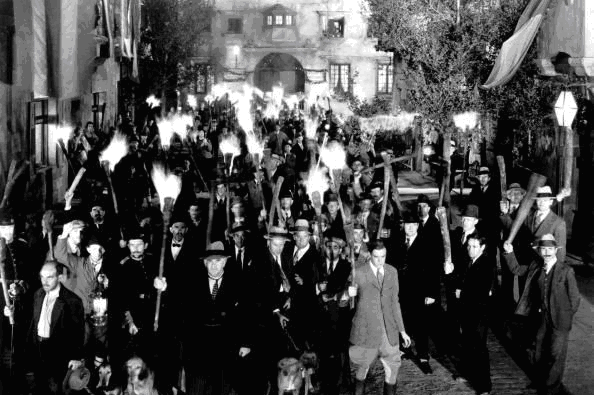
Does Congress avoiding confrontation with the justifiable anger of the voting public meet any of these pragmatic steps in resolving problems?
Is this just another sign that democracy is dead unless you’re a rich campaign contributor or a large corporation?
Is this simply adding fuel to the fire of public discontent with Washington’s “business as usual/pay to play” mentality?
Is it tone-deaf “talk to the hand” approach (combined with other tactics to diffuse/nullify free speech and the right to petition like “free speech zones”) simply asking for more trouble down the road given that non-responsive government was a direct cause of our Revolutionary War?
What do you think?
Sources: Huffington Post (1) (2)
~Submitted by Gene Howington, Guest Blogger