


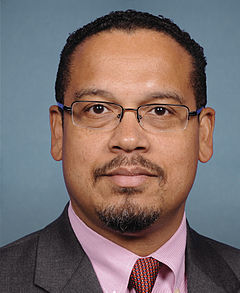
The bill proposes the following amendment:
Page 44, line 6, insert before the semicolon the following: “Provided, That upon a determination by the Attorney General that a State has in effect a law allowing an armed person to confront an unarmed person in public and shoot to kill even if the confrontation could have been safely avoided, the Attorney General shall withhold 20 percent of the amount that would otherwise be allocated to that State under section 505 of the Omnibus Crime Control and Safe Streets Act of 1968 (42 U.S.C. 3755).”
It has become customary for Congress to raise some taxes for the sole purpose of giving the money back to the states with conditions or strings attached. I have also been a critic of this practice as inimical to federalism. This issue is before the Supreme Court in the health care litigation. One of the issues is whether Congress can coerce states into doing what it wants by withholding federal funds. The Court has upheld such conditions in cases like South Dakota v. Dole, which withheld highway funds to states that did not raise their legal drinking age to 21. The Court has long maintained that such conditional funds can violated the Constitution if they amount to compulsion.
These funds are clearly not so great as to amount to unconstitutional compulsion. However, I still believe that it is a bad practice for Congress to force states to adhere to its demands as to state laws. This is an area that is traditionally left to the states. States are allowed to pursue their own policies and priorities in crafting such laws. Indeed, Florida is considering repealing or reforming the “Stand Your Ground” law.
Despite the best motivations, this amendment intrudes upon the rights of citizens of each state to make these decisions for themselves.
Source: Politico