

![praying_hands[1]](https://i0.wp.com/jonathanturley.org/wp-content/uploads/2011/06/praying_hands1.jpg)
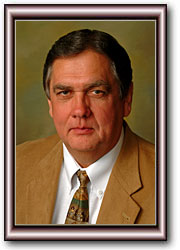
Hurst insists that “If Congress can open with a prayer, and the state of Alabama Legislature can, I don’t see why schools can’t.”
Here is the language of HB 318:
SYNOPSIS: This bill provides for a period of time in the public schools for studying the formal procedures of the United States Congress including the verbatim reading of a congressional opening prayer.
A BILL TO BE ENTITLED AN ACT
To prescribe a period of time in the public schools not to exceed 15 minutes for study of the formal procedures followed by the United States Congress, which study shall include a reading verbatim of one of the opening prayers given by the House or Senate Chaplain or a guest member of the clergy at the beginning of a meeting of the United States House of Representatives or Senate.
BE IT ENACTED BY THE LEGISLATURE OF ALABAMA:
Section 1. At the commencement of the first class of each day in all grades in all public schools, the teacher in charge of the room in which such class is held shall, for a period of time not exceeding 15 minutes, instruct the class in the formal procedures followed by the United States Congress. The study shall include, but not be limited to, a reading verbatim of one of the opening prayers given by the House or Senate Chaplain or a guest member of the clergy at the beginning of a meeting of the House of Representatives or the Senate.Section 2. This act shall become effective on the first day of the third month following its passage and approval by the Governor, or its otherwise becoming law.
The bill would raise a longstanding conflict in the jurisprudence of the Supreme Court, which has tried to allow certain prayers like at the start of Congress while drawing the line at schools. The issue is now before the Supreme Court in Town of Greece v. Galloway. Since 1999, the town has started its town council meetings with a prayer led local clergy or local residents. The case will return the Court to the area some thirty years after its ruling in Marsh v. Chambers when it held that the Nebraska legislature could begin its legislative sessions with prayers. This is an area however where the Court has avoided clear lines and left significant confusion in the wake of the decision. But the Court has never settled when legislative prayers go too far and cross the line separating church and state. Since 1999, the town of Greece, New York, which is outside Rochester, has started its town council meetings with a prayer led by members of the local clergy or local residents. In the case of the Town of Greece, all of the prayer leaders happen to have been Christians. It was challenged in 2007 by Jewish resident Susan Galloway and atheist Linda Stephens. One such example of the prayer involved in pastor proclaiming “the freedom that comes from knowing your son, Jesus.” A lower court found the prayer violated the first amendment as an endorsement of Christianity.
That in turn raises the Alabama proposal. The prayers before Congress are given by various demoninations, though teachers would be allowed to choose (which could produce an as applied problem). However, there is a problem with the audience which is viewed as a captive audience in past cases. In 1962, the Court considered a relatively mild prayer approved by the New York Board of Regents: “Almighty God, we acknowledge our dependence on Thee, and we beg Thy blessings upon us, our parents, our teachers, and our country.” It ruled that such prayers violated the establishment clause. In 1963, it ruled in Abington School District v. Schempp that school-sponsored Bible reading in public schools in the United States is unconstitutional. Both rulings had overwhelming majorities.
Notably, these decisions did not ban prayer from schools since children could still individually pray. Moreover, it does not keep religion out of legitimate educational programs. In Abington School District, Justice Tom Clark stressed “Nothing that we have said here indicates that such study of the Bible or of religion, when presented objectively as part of a secular program of education, may not be effected consistent with the First Amendment.” He added:
“The place of religion in our society is an exalted one, achieved through a long tradition of reliance on the home, the church, and the inviolable citadel of the individual heart and mind. We have come to recognize through bitter experience that it is not within the power of government to invade that citadel, whether its purpose or effect be to aid or oppose, to advance or retard. In the relationship between man and religion, the State is firmly committed to a position of neutrality.”
That presents an interesting potential test case that falls between school prayers cases and legislative prayer cases — a distinction long opposed by secularists who want the government out of religious speech and practices. Marsh allows legislative prayers to be sure but not efforts to proselytize or favor or denounce a religion. However, the Court is likely to view this as yet another effort to circumvent its school prayer cases. The odds are heavily against Alabama which would mean that it will spend considerable money on the inevitable challenge to the law — only to likely lose in the federal courts.
Source: Anniston Star