

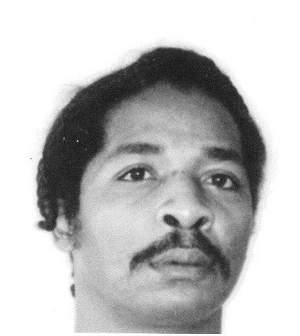
The murder occurred on Nov. 5, 1983. Ford had done some work for Rozeman but insisted that he was his friend and that they sit on his porch often talking and drinking coffee. Rozeman was found face down on the floor with a gunshot in the back of the head. His pockets were turned out. Several teenagers said that they saw Ford in Rozeman’s backyard on the day of the killing. (Ford admitted to being in the shop that day, which was common). Ford was arrested Nov. 8, 1983, on charges of being in possession of stolen items. Eventually, Ford, the Robinson brothers and George Starks were arrested and indicted in Isadore Rozeman’s murder. However, Jake Robinson and his brother refused to testify during Ford’s trial. Jake Robinson asserted his constitutional right to remain silent.
The defense claimed that Ford acted at times as a fence for stolen items. Ford told police about meeting two men that day and one of them, called “O.B.,” asked Ford if he knew anyone who wanted to buy a .38-caliber gun. He said that he was not given the gun but did pawn the jewelry at the shop for the men. That some jewelry was later taken by the killer or killers. Ford later identified Jake Robinson as one of the men, but not his brother. He later identified Henry Robinson as “O.B.”
Police insisted that the killer was left handed. Ford is left-handed.
Ford insisted on the stand that he was being framed and tried to claim the fifth amendment. He also admitted that he moved Shreveport from California to change his life after committing crimes in teens and early 20s. He was represented by an oil and gas lawyer who had never handled a criminal case and at the sentencing stage he was represented by a recent graduate from law school. His father proved a useless witness since he barely knew his son and other witnesses were passing acquaintances. The defense wanted to call Vercie Milo who is the mother of his two children but it could not be arranged.
The all-white jury convicted Ford and sentenced him to death in the electric chair.
Later, Jake Robinson pleaded not guilty when charged in the murder but the shared was dismissed. (He was also charged at the time with an unrelated vehicular homicide charge). The charges against Henry Robinson were also dropped for insufficient evidence to prove he had a part in the crime. However, it turns out that only six days after Rozeman’s murder, informants implicated the Robinson brother — and not Ford — in the murder and multiple sources linked them to the murder weapon.
Ford’s case bounced around the system but in 2000 the Louisiana Supreme Court reversed and remanded the case with instructions to conduct an evidentiary hearing on claims that the prosecution suppressed favorable evidence and that he was deprived of his Sixth Amendment right to effective counsel and appeal.
Last year, prosecutors informed the federal court that, during an investigation of an unrelated homicide, a “reliable informant” said Jake Robinson admitted to being the one who shot Isadore Rozeman. In a later statement, the informant added that Robinson told him that he used his left hand in the murder.
Prosecutors filed papers with the court conceding a mistake had been made: “In late 2013, credible evidence came to the attention of the undersigned to supporting [sic] a finding that Glenn Ford was neither present at, nor a participant in, the robbery and murder of Isadore Rozeman.”
What is most frightening in this case is not simply with withholding of evidence by the prosecution (for which there has been not discipline) but that a man was sent to death row on the thinnest possible circumstantial evidence. Had his appeals been curtailed (as many have advocated for the criminal justice system), he would not have lived to be see his vindication.
Source: Sheveporttimes