

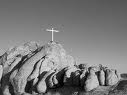

The U.S. Park Service was ordered to remove an 8-foot-high cross that stands as a memorial to World War I soldiers. It was first raised in 1934.
The lower courts rejected a proposal to transfer the land to private hands as a way to preserve the cross. The five justices ordered the court to reconsider the plan. However, the decision was highly fractured, making it more of a plurality decision on the merits except for the result which garnered five votes: only Chief Justice Roberts concurred entirely with Kennedy; Justice Alito concurred in part and in the judgment; Justice Scalia (and Justice Thomas) concurred in the judgment. Justice Stevens dissents, joined by Justices Ginsburg and Sotomayor, and Justice Breyer dissents alone.
Associate Justice Anthony Kennedy dismissed the objections that the cross amounted to an endorsement of religion: “The Constitution does not oblige government to avoid any public acknowledgment of religion’s role in society. . . . Here one Latin cross in the desert evokes far more than religion. It evokes thousands of small crosses in foreign fields marking the graves of Americans who fell in battles, battles whose tragedies are compounded if the fallen are forgotten.”
That could spell trouble for plaintiffs in a couple of other major cross cases working their way through the federal system.
Justice John Paul Stevens dissented, insisting that the government “cannot lawfully do so by continued endorsement of a starkly sectarian message.”
For his part, Justice Samuel Alito emphasized the remoteness of the site:”At least until this litigation, it is likely that the cross was seen by more rattlesnakes than humans.” Even if true, I do not see why that is relevant. Does Justice Alito believe that there is a sliding scale of entanglement depending on the number of people aware of it? That creates a constitutional version of the meditative question of whether a tree falling in the forest makes a sound if no one is around to hear it.
Here is the decision: 08-472
For the story, click here.