

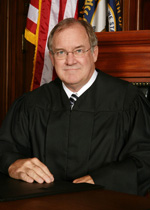

The majority opinion is well written and well conceived. It explores how much has changed from when the courts heard these so-called “bastardy cases” — changes that Cunningham is clearly not comfortable with.
The case involved an adulterous affair where the woman continues to have relations with both her husband and her lover. While Egan (who was also married at the time but pursuing a divorce) said the woman swore her love for him and her intention to leave her husband, she cut off the affair after discovering she was pregnant.
On September 8,2008, Appellant gave birth in Kentucky to a baby girl, N .R.S. Two weeks later,she and C .H.E.arranged for a DNA test to determine if he was the father of N.R.S.TheDNAtestrevealeda99.9429% probability that C .H.E.was the baby’s father. When C .H.E.expressed a desire to acknowledge his daughter and to be a part of her life, Appellant informed her husband of the affair.
She opposed his efforts to establish paternity by using the fact of her adulterous affair against him. The court decided it was time to accept modern science in Kentucky:
The test results may be for her an inconvenient fact, but they are so only because her husband chose to stay in the marriage. Had he chosen to do otherwise, those DNA test results might have been her only means to secure paternal support for her newborn baby.The current state of DNA testing is capable of determining paternity to such a degree of certainty that we no longer have to rely solely upon the husband’s alleged impotence, his absence “beyond the four seas,” or a visual examination of the baby to see if there are racial characteristics inconsistent with the husband . Just as those were once the only means of demonstrating beyond a reasonable doubt that the husband was not the father,DNA testing now serves as an appropriate form of evidence,not to avoid the traditional presumption of paternity, but to rebut it.
I strongly recommend reading Justice Venters’ opinion which is an formidable display of excellent historical and legal analysis.
Cunningham’s dissent (joined by Justice Scott) reads more as a period piece of a time when the courts enforced majoritarian morals, even to the stigmatizing of children:
The majority here deals with only one child. We speak for the thousands of children yet unborn . For centuries, the institution of marriage has “been the rock in the shadow of which children are born, shaded, protected, and nurtured.”Id.at599 (Cunningham, J.,concurring in result only).Our extended comments in the J.N.R.case will be left to speak for our refusal to stand quietly by as the legal institution of marriage is surrendered to the funeral pyre of modern convenience and unanchored values. We refuse to bow down to the “Gods of the Market-Place.” RUDYARD KIPLING, THE GODS OF THE COPYBOOK HEADINGS (1919). Who is right and who is wrong in our debate will be left to the long view of history .
Notably, Venters was only able to secure majority by a 4-3 vote. Chief Justice Minton also dissented but did so on the more classic basis of deference of the legislature.
Here is the ruling: 2010-SC-000045-MR
Source: Louisville Courier-Journalas first seen on ABA Journal
Jonathan Turley