

-Submitted by David Drumm (Nal), Guest Blogger

A key question in verifying the unfairness of affirmative action is an objective measure of each student’s qualifications.
A recent study helps to shed some light on the objectivity of determining qualifications. While the study involved the question of gender disparity in academic science, its results apply to other areas of qualification determination.
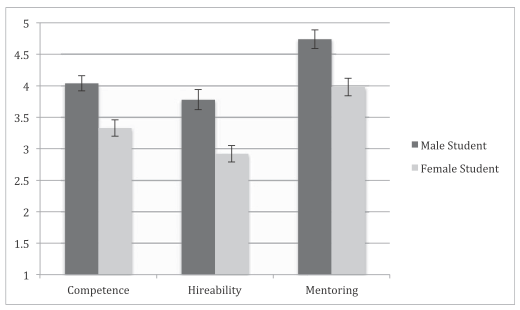
It is noteworthy that female faculty members were just as likely as their male colleagues to favor the male student.
The study shows that cultural stereotyping can effect the perceived qualifications. A female, looking to make a career in a scientific field, has had to deal with stereotyping throughout her school years.
It is not unreasonable to conclude that cultural biases exist throughout the classrooms of America and that these biases can lead to lower performance scores. An objective measure of a student’s qualifications for university admittance should include any relevant biases that might impact high school grades and SAT scores.
H/T: Caroline Mala Corbin.