


The Nevada Code of Judicial Conduct states that “a judge shall require order and decorum in proceedings before the court.”
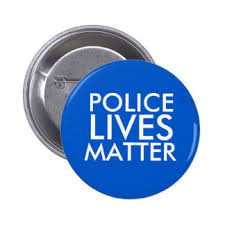
Judge Douglas Herndon of Clark County was consistent with most judges in demanding that lawyers remove such political buttons. He stated that the button “is making a political statement, that, ‘I wear this in protest of how the court is treating minority defendants.'” Herndon’s order was well within the powers articulated in prior cases like Burner v. Delahanty. In that case, the court explained the facts:
The defendant, Thomas E. Delahanty, II, is an associate justice of the Maine Superior Court. On October 31, 1995, Berner was seated in the gallery of Judge Delahanty’s courtroom, waiting for his turn to appear before the court. Berner wore a circular button pinned to his lapel. The button was approximately two inches in diameter and bore the words “No on 1-Maine Won’t Discriminate.” This legend expressed opposition to a statewide referendum that Maine voters were scheduled to consider during the November election.1 Neither the pin nor its message were related to Berner’s business before the court.
The court upheld the power of the judge and rejected the same type of free speech claims made by Ballou:
Judge Delahanty’s order compelling Berner to remove his political-advocacy button while in the courtroom fits comfortably within this apolitical paradigm. Emblems of political significance worn by attorneys in the courtroom as a means of espousing personal political opinions can reasonably be thought to compromise the environment of impartiality and fairness to which every jurist aspires. As an officer of the court, a lawyer’s injection of private political viewpoints into the courtroom, coupled with the judge’s toleration of such conduct, necessarily tarnishes the veneer of political imperviousness that ideally should cloak a courtroom, especially when the partisan sentiments are completely unrelated to the court’s business.
Here, Judge Delahanty stated clearly that he was ordering Berner to remove the button because participants in the judicial process ought not simultaneously “take sides” in extraneous political debates.5 This explanation is entirely consistent with a desire to ensure that the courtroom remains free from the appearance of political partisanship. Evaluating the professed justification, as we must, “in light of the purpose of the forum and all the surrounding circumstances,” Cornelius, 473 U.S. at 809, 105 S.Ct. at 3453, we discern no reason why a judge may not even-handedly prohibit lawyers from wearing political paraphernalia in the courtroom.
Notably, public defenders in this office have previously had confrontations with judges who say that they have refused to comply with orders.
The rules for the Tenth Judicial District are typical in prohibiting certain clothing items but does not expressly reference buttons or other symbols:
Rule 10. Courtroom conduct and attire. Proceedings in court should be conducted with fitting dignity and decorum.
The following attire shall be required for all court appearances:
A. Attorneys:
1. All male attorneys shall wear full length trousers, dress-type shirts, coats and ties.
2. All female attorneys shall wear suitable dresses or pantsuits.
B. Litigants, witnesses and jurors (minimum requirements):
1. Male: Long or short sleeve dress-type shirts; slacks or dress-type denim trousers; dress shoes or boots.
2. Female: Dresses; dress slacks or skirts and blouses; dress shoes.
3. Law enforcement personnel may elect to wear uniforms.
In no event will t-shirts, tank or halter tops, shorts, soiled or unkempt clothing, thongs, sandals or casual exercise apparel be allowed.
[Added; effective November 6, 1987]
What do you think?