

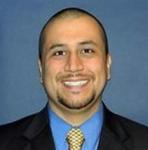


In addition to NBC and NBC’s Ron Allen, the lawsuit names as defendants Lilia Rodriguez Luciano (who was later terminated due to her reporting of the case for NBC) and Jeffrey Burnside of Dade County, another journalist who was also fired by NBC.
The second line is no more favorable: ““Their goal was simple: keep their viewers alarmed, and thus always watching, by menacing them with reprehensible series of imaginary and exaggerated racist claims.”
I am not sure if such reports “menace” viewers but it was clearly wrong and clearly harmful to Zimmerman. The network committed a serious error in the
editing of the 911 audiotape. Here is the audiotape:
Zimmerman: This guy looks like he’s up to no good. He looks black.
The full tape went like this:
Zimmerman: This guy looks like he’s up to no good. Or he’s on drugs or something. It’s raining and he’s just walking around, looking about.
Dispatcher: OK, and this guy — is he black, white or Hispanic?
Zimmerman: He looks black.
Thus, Zimmerman was not the one who raised race and was specifically asked to give Martin’s race by the police. However, NBC spliced together parts of the recording and left the opposite impression — a very serious mistake and lead to added international condemnation. NBC edited the tape to show Zimmerman stating “This guy looks like he’s up to no good. Or he’s on drugs or something. He’s got his hand in his wraistband. And he’s a black male.” It is truly hard to see how a “mistake” like that could occur without malice, but at best it was gross negligence. It certainly, in my view, raises a legitimate defamation claim.
This is one of four such misrepresentations cited in the complaint which is linked below. This includes stating that Zimmerman said “f—ing coons” on the February 26 call when he said “f—ing punks.”
Count one is an omnibus defamation claim. Count two is an intentional infliction of emotional distress claim. He is seeking both joint and several liability as well as punitive damages.
Notably, in some jurisdictions, he could also bring a false light claim. However, the Florida Supreme Court rejected the false light claims, leaving defamation as the only option in such cases. The court found that concerns over false light were valid: “(1) it is largely duplicative of defamation, both in the conduct alleged and the interests protected, and creates the potential for confusion because many of its parameters, in contrast to defamation, have yet to be defined; and (2) without many of the First Amendment protections attendant to defamation, it has the potential to chill speech without any appreciable benefit to society.”
There remains the question of the status of George Zimmerman in any defamation action. A status as a public figure or limited public figure would subject him to the higher standard of “actual malice” and the need to show actual knowledge of falsity or reckless disregard of the truth under New York Times v. Sullivan.
The complaint does not concede that Zimmerman is a public figure but it notably accuses the defendant of either actual knowledge or reckless disregard. While higher, there is a plausible basis for such a claim in the case even as a public figure. If Zimmerman tries to sue as an average citizen, he could face the same problem of my former client, Eric Foretich, who was declared a limited public figure due to a brief comment to the media in Foretich v. ABC. Zimmerman’s family made early efforts to frame his image in the media. This is understandable but could be viewed as triggering the higher standard if done with his knowledge or consent. It seems likely that he will be declared either a public figure or limited public figure.
Then there is the novel question of whether Zimmerman falls into a narrow category of a “libel proof” defendant. The complaint states that “[d]ue to the defendants’ journalistic crimes, Zimmerman has been transformed into one of the most hated men in America.” Yet, NBC could argue that his actions and confirmed statements resulted in that status and that, furthermore, he is now so without a good reputation that he is effectively libel proof. If so the court would have to find that Zimmerman’s reputation was already so damaged that he cannot recover more than nominal damages for subsequent defamatory statements. Marcone v. Penthouse Int’l Magazine for Men, 754 F.2d 1072, 1079 (3rd Cir. 1985). This is a relatively rare basis for a dismissal and the plaintiff has to be akin to a Charles Manson.
Zimmerman has long denied the allegations and insisted that he was defending himself. Moreover, these incidents occurred early in the controversy. There is no question that the case quickly took on intense racial elements. I have written before that I believe that the case was over-charged and that the media was engaging in highly unprofessional commentary. I do not believe that the defendants could succeed in a libel-proof claims anymore than Zimmerman will be able to escape the status of a limited public figure.
I also believe that the lawsuit has merit, even with the apology of NBC. The story had already spread across the internet and global media. The apology could protect the company from punitive damages, however, depending on how the evidence unfolds. What do you think?
Here is the complaint.
Source: Washington Post