

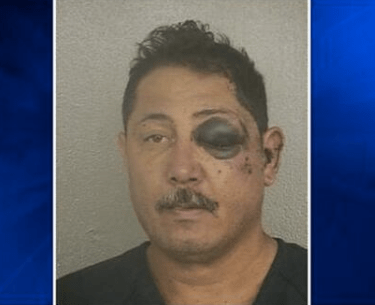
Gonzalez, 50, says that he was merely speaking with the officers and trying to defend himself verbally when he was punched twice and then slammed into the pavement outside of a Texaco gas station in Deerfield Beach. He may have been intoxicated (a witness corroborated that fact) but the video is clearly at odds with what the officers reportedly claimed in their report.
Gonzales suffered a broken orbital bone as well as a cut over his eye. He was charged with resisting arrest without violence. That later part is key. The officers did not claim that Gonzalez was violent and yet he ended up with broken bones in his face.
Gonzalez is reportedly preparing a federal lawsuit for false arrest and excessive force. The first claim is particularly interesting since there does appear to be at least one witness confirming that he was drunk. However, he was not charged with public intoxication or disturbing the peace. Likewise, while the witness says that he stole candy and tried to trade a watch for beer, he was given only a warning on trespass at the scene. The charge was resisting without force. Nevertheless, it is the second charge that has the most promise in light of the video.
Notably, media reports state that three months ago, the department paid $350,000 to settle a federal lawsuit involving Deputy Lambert, who allegedly beat another Broward citizen. Lambert was accused of “striking, pummeling and pounding” a party host after responding to a noise complaint in Dania Beach back in 2009.
We have been following the continuing abuse of citizens who are detained or arrested for filming police in public. (For prior columns, click here and here). Despite consistent rulings upholding the right of citizens to film police in public, these abuses continue.
The video contradiction of the police account is all too familiar on this blog. Of course, in Dallas, Dallas Police Chief David Brown revealed a new policy that would require officers involved in a shooting to wait 72 hours before making a statement. The policy came after a scandal where a surveillance video showed one of Brown’s officers shooting a mentally ill suspect for no apparent reason. The video contradicted the officer’s testimony and undermined the charge against the victim. Brown’s solution was not greater disciplining and monitoring of officers but to impose a delay to allow officers to craft their statements.
The question is why Lambert was allowed back on the streets if the earlier account of the settled lawsuit is true. Moreover, there is the question as to the possibility of both criminal charges in this incident or whether both officers will be terminated if this tape is found to be an accurate account of what occurred. We have often seen officers charge victims of abuse with resisting arrest only for those charges to be dropped later. However, officers are often left on the force — even when thousands are paid out in civil damages or settlements.

Source: Local 10