


At the moment, I see a compelling case for dismissal as a threshold legal question for the court. However, the degree to which the court views this matter as turning on the factual allegations as opposed to the legal questions, it could be held over for trial. That is the problem with such ambiguously written provisions is that the court may feel more constrained in dismissing the counts. The result for Perry can be damaging even if he is acquitted as was former U.S. Senator Kay Bailey Hutchison two decades ago. Hutchinson was charged with using state employees to plan her Christmas vacation in Colorado and write thank-you notes. The case was so weak that it took only 30 minutes for the jury to find her not guilty on all charges. The political danger is the exposure of private communications. Few of us are as crude as Blagojevich or his wife even in private but none of us is likely to look good if our unguarded comments were played out for a national audience. Once again, only time will tell what type of evidence was heard by the grand jury. Yet, my view is that this indictment is very problematic from a constitutional standpoint and offers little to support such a major prosecution.
Here is the column:
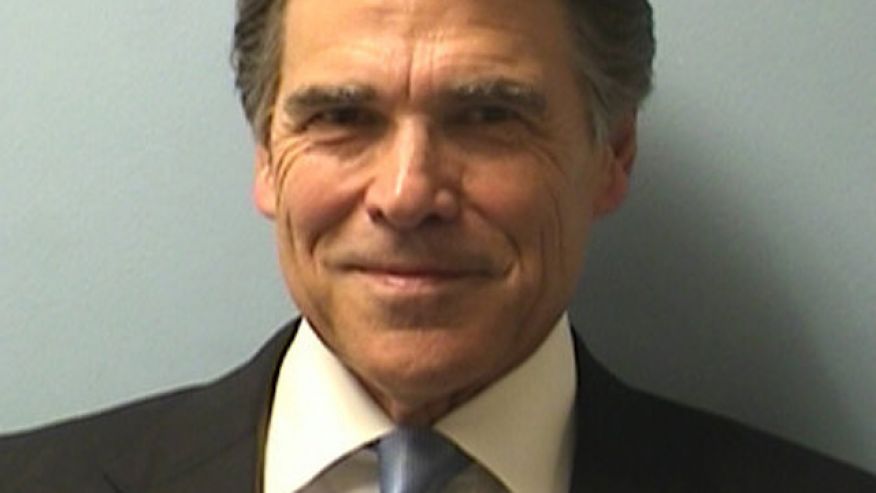
The news of the indictment of Texas Gov. Rick Perry late Friday thrilled many of his critics around the country, but it perplexed anyone who actually read the indictment. The charges against Perry, who was scheduled to be booked on Tuesday, stem from his carrying out a threat to veto the funding of a “public integrity” office after its chief prosecutor was incarcerated. How a seemingly political act became an alleged criminal offense is a Texas tale more twisted than the Brazos.
The controversy began on April 12, 2013, when someone called 911 to report a vehicle driving dangerously. Inside the car, the police found District Attorney Rosemary Lehmberg. Inside Lehmberg they found almost three times the legal level of alcohol. Worse yet, videos showed a combative Lehmberg badgering officers, invoking her status as district attorney and, according to police, acting so violent that she had to be restrained.
Many people (including Perry) called on Lehmberg to resign, particularly after she was sentenced to 45 days in jail. Lehmberg refused.
Perry then publicly threatened that he would veto the budget for her office if she remained in her position. In my view, he was wrongheaded in making such a threat, particularly given Lehmberg’s position heading the Public Integrity Unit with jurisdiction over politicians like Perry. However, Perry made good on his word and, when the budget came through, he vetoed the $7.5 million in funding for the Travis County Public Integrity Unit.
The threat led a liberal watchdog, Texans for Public Justice, to file a complaint alleging a variety of crimes, including an implausible allegation of bribery, against Perry.
The indictment in Texas v. Perry is based on two state laws, including one that is maddeningly vague and another that has little applicability to this type of circumstance. The charge, Abuse of Official Capacity, refers to public servants who “intentionally or knowingly” misuse government property or services or personnel. It is a provision that would be more fitting if Perry used the $7.5 million for a romp in Vegas. The state provision is incredibly ambiguous, and there is no direct precedent for its use in this type of case. Indeed, such vague provisions are often passed because most prosecutors practice discretion and restraint — both of which was missing here.
The second count refers to attempting to influence “a public servant in a specific exercise of his official power or a specific performance of his official duty.” The “specific exercise of his official power or a specific performance” in this case would be the resignation from office. That is obviously not the intent or purpose of this law.
Perry made this threat publicly. He was using (unwisely) the threat of a budget cut to deal with someone that he (wisely) viewed as a disgrace to her office. There is no precedent directly supporting this charge against Perry, but at least one case seems to contradict it. In 1990, a Texas appellate court ruled that a threat of a lawful action cannot constitute coercion of a public official. Perry is allowed under the Texas Constitution to veto a budget item, and the legislature may override him. Indeed, most of this case turns not on the vetoing of the appropriations line, but threatening to do so in advance. Had he simply cut the funding with little more than a smirk, he would have presumably been free and clear.
When you decide to criminally charge a governor in a case with serious constitutional implications, you should have strong facts and clearly applicable law. Few people (including Perry) would have been put on notice that such laws could be used to criminalize this political dispute. Michael McCrum, the special prosecutor handling the case, had to pound very hard to get these square facts into round holes. A bit too hard.
The problem is that such constitutional concerns can get lost in a trial, as shown by the trial of another governor: Illinois Democratic Gov. Rod Blagojevich. Blagojevich was given a 14-year sentence for seeking a quid pro quo arrangement in exchange for the appointment of a replacement for the Senate seat Barack Obama vacated to become president. Many of us criticized the indictment for criminalizing common political horse-trading. However, Blagojevich was hurt by witness testimony and recordings with vulgar and raw exchanges between politicians. It reaffirmed the view of many that politicians are untrustworthy and sleazy.
In fairness to the prosecutor in Texas, we have not seen the evidence he intends to bring to court. Raw behind-the-scenes testimony can color a case and distract from what might seem abstract arguments based on inherent executive authority. Many jurors find it a challenge to give any politician a presumption of innocence in any forum.
However, at the moment, this indictment is short on the law and even shorter on the facts. It looks like what they call people in Texas who dress up to look like cowboys but have never gotten closer to a steer than a T-bone at an overprized Dallas steakhouse. To put it simply, the Perry indictment is “all hat, no cattle.”
Jonathan Turley is the Shapiro Professor of Public Interest Law at George Washington University and a member of USA TODAY’s board of contributors.
August 21, 2014 USA Today