

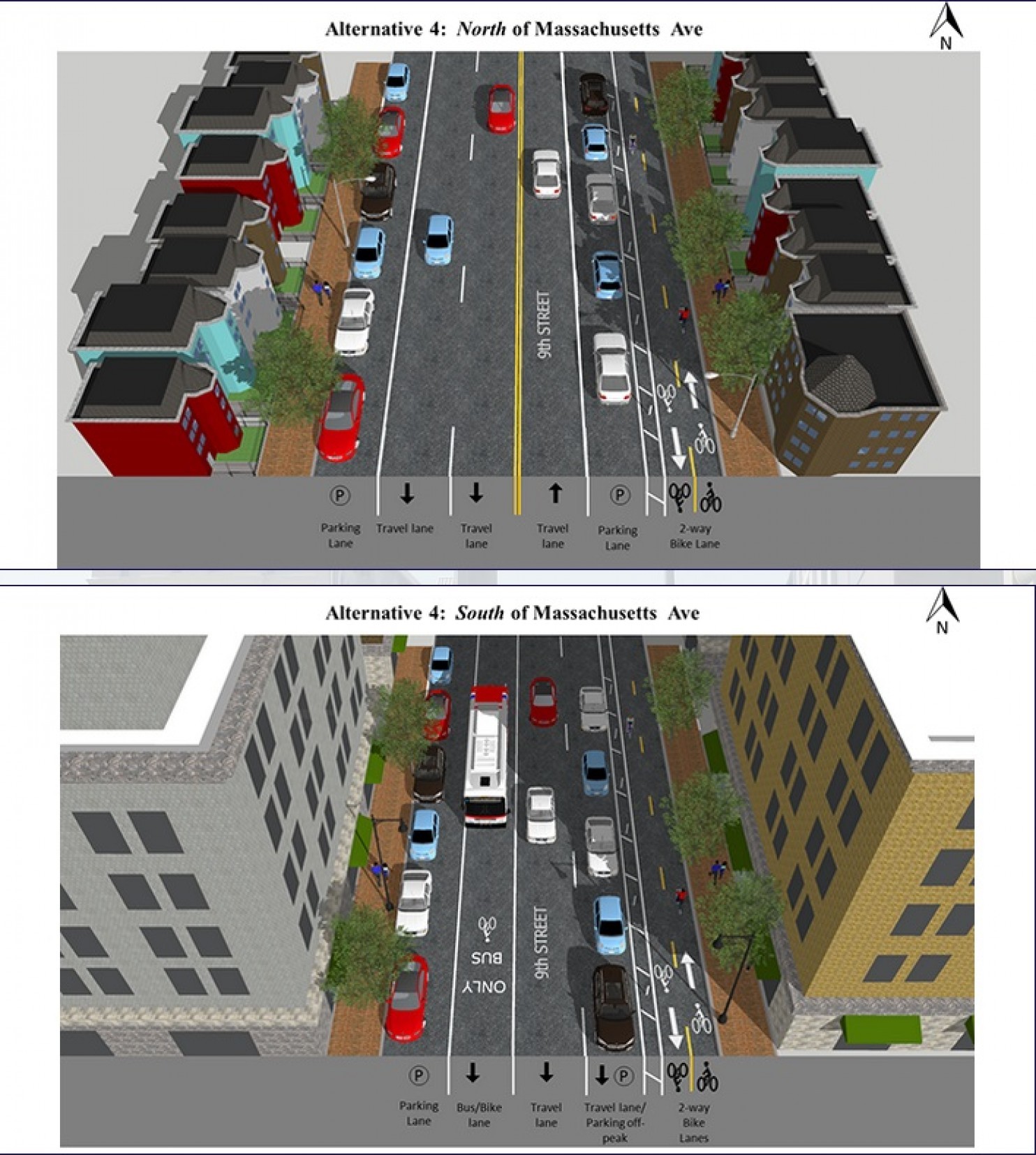
The Church has 800 members and its lawyer wrote the District Department of Transportation that the proposed bike lane are “unsupportable, unrealistic and particularly problematic for traffic and parking.” The lawyer suggested the addition of a standard bike lane would add to traffic congestion and thus violate the Constitution. It suggests sending the bike lane down another street (where presumably another church would not claim a constitutional violation).
The church lawyer insisted that by potentially increasing congestion the DDOT was impinging on religious freedoms: “As you know, bicycles have freely and safely traversed the District of Columbia throughout the 90-year history of the United House of Prayer, without any protected bicycle lanes and without infringing in the least on the United House of Prayer’s religious rights.”
Notably, the District previously caved to another church’s objections to a bike lane and agreed to make the bike lane unprotected in front of the church despite the view of groups and other churches can now make similarly frivolous claims under the Constitution.
The District is now considering the latest religious freedom claim. The use of the religious rights argument would suggest that a church might be able to block a municipal traffic plan where a non-religious institution might not.

“It is contrary to the principles of reason and justice that any should be compelled to contribute to the maintenance of a church with which their consciences will not permit them to join, and from which they can derive no benefit; for remedy whereof, and that equal liberty as well religious as civil, may be universally extended to all the good people of this commonwealth.”
~Founding Father George Mason, Virginia Declaration of Rights, 1776