

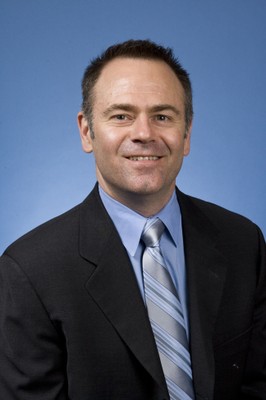


Groseclose says that after he raised his concerns and asked to review the admissions data, he was denied access. Instead, the university appointed UCLA Sociology Prof. Robert Mare to conduct a review. The report declared no “bias” in the admissions process. However, Groseclose said that he reviewed the data and found that “245 more North Asian applicants would have been admitted, which would be almost a 9 percent increase . . . 121 fewer black applicants would have been admitted . . . [a 33 percent decrease].” He found similar advantages given to Hispanic students.
Groseclose lucked out on his timing for the book. It is coming out in the aftermath of the decision in Schuette v. BAMN, as we have discussed previously (here and here). California is one of the eight states with a ban on the use of race to affect admissions decisions. Groseclose’s research may be the foundation for a challenge that raises an interesting comparison to prior discrimination cases. Courts will often look at not just de jure discrimination but de facto discrimination. Groseclose is accusing academic colleagues and administration of openly circumventing the state law by shielding the use of race in the name of “holistic” admissions.
I do think that some academics actively try to circumvent such limits to achieve greater diversity — something the majority of academic value as a high priority in education. However, this is also an area that can be difficult to evaluate because admissions at top schools look at individual records and balance multiple factors. Courts have been reluctant to assign improper motives in such selections. However, Grossclose is suggesting that, just as discrimination cases are often based on a statistical disparity, the same can be shown in the statistical evidence of the race of admitted students. With the ruling in Schuette, such an argument may now have added weight with courts who might have dismissed challenges in the past.
Groseclose holds the Marvin Hoffenberg Chair of American Politics. He received his PhD in 1992 from Stanford’s Graduate School of Business and his academic research focuses mainly upon Congress, media bias, and mathematical models of politics.