

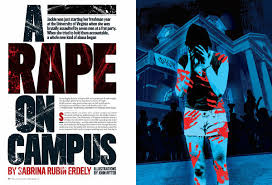
The Rolling Stone magazine retracted the University of Virginia rape story and agreed with a Columbia Journalism School review of major flaws in reporting and editing. However, as I previously criticized, the magazine refused to fire Sabrina Rubin Erdely despite her glaring failures as a journalist in researching and writing the story. For many of us, it was even more insulting to have Erdely testify how she was “A couple of other things struck me as odd. … I was getting a little hinky feeling.” This was due to the statement from the accusing student that she might have been mistaken: “I was just so startled. … Here she was saying in such a casual way, ‘Oh yeah, maybe he wasn’t in Phi Psi.'” Really? What be startled when you were acting without support beyond her account and ignored every other conflicting point or witness? Orderly’s eagerness to “expose” a rape culture at universities blinded her to such failures in writing the 9,000-word article titled “A Rape on Campus.”.
In addition to Columbia the shocking failures of Erdely to interview key witnesses, Sean Woods, the primary editor, was found as lacking in not doing enough to press Erdely to “close the gaps in her reporting.” Likewise, Will Dana, the magazine’s top editor, “might have looked more deeply into the story drafts he read, spotted the reporting gaps and insisted that they be fixed. He did not.” Notably, Woods has insisted he did push: “I did repeatedly ask, ‘Can we reach these people? Can we?’ And I was told no.”
The federal jury saw right through the defense and belated apologies. The 10 member jury concluded that Erdely was responsible for defamation even under the tougher “actual malice” standard of New York Times v. Sullivan, requiring knowing falsehood or reckless disregard of the truth.
Eramo sued over the magazine’s portrayal of her as callous and dismissive of rape reports on campus was untrue and unfair. Frankly, I was more eager to see the fraternity sue, but this will at least impose a cost on publications for such blind advocacy pieces.
Rolling Stone continues to make a good-faith argument while keeping Erdely on staff. It stated in the wake of the verdict that “In our desire to present this complicated issue from the perspective of a survivor, we overlooked reporting paths and made journalistic mistakes that we are committed to never making again.”
The trial lasted 17 days and heard from 12 witnesses as well as the playing of 11 hours of video statements and more than 180 exhibits of evidence.

The jury will consider damages and Eramo originally asked for $7.5 million.