


The ship was sunk upon its return trip from Tinian by a Japanese submarine on July 30, 1945. Because of its secret mission, there was no immediate notice of its sinking and the survivors were left in sharp infested waters where sharks feasted on the floating sailors. It was a tragedy captured famously in the movie “Jaws.”

The tragedy continued as Navy brass tried to pin the disaster on the captain with a court martial. Charles B. McVay III was the first captain in history to be subject to a court martial for losing a ship sunk by an act of war. He was accused of failing to zig zag even thought he Japanese commander who sank his ship said that such a tactic would not have changed the outcome. He was convicted but the sentence was overturned by Secretary James Forrestal and he was promoted to rear admiral when he retired from the navy in 1949. However, he was plagued by letters and attacks from the families of the deceased crew. On November 6, 1968, he committed suicide with his service revolver in the front yard of his home in Litchfield, Connecticut.
Here is the evidence posted by Allen:

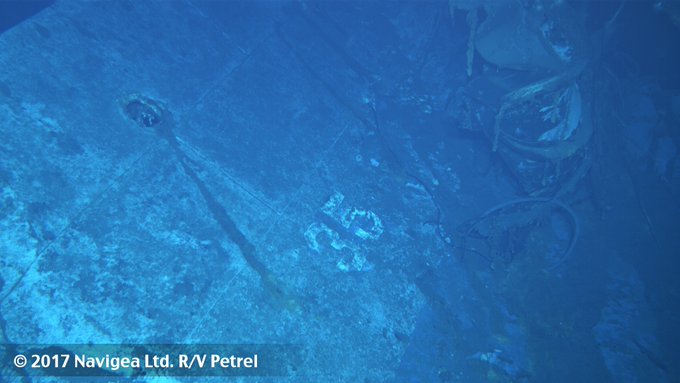

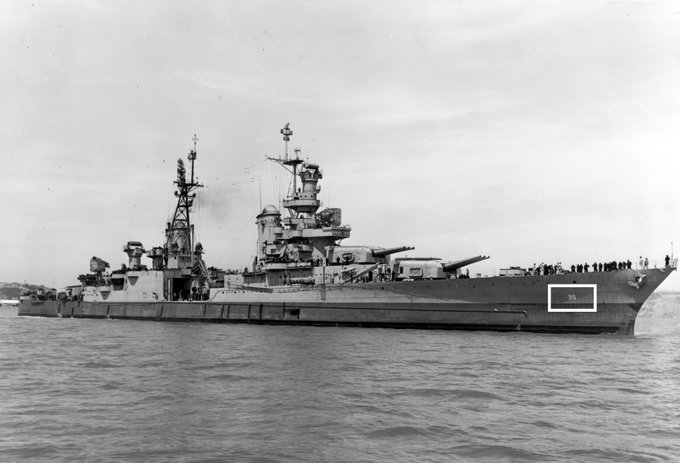
We’ve located wreckage of USS Indianapolis in Philippine Sea at 5500m below the sea. ’35’ on hull 1st confirmation: http://paulallen.com


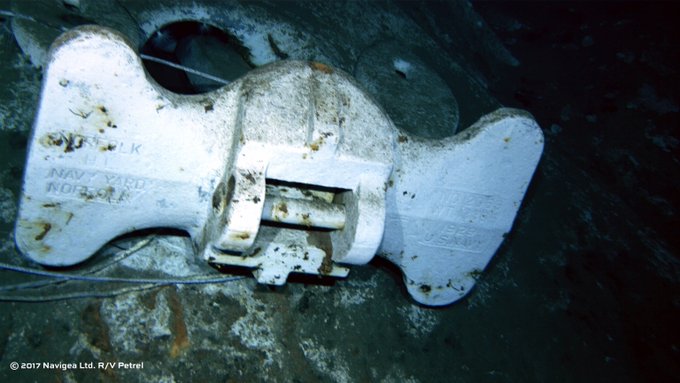
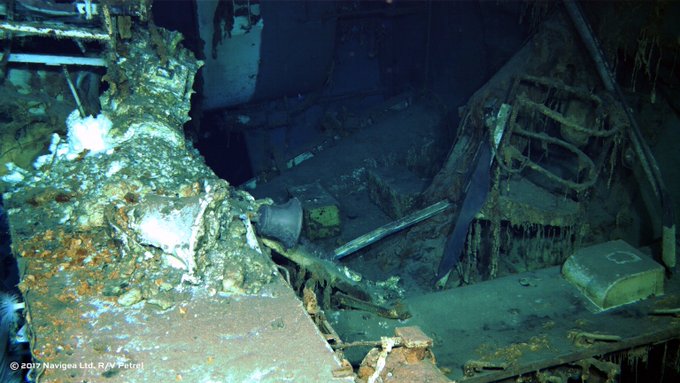
Important chapter of WWII history concludes–I hope survivors/families gain some closure. Anchor and ship’s bell seen here. #USSIndianapolis