

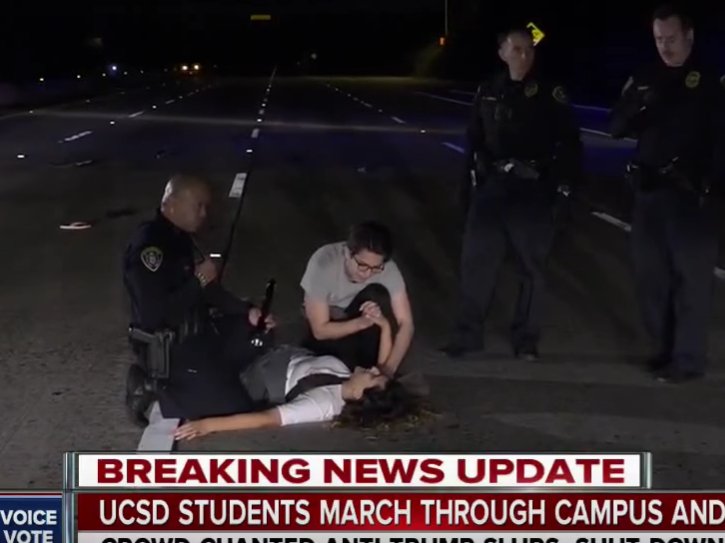

The protest was over the presidential victory of Donald Trump and Flores was demonstrating on I-5 (an eight lane highway) when the car hit her and crushed her pelvis, fractured her leg, and caused other injuries. She does not blame herself or the protesters. She blames the university for not stopping her from doing such a reckless thing.
Flores’ complaint maintains that anyone employed by the university who encouraged or supported the protest would be sufficient to established liability.
The effort is clearly to get a jury to find not that Flores was without fault but that there was comparative fault by UCSB. The case is an argument against a “pure” comparative negligence standard like the one used in California. In a pure comparative negligence jurisdiction, a plaintiff may recover damages even if he or she is more at fault than the defendant. The award is reduced by whatever the percentage of fault is assigned to the plaintiff. Other states use a partial or modified comparative fault system where you are barred if you are 50 percent or more at fault in your own accident. In the traditional contributory negligence states Flores would have been barred for even one percent of fault (absent a finding under “last clear chance” doctrines).
It is a good thing that UCSD is not simply caving into this lawsuit with a settlement. I fail to see the basis for liability based on the facts alleged by Flores.
What do you think?