


Connecting support for Diversity, Equity, and Inclusion programs to limiting free speech is a chilling and tragically ironic notion. Many of us have raised concerns over the lack of diversity of viewpoints on our campuses. The students at Illinois are suggesting that limiting such intellectual diversity is key for any commitment to DEI.
The resolution states:
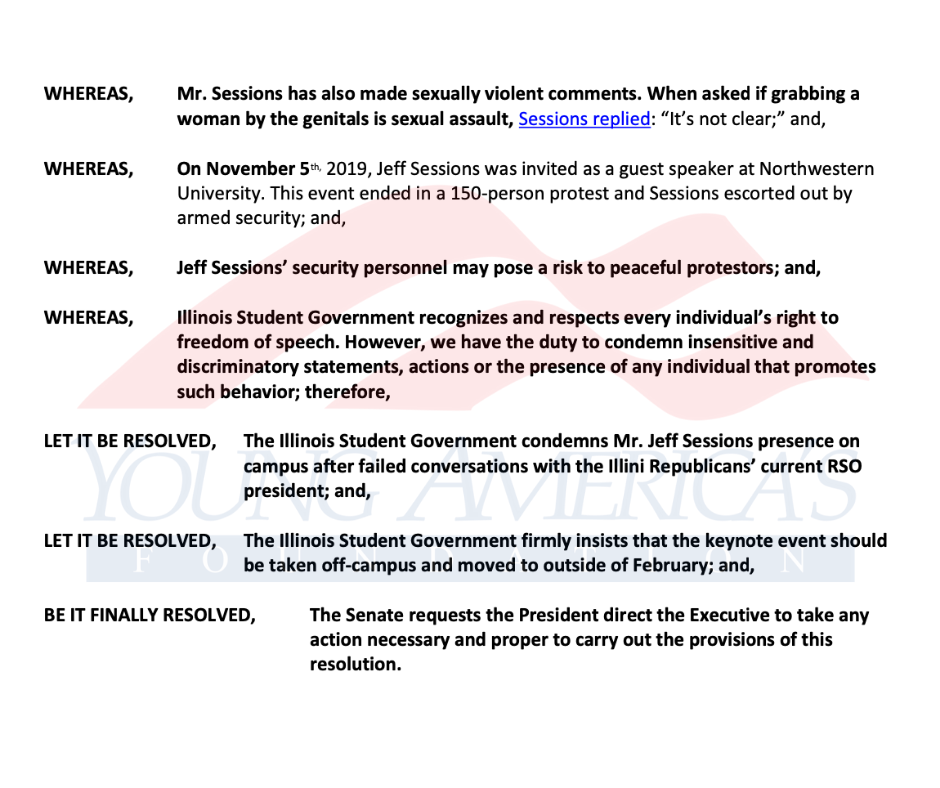
“Illinois Student Government recognizes and respects every individual’s right to freedom of speech. However, we have the duty to condemn insensitive and discriminatory statements, actions, or the presence of any individual that promotes such behavior.”
That is fine. Debating, protesting, condemning are part of free speech. However, the students then added that the student government “firmly insists that the keynote event should be taken off-campus and moved to outside of February.”
Other students and faculty likely want to hear from Sessions, who was removed as Attorney General for defying former President Donald Trump on the Russian investigation and has a long history in American politics. Forcing delays and remote locations are all ways of creating barriers to the exercise of free speech and association. We previously discussed the concern over the rising generation of censors on our student governments and journals. The link between DEI and limiting diversity of speakers on campus could further worsen that trend toward viewpoint intolerance.