
 Below is my column today on the Perry indictment. I have previously raised my serious reservations about the factual and legal basis for a criminal charge. We obviously do not know what evidence will be presented, particularly evidence of back channel communications that might have occurred over the threatened veto. Such conversations can have a highly damaging effect on jurors as shown by the trial of Illinois Democratic Gov. Rod Blagojevich. They can also damage someone politically by exposing uninhibited moments or comments. I have heard from reporters in Texas that there might have been communications between Perry and Lehmberg about her resigning but I have yet to see clear accounts of such communications. However, at the moment, I cannot see the basis for these charges. Perry publicly stated his intent to use his lawful power to veto the line item for the office budget if Lehmberg did not resign. I do not see how the use of such a lawful power in this case would rise to the level of a criminal act.
At the moment, I see a compelling case for dismissal as a threshold legal question for the court. However, the degree to which the court views this matter as turning on the factual allegations as opposed to the legal questions, it could be held over for trial. That is the problem with such ambiguously written provisions is that the court may feel more constrained in dismissing the counts. The result for Perry can be damaging even if he is acquitted as was former U.S. Senator Kay Bailey Hutchison two decades ago. Hutchinson was charged with using state employees to plan her Christmas vacation in Colorado and write thank-you notes. The case was so weak that it took only 30 minutes for the jury to find her not guilty on all charges. The political danger is the exposure of private communications. Few of us are as crude as Blagojevich or his wife even in private but none of us is likely to look good if our unguarded comments were played out for a national audience. Once again, only time will tell what type of evidence was heard by the grand jury. Yet, my view is that this indictment is very problematic from a constitutional standpoint and offers little to support such a major prosecution.
Here is the column:
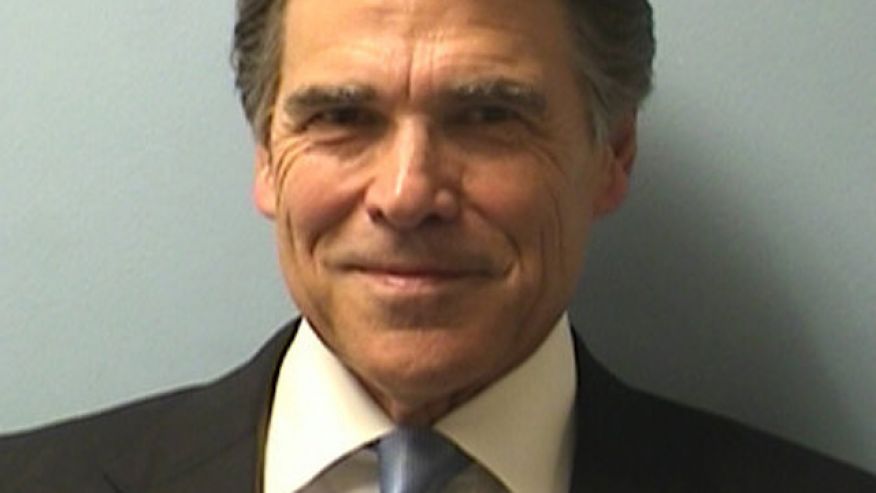
The news of the indictment of Texas Gov. Rick Perry late Friday thrilled many of his critics around the country, but it perplexed anyone who actually read the indictment. The charges against Perry, who was scheduled to be booked on Tuesday, stem from his carrying out a threat to veto the funding of a “public integrity” office after its chief prosecutor was incarcerated. How a seemingly political act became an alleged criminal offense is a Texas tale more twisted than the Brazos.
The controversy began on April 12, 2013, when someone called 911 to report a vehicle driving dangerously. Inside the car, the police found District Attorney Rosemary Lehmberg. Inside Lehmberg they found almost three times the legal level of alcohol. Worse yet, videos showed a combative Lehmberg badgering officers, invoking her status as district attorney and, according to police, acting so violent that she had to be restrained.
Many people (including Perry) called on Lehmberg to resign, particularly after she was sentenced to 45 days in jail. Lehmberg refused.
Perry then publicly threatened that he would veto the budget for her office if she remained in her position. In my view, he was wrongheaded in making such a threat, particularly given Lehmberg’s position heading the Public Integrity Unit with jurisdiction over politicians like Perry. However, Perry made good on his word and, when the budget came through, he vetoed the $7.5 million in funding for the Travis County Public Integrity Unit.
The threat led a liberal watchdog, Texans for Public Justice, to file a complaint alleging a variety of crimes, including an implausible allegation of bribery, against Perry.
The indictment in Texas v. Perry is based on two state laws, including one that is maddeningly vague and another that has little applicability to this type of circumstance. The charge, Abuse of Official Capacity, refers to public servants who “intentionally or knowingly” misuse government property or services or personnel. It is a provision that would be more fitting if Perry used the $7.5 million for a romp in Vegas. The state provision is incredibly ambiguous, and there is no direct precedent for its use in this type of case. Indeed, such vague provisions are often passed because most prosecutors practice discretion and restraint — both of which was missing here.
The second count refers to attempting to influence “a public servant in a specific exercise of his official power or a specific performance of his official duty.” The “specific exercise of his official power or a specific performance” in this case would be the resignation from office. That is obviously not the intent or purpose of this law.
Perry made this threat publicly. He was using (unwisely) the threat of a budget cut to deal with someone that he (wisely) viewed as a disgrace to her office. There is no precedent directly supporting this charge against Perry, but at least one case seems to contradict it. In 1990, a Texas appellate court ruled that a threat of a lawful action cannot constitute coercion of a public official. Perry is allowed under the Texas Constitution to veto a budget item, and the legislature may override him. Indeed, most of this case turns not on the vetoing of the appropriations line, but threatening to do so in advance. Had he simply cut the funding with little more than a smirk, he would have presumably been free and clear.
When you decide to criminally charge a governor in a case with serious constitutional implications, you should have strong facts and clearly applicable law. Few people (including Perry) would have been put on notice that such laws could be used to criminalize this political dispute. Michael McCrum, the special prosecutor handling the case, had to pound very hard to get these square facts into round holes. A bit too hard.
The problem is that such constitutional concerns can get lost in a trial, as shown by the trial of another governor: Illinois Democratic Gov. Rod Blagojevich. Blagojevich was given a 14-year sentence for seeking a quid pro quo arrangement in exchange for the appointment of a replacement for the Senate seat Barack Obama vacated to become president. Many of us criticized the indictment for criminalizing common political horse-trading. However, Blagojevich was hurt by witness testimony and recordings with vulgar and raw exchanges between politicians. It reaffirmed the view of many that politicians are untrustworthy and sleazy.
In fairness to the prosecutor in Texas, we have not seen the evidence he intends to bring to court. Raw behind-the-scenes testimony can color a case and distract from what might seem abstract arguments based on inherent executive authority. Many jurors find it a challenge to give any politician a presumption of innocence in any forum.
However, at the moment, this indictment is short on the law and even shorter on the facts. It looks like what they call people in Texas who dress up to look like cowboys but have never gotten closer to a steer than a T-bone at an overprized Dallas steakhouse. To put it simply, the Perry indictment is “all hat, no cattle.”
Jonathan Turley is the Shapiro Professor of Public Interest Law at George Washington University and a member of USA TODAY’s board of contributors.
August 21, 2014 USA Today
Robert, Good comment. It is almost surreal that a person like Lehmberg is allowed to remain in a post like that. Again, honor has left politics and we are all screwed because of that.
Lemberg is a politicain. Even though most of us would like to think our elected representatives act with honor or integrity, it is not a common trait. Sadly, many of them are driven by ego, and the oppoprtunity to wield power over another. Even when that exercising that power, in their mind is for the public good, it can lead to some pretty ugly outcomes. It is depressing, but even more so when it is a person chosen to head a “Public Integrity Unit”. Yes, she should have resigned, if for no other reason than she could not fill her constitutional duty while a prisoner of the state.
And a follow-up with a second personal attack! Someone is trying to start a tit for tat. That’s the height of incivility.
I am interested in how people think. Does anyone here think Lehmberg should have continued on as the head of the Public Integrity Unit?
How completely childish taunting Elaine with comments such as “The better poet knowet”. I don’t know why JT tolerates it. It’s very tiresome and brings down the entire blog to schoolyard level.
Annie, Elaine, Squeeky and Nick – How about a contest. Elaine and Squeeky can each write an Elizabethan sonnet about Ferguson and the rest of us will judge the quality?
How about a poem.
Victimhood, flopping. The truth makes it not a “personal attack” it makes it well, the truth. Now, move on and stop the titty tatty flopping.
Elaine, what else is new? It’s all hang dog ‘I’m sorry’ contriteness, until the next time. It’s a trait known to be common in certain types.
The fact that Perry vetoed clearly demonstrates that he had the power to veto.
Perry’s suggestion that a disgraced public servant resign after being convicted of a felony is a de facto moral turpitude clause that is generally accepted and ubiquitous.
Perry took very candid, honest and public actions which cannot be construed as covert coercion.
The Travis County DA and Grand Jury are guilty of deliberately frivolous acts, betrayal of the public trust, corruption and abuse of power for which swift prosecution must ensue.
Once again, people run off chasing rabbits. Dredd post and then argues his point without ever realizing his post has nothing at all to do the circumstances or charges in this case, and thast even if bribery had been charged, there was no benefit offered to the DA, so there was no bribery. Sheesh, it must be terrible to live so far in the hole on a political side that you have to make stuff up to keep yourself happy.
Nick,
Another personal attack? I think you ought to apologize to Jonathan for not abiding by the civility rule.
http://www.politifact.com/texas/statements/2014/aug/21/sarah-palin/palin-incorrect-rosemary-lehmberg-convened-grand-j/
The point is: She was heading the Integrity Unit and her integrity was questionable. It is about time that Public Officials start working for the people that employ them and get rid of fellow leaches. A little late but go Perry!
The Kaisner v State case I linked to up-thread shows that a bribery count (Count III) should have been added to the indictment and would be quite valid (emphasis mine):
BURGESS, Justice.
A jury convicted appellant of bribery and assessed his punishment at two years’ confinement in the Texas Department of Corrections while recommending the prison term be probated. Appellant brings forth four points of error.
Appellant was the sheriff of Denton County, Texas, having taken office in January, 1985. In March, 1988, he was on the ballot for reelection in the Republican Party primary. Appellant received 41% of the votes cast in the first primary and was to meet Kirby Robinson in a runoff election to be held in April, 1988.
A political advisor of Sheriff Kaisner met with Robinson and offered him the job of chief deputy if Robinson would withdraw from the runoff election. The sheriff denied authorizing the advisor to make any such offer. Kaisner subsequently lost the election and was indicted.
The indictment, omitting the formal parts, stated:
“Jack Ehrhart and Randy Kaisner … did then and there intentionally and knowingly offer and agree to confer a benefit upon Kirby Robinson, who was then and there a public servant in that the said Kirby Robinson was a candidate for the Republican Party’s nomination for the office of Sheriff of Denton County, Texas, and said offer and agreement to confer a benefit was in consideration for Kirby Robinson’s decision to withdraw from the Republican Party Primary Run-Off Election for Denton County, Texas, Sheriff scheduled to be held on April 12, 1988, and said offer was that in consideration for the decision to withdraw from said election, that Kirby Robinson would receive the job of Chief Deputy of the Denton County, Texas, Sheriff’s Department on March 14, 1988, which job would carry an annual salary of $32,000 …”
Appellant’s first three points of error state:
1. “The indictment fails to state an offense cognizable in Texas because the offer of a job to an office seeker in return for withdrawal from candidacy does not constitute bribery.” 2. “The evidence of guilt is insufficient to sustain the conviction because the offer of a job to an office seeker in return for withdrawal from candidacy does not constitute bribery.” 3. “The evidence of guilt is insufficient to sustain a conviction because the offer of a job to an office seeker in return for withdraw [sic] from candidacy does not constitute bribery and is a common law exception to the offense of bribery.”
Appellant begins his argument with these statements:
“The prosecutor has constructed a prosecution which is contrary to the traditional concept of bribery and is not one envisioned by the drafters of the constitution or the legislature. In so doing, the state has utterly blurred the distinction between making decisions as a public servant and deciding to be a public servant.”
However, this ignores the statutory definition of public servant. TEX.PENAL CODE ANN. sec. 1.07(30) (Vernon 1974) states:
“(30) `Public servant’ means a person elected, selected, appointed, employed, or otherwise designated as one of the following, even if he has not yet qualified for office or assumed his duties: * * * * * * “(E) a candidate for nomination or election to public office; ….”
As a candidate in a party primary, Robinson was clearly a public servant under the Code. The decision to withdraw from the runoff would have been the exercise of discretion as a public servant. Under TEX.PENAL CODE ANN. sec. 36.01(5) (Vernon 1989), the offer of the job was the offer of a benefit. The indictment alleges all the necessary elements of the offense of bribery. Point of error number one is overruled.
While appellant denied authorizing an offer to Robinson, he does not take serious issue with the State’s proof of the underlying factual allegations. Rather, appellant argues the facts do not constitute the offense of bribery. Appellant’s argument is that the offer of a job to a political opponent falls within the traditional notion of political patronage and is therefore outside the statutory prohibition. We disagree. No such exception, justification or defense was authorized by the legislature. While it may have been acceptable or traditional behavior in Texas or other jurisdictions to “buy off” opponents, it is certainly within the province of the legislature to criminalize such acts.
These two points of error are overruled.
The final point of error alleges error in charging the jury on a portion of the election law. The jury was charged on a provision concerning the timing and the effect of the withdrawal of candidates and further charged that ignorance of the law is no defense. This portion of the charge was obviously prompted by appellant’s testimony that he did not know of any Election Code provision wherein a candidate only had ten days after the first primary to withdraw from the runoff. This inclusion is of questionable value to the jury in determining the elements of bribery. However, appellant must show that the inclusion was an error calculated to injure his rights. Almanza v. State, 686 S.W.2d 157, 171 (Tex.Crim.App.1985) (opinion on rehearing). In making this determination, we must review the entire record to illuminate the actual harm, if any. We find none. This point of error is overruled.
The judgment is affirmed.
Funding to the Public Integrity Unit was restored by Travis County, shortly after the veto.
Elaine M,
Good link.
It points out:
(Elaine’s Link up-thread).
@elaine
Wonderful link you provided, Elaine! Here is an excerpt:
“It is quite possible that the case against Rick Perry will fizzle. Perhaps it is “flimsy” and “thin” and all the rest. Credible legal experts have said they think the prosecution will have a difficult time securing a conviction. However, none of us is privy to the evidence and testimony presented to the grand jury.”
Sooo, what you have is a title that reads “What The Pundits Don’t Get”, which looks all informative on the surface, and then when you read the article, the authors don’t seem to “get it” either. Another case of “All Hat, No Cattle.”
Squeeky Fromm
Girl Reporter
But, hey, conservatives are already targeted by the IRS, so it’s just a typical day.
Perhaps that was the real motive. They have no hope of winning the case, but instead are abusing the legal system to try to get embarrassing private emails that will hurt him politically.
Politics in the mud at its best.
What a message this sends to conservatives – do what Libs demand or they’ll arrest you on groundless charges and post your mug shot.
The detail you’re missing is that Perry had called two other cases of DAs convicted of DUI (one for the second time) “local Issues” and refused to take any action. The difference?–the previous two’s offices had not investigated allegations of corruption in his administration
http://www.dallasnews.com/news/state/headlines/20140819-travis-das-drunken-driving-arrest-riled-perry-others-didnt.ece
mmc – I think the head of the Office of Public Integrity should have integrity. It is clear from the video of her arrest that she is trying to use her connections to get out of the arrest. Compare that with our thread yesterday on the young man who had a t-shirt with his first booking photo on when they took his second booking photo. Took it like a man.
Integrity is an issue for all DAs. But it seems strange to refuse to even comment on a DA arrested for the second time for DUI who is also involved in a current scandal and then to threaten to cut her office’s budget if she doesn’t resign.