By Mark Esposito, Guest Blogger
 Well, Sally Field must be aghast. How could even her bird’s-eye view have predicted the over the top report from the Vatican’s Congregation for the Doctrine of the Faith? Once the province of current Pope Benedict, the watchdog of orthodoxy that took such a hands-off approach to the child sexual molestation within the priesthood, has issued a stinging reprimand to all American nuns for “certain radical feminist themes incompatible with the Catholic faith.”
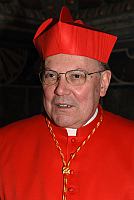 Headed by American Cardinal William Levada, the crowd that gave us the Inquisition and who tried Galileo, has ordered a crackdown on all U.S. nuns. Overseen by three
 middle-aged white men American bishops, the Vatican wants the good sisters to toe the Vatican’s increasingly fundamentalist line. And what was the doctrinal crime that got the nuns in trouble? Why, their apparent heretical support for such outlandish positions as supporting universal health care under Obama’s plan, sensitivity to marriage rights for gays, and –God forbid it — advocating females for admission to the priesthood. They are even under scrutiny for praying for Girl Scouts.
As with other tone-deaf proclamations by the RCC, this one has produced an outpouring of support for a group of dedicated women whose average age is 69. There are about 75,000 nuns in the US — down from their heyday in 1965 when the ranks numbered about 180,000. Still this feisty few aren’t taking the recrimination sitting down.
The Leadership Conference of Women Religious, which serves as the umbrella group for most orders of nuns, has responded with a duly obsequious statement but armed with enough teeth in it to get attention from the beanie wearing gang in Rome. “Board members concluded that the assessment was based on unsubstantiated accusations and the result of a flawed process that lacked transparency,” the group said after a three-day meeting. “Moreover, the sanctions imposed were disproportionate to the concerns raised and could compromise their ability to fulfill their mission.”
 Conference of Catholic Bishops who supports the Vatican’s move. Archbishop Peter Sartain of Seattle, who was appointed by the Vatican to supervise reform of the nuns’ group took pains to praise American nuns as a “great gift.” He added that he hoped to work with them “in a way that shows our continued love and support for their extraordinary contribution.”
id707,
Sorry about the thomas thing … I misread your post. One of the books that comes to mind is the fourth edition of “The Complete Gospels”
id707,
Gene’s recommendation is a good place to start.
I’ve got a ton of books in my library on historical theology.
Malisha,
Didymos Judas Thomas
Who is that Thomas who has a gospel of Thomas?
id707,
I found the Gospel of Thomas one of the most interesting of all the Gnostic gospels.
Blouise,
Got one good book to recommend? Haven’t time for more. Will trade a good Indian history which am sure you will appreciate.
GeneH,
Exactly, Which is why he gave up trying to use the many temples scattered throughout Hellenism, with the various local adaptatíons to local gods, with hellenistic influence.
His wife/mother got credit for destroying the academies and the temples.
And let us not forget the Gospel of Thomas. nor the shepherd who dug up many, but not all are available. One can wonder what those “lost” contained and who bought them from the Egyptian. Could there be recorded the veritable words of Jesus. The GoThomas makes that claim.
Malisha,
Several other versions resulting in several sects. Constantine chose this particular small paulinian sect’s version because it meshed so nicely with his political plans. Once having gained his support, power and influence, and after holding several tweaking sessions, that one relatively obscure paulinian sect went about the business of destroying all the others eventually resulting in the arrogant (human beings playing God) Christianity we have today.
It’s a fascinating history and fairly well documented.
Malisha,
Yes, the Gospel of Judas is considered one of the Gnostic gospels.
id707,
“The gnostics, the little we know comes mainly from a detractor, a Christian bishop. The modern consensus seems to be that they never had a center, rather accepting new ideas whenever and wherever. Thus unlikely ground for forming a church.”
We also know about the Gnostics from independent scrolls found as well like the Gospel of Mary and the Gospel of Judas. What you point to is precisely why Constantine had no use for them and opted for the Pauline interpretation of Christianity. 1) The Pauline encouraged organization and compliance with dogma and 2) that played to his political ends. He was looking for a tool to control the people first and foremost. Under Imperial power, a church could have been built around the Gnostics. An organization can built around anything. That a Gnostic church would have had very limited utility to Constantine (and those who would install themselves into a Pauline hierarchy) by the very nature of their teachings is precisely why the RCC is a Pauline church today.
Oh, and I believe I have read that the reason priests could not marry (this happened within the first thousand years A.D. but I can’t remember when exactly) had to do with inheritance rights, not sex. They didn’t want the large estates owned by the priests to go through ordinary inheritance laws and get dissipated, wanted to keep the wealth in the church, ergo, priests could not marry because they were not supposed to have legitimate children who could inherit from them. The only kids they could have were, thereafter, illegitimate, with no claim to money, goods or land from the church.
OK, wait a minute, is the Gospel according to Judas one of the gnostic writings? There was a whole “other” version of what really happened, was there not?
Lotta,
If the arch still stands there, stand under it today.
I will attenpt agaín to win over my fumble fingers. One stroke and the whole 20 sentences disapppear.
GeneH.
Just to clarify.
My view on Magdelaena was a speculative hope that her STRONG presenece with support, would have accorded women higher status in the church and a raising them from the chattel role of Mary the mother, who only provided an carnation role in the Jesus legend. The seed came from god, a continuation of the idea that the seed was a miniature person entrusted to the womb to grow there.
Magdelena could perhaps have effected the dogmas which developed. Although considering the time from Christ and the Constantine councils then such hopes are unlikely to have been fulfilled.
The gnostics, the little we know comes mainly from a detractor, a Christian bishop. The modern consensus seems to be that they never had a center, rather accepting new ideas whenever and wherever. Thus unlikely ground for forming a church.
The apostolic principle of the RCC stands for an immutable view. What has come from God is unchangeable.
Not dissimilar from the Muslim view of the Koran and the sunni writings. etc.
Once upon a time, priests were allowed to marry I believe. But will such a miracle occur again. The pedophilic symptoms indicate not. And that was a serious comment, not meant to be snide. We have the RCC, and we must deal with it. I will not stand and cast pebbles at it which unserious cries of pedonest amount to today.
SwM,
Maybe, but based on solid psychological research, we know the old adage, “As the twig is bent, so grows the tree,” is a true statement. And we also know revisionist history is a closet industry in every large economic enterprise, including that of the Vatican.
“The Gnostic interpretations of the teachings of Jesus (some of which are likely far more contemporary and accurate than the Pauline gospels in that regard) paint a picture where God is found within us all – similar to the teachings of Buddha – and the church as an organization is of secondary importance to religious “salvation” and not really required to benefit from the teachings of Christ.”
Gene,
Yes, Jesus was a prophet/philosopher in the same mold as Buddha, Confucius ad Rabbi Hillel. They all preached the same gospel. Unfortunately, as you explain the organizations that pretend to be disciples of wise humans, often fall far short of the Master’s words.
Very interesting take on that, LK.
I like it.
From blawg posting: “(Query: Why does the Vatican need an embassy?) to register their dismay at the slightly misogynistic message implicit in the church’s smack-down.”
****
Because the Vatican City State is a sovereign state, a country within a country that has embassies and diplomatic relations with about 180 other countries. The Holy See, the governing body and administrative heart of the Catholic Church, is an administrative arm of the Vatican City State.
I think it odd that a foreign government is allowed to work, through its primary religious sub-division, to influence our countries policies and politics as much as the Vatican City State is so allowed. When the Vatican spirits away offending priests to its State (as it has done in the recent past) and refused to return them for charges and trial, this is the decision of a sovereign State. When our politicians proclaim their loyalty and fealty to The Church- agree that they are advancing Church goals- they are actually claiming loyalty and fealty to another country and government IMO, and it should disqualify them for office.
Malisha,
Perhaps, but you cannot argue that Paul and the Paulines weren’t about organization and the perpetuation of organization from the day the nails were driven. Their often selective and biased interpretations of the teachings of Christ lent itself to that behavior. The Gospel of Mary is part of the Gnostic tradition. The Gnostic interpretations of the teachings of Jesus (some of which are likely far more contemporary and accurate than the Pauline gospels in that regard) paint a picture where God is found within us all – similar to the teachings of Buddha – and the church as an organization is of secondary importance to religious “salvation” and not really required to benefit from the teachings of Christ. Given this, see the history of Buddhism. Bad things have been done in the name of organized Buddhism, but in contrast with organized Christianity? The damage done to societies “in the Name of Buddha” versus “in the Name of Christ” is small. Some bad would have come from any resultant organization to be sure, but in this instance, I think id707 is not completely off base about the nature of “the Church” possibly being substantially less malevolent under a Gnostic influence than they have been under the Pauline (slash Constantine) influence.
Idealist, “If Mary Magdalena had only had better support, would we have had a better church today? I believe so.”
I don’t. Just as Jesus was “spun” and represented by Paul et al. so that he became all but unrecognizable, Mary M would have become a brand for — oh I don’t know — maybe something like Sarah Palin. At least.