By Mark Esposito, Guest Blogger
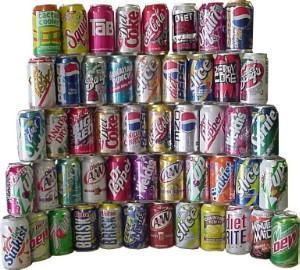 New York Mayor Michael Bloomberg ignited a firestorm on this blog and elsewhere for his proposal to ban all but 16 ounce containers of sodas, energy drinks, sweetened iced teas and other sugary beverages in restaurants, movie theaters, sports arenas and food carts (they will still be available in supermarkets and bodegas). Wondering why he’d make a proposal that could not possibly help him politically and was likely to draw the ire of Big Soda, I did a little research. Here is the abbreviated case against cola:
- Weight Increase. Using high fructose corn syrup as a sweetener, a 20 oz can of soda contains the equivalent of anywhere between 17 (Coke) and 20 (Pepsi) teaspoons of sugar per can. Drinking just one regular 20 oz soda per day adds about 225 calories to our daily diet or about 7000 calories a month which, without concomitant exercise, translates to 2 pounds a month of 24 pounds of weight gain per year. And that’s just one per day. Many American teens average 3 per day. Since 1978, the consumption of sugary drinks has skyrocketed. Back then we soda was a puny 3% of our caloric intake and milk chimed in at 8%. The numbers are now almost reversed with soda making up about 7% of our daily caloric intake. If you’re interested, here’s the sugar content of many popular drinks.
- Insulin Blaster. Americans with type 2 diabetes has tripled from 6.6 million in 1980 to 20.8 million today. Why? One major reason might be soda. Researchers at Brigham and Women’s Hospital in Boston and Harvard Medical School analyzed the data from the Nurses Heath Study II. They concluded that “women who drank one or more sugary drinks a day gained more weight and were 83% more likely to develop type 2 diabetes than those who imbibed less than once a month.” The researchers also noted that, “rapidly absorbed carbohydrates like high fructose corn syrup put more strain on insulin-producing cells than other foods.” When sugar enters the bloodstream quickly, the pancreas has to secrete large amounts of insulin for the body to process it. Some scientists believe that the unceasing demands that a soda habit places on the pancreas may ultimately leave it unable to keep up with the body’s need for insulin.
- Tooth Dissolver. Soda is a known enemy of tooth enamel due to its high acidity. In a series of studies, Professor Poonam Jain, director of community dentistry at Southern Illinois University School of Dental Medicine, tested various sodas by measuring their pH–an indication of acidity. Battery acid, for example, has a pH of 1; water scores a 7. Jain found that sugar-sweetened sodas came in at about 2.5, while diet sodas scored 3.2. “The acidity can dissolve the mineral content of the enamel, making the teeth weaker, more sensitive, and more susceptible to decay,” he contends.
- Bone Dissolver. In the 1950s we drank 3 cups of milk for every one cup of soda. Now those numbers are reversed and we’ve seen an increase in osteoporosis as a result. In 2000, research at the Harvard School of Public Health disclosed that brittle bones were a particular problem for soda drinking adolescent girls. The study of 460 high schoolers found that girls who drank carbonated soft drinks were three times as likely to break their arms and legs as those who consumed other drinks. And the problem continues into advanced age. Grace Wyshak, PhD, a biostatistician and the study’s lead researcher, believes something in colas is interfering with the body’s ability to use calcium. This is a big problem, she says, “because girls will be more susceptible to fractures later in life if they don’t acquire optimal bone mass in adolescence.”
- Caffeine Addiction. Many in the medical community consider caffeine a psychoactive substance. In fact, almost 90% of Americans consume it daily. It reacts with the central nervous system and stimulates the body. The caffeine in just one can of sugar-free diet soda ” is associated with a 48 percent increased risk of ‘metabolic syndrome,’ which plays a major role in heart disease and diabetes.”
Diet soda fairs no better with new research indicating its sugar less formula may well trigger food cravings and thus leads to weigh gain. It contains equal or more amounts of acid and caffeine and provides little in the way of nutritional benefits.
Bloomberg’s proposal then makes sense both from a public health perspective and from the point of view of logic. Why then all the resistance? Are we like spoiled children refusing to “eat our vegetables” because we just don’t want to eat them? Are we afraid of government depriving us of the products we take for granted and really, really like? Or are we just rationalizing our own indulgences under the banner of freedom of choice?
Basically, are we endowed by our Creator with the unalienable right to harm ourselves for our own pleasure and increase the costs to our fellows and our future generations as they are forced to pay for all the bad health choices we make?
What do you think?
Sources: Prevention Magazine; ABC News; Healthy Resources
~Mark Esposito, Guest Blogger
I reached a point that to this day I have not been able to find funny.
Malisha, not at this point, but towards the end I couldn’t help but burst out in laughter, I am afraid, in spite of all you wrote. Thanks a lot, I need that occasionally.
Besides, this and your later comment reminded me of an article by a German director now leading the most well known theater in Vienna, a wonderful woman. I once stumbled across something she wrote about a journey in America. As I remember it, the center of her attention were the paternalistic structures of society that she seemed to encounter everywhere. Admittedly, they have never drawn my attention, and initially I was a bit surprised. But in the end it turned into a rant about all the signs she encountered somewhere trying to prevent people from suicide, I agree with her, in the end signs won’t prevent anything, is someone’s resolve is firm; just in your case you could have simply gotten it somewhere else. So what was your pharmacist’s real intention? It feels like you are pretty close.
Since I know some of Andrea’s work, and I know how careful she works, I don’t think it were the signs themselves, maybe not even the magniloquent admonitions she cited, but the strange idea you only have to put up signs to help somebody stop doing something you surely can’t prevent with sermons only. I remember that each of the citations she collected felt like they would have only made my resolve firmer. I am sure that beneath the facade of empathy and responsible citizenship she sensed something else, something these sings signaled to her. No matter how well intended they are on the surface, possibly even a peculiar attempt to smooth one’s conscience, to practice good citizenship, could they have a much more practical reason hidden beneath, some kind of public prayer, if you like: God, please prevent these corpses from falling down on our clean little town, imagine the kids have to see them, and often it takes hours before the place is cleaned up again.
Bron,
I can’t speak o the Linux issue, but $130 for just PowerPoint, to me, is outrageous.
That just shows you’ve never looked at a Linux distribution. You could have gotten LibreOffice (which has a presentation package that works just as good as PowerPoint) for free. Also there are “non-free” versions of Linux like Red Hat – they give away the OS and charge you for technical support (which most people never need unless they are doing something at an enterprise level). Something that Cannonical does for the Ubuntu Linux distribution as well. Microsoft charges a ridiculous amount for a bloated bag of junk that impedes maximum system performance. In fact, they recently announced they’ll gladly remove the “bloat ware” from your system at authorized MS service centers. For $99.
They are a market driven monopoly with an inferior product, Bron.
You just don’t know any better because all you’ve ever known is Windows and MS.
There are other non-Gates software out there that work just as good and better for far less money and none of them are trying to force their operating system on you by the kind of shenanigans MS is pulling right now with equipment manufactures.
Gene H:
I paid $130 for power point, had it down loaded and got a disk in the mail for an additional 14 dollars.
I went to the movies last night and it cost me almost 50 bucks for 2 tickets, popcorn and soda. The movie was about Mexican Statists killing Catholic priests.
Microsoft may have an 85% market share but they provide a good product at a reasonable price. I see Linux sold in computer stores and other operating systems, why havent they broken into the main stream? Linux cant even give the system away. I have heard it is better than windows.
Microsoft does not charge ridiculous prices and it provides decent service. An example of a monopoly is the DMV and most utility companies. Lousy service and high prices respectively.
“I do not think that a 24-ounce sodapop law is analogous to a law requiring food handlers to wash their hands, no.”
I think a 1 cent per ounce soda tax is analogous to a 5 cent tax on each cigarette (google tells me that’s close to the current federal tax rate), and analogous to the 5 cent per can federal tax on beer and analogous to the 20 cent per gallon federal tax rate on gasoline or the 11 percent tax on ammo or the 2% blank CD tax on blank music CDs.
If you were born the day after a 1 center per ounce soda tax was implemented, and you were 30 years old in a world with many individuals ill from sugar addiction, or with their other illnesses much less difficult because they were not compounded with obesity problems , would you really think it was ridiculous and horrid to pass the Sugary Soft Drink Act of 2013?
Bron,
“As far as monopolies go, the only ones I see are government supported/controlled.”
Then you aren’t seeing very well. Microsoft has about an 80% market share on operating systems which gives them the leverage to make the next generation of hardware biased against other OS’s (i.e. they told manufactures if they didn’t install firmware blocks to other OS’s, they would not be allowed to use Windows). When you compare this to the next best competition, MacO/S with about 8% market share and Linux with about 1.5% market share, the idea that Microsoft isn’t a freestanding monopoly is ridiculous. Also consider that Intel controls about the same percentage of the processor market. Market driven monopolies happen all the time as larger competitors suppress competition. It’s a natural function and consequence of unregulated markets. The reasons government has granted monopolies in the past is because of very real cases to be made for the efficiency of consolidating control of vital systems to ensure uniform access to goods and/or services, control prices in pursuit of that issue and to realize other efficiencies based on consolidated control of infrastructure. Government monopolies are the exception to market based monopolies, not the rule.
Anon, you’ve just got a reductio ad absurdam filter on the wrong lens. Regulation by either taxation or warning label, regulation for general safety on public roads that carry traffic for most citizens of many states, regulation of basic social problems that should be very clearly kept out of a civilized society, these are all acceptable functions of governments By the people OF the people and FOR the people.
When you get down to utter nonsense that won’t accomplish anything but adding to the bureaucratic (and dishonest) claptrap that passes for government at the level of “I can fine you any time I find you” that’s quite a different matter. Cute examples and funny examples, yours AND mine, are just another way to say this, and this remains my opinion.
I do not think that a 24-ounce sodapop law is analogous to a law requiring food handlers to wash their hands, no.
bigfatmike:
“Markets work better when all participants have better information.”
good point and very necessary.
“Free markets can be manipulated; they may become monopolies.”
Yes they can be manipulated but it is very hard to corner a market, if not impossible. As far as monopolies go, the only ones I see are government supported/controlled.
Great article Mark. I do not think the government should be allowed to ban certain sizes of soda pop, but Gene’s idea of warning labels is the best idea.
Malisha, bigfatmike
I appreciate your responses, I have to leave soon to have visitation denied by my ex, so I won’t be able to give a full response.
BTW, I hope you understand I have all sorts of differing opinions on this, pro and con.
Anon, several differences.
1. SEATBELTS: This law would limit sodapop to 16 ounces. That’s like “you can drive without a seatbelt if your car is this particular size but no larger [or smaller].”
I think it’s more like, “Golf carts don’t need seat belts”
2. SMOKING: This law would prevent one consumer from buying a single item because of its content and size, although presumably the one item was only going to be consumed by the one consumer. That’s like, “You can smoke but don’t exhale.” Also, nobody limited the purchase of cigarettes to ONE OR TWO PER DAY rather than allowing bulk sale of cartons. In fact, you save money buying in larger quantities!
I am not arguing against any specific law, but against the notion that soft drinks shouldn’t be taxed or regulated because damnit they are food and my right!
OTOH, I we regulate the purchase and timing of hand guns (and ammo?), limit the amount and timing of head ache medications that actually work, and even the amount and structure of the money we take out of a bank or across a border.
3. Helmet laws seek to prevent a motorcycle rider from causing a situation where the ambulance MUST deal with a life-and-death crisis
Not sure this is true at all. Helmet laws seem like pure nanny state protection.
4. CHILD LABOR:
Child labor advocates would say that when mom and dad can’t get jobs (they are too old and can’t get hired) this provides a family with income. Stay out of the family’s lives!
It teaches the kid the family trade (farming, restaurant work)
5. SANITATION
I was actually referring to food workers washing their hands, not keeping food near the trash, keeping places clean, etc.
Probably also refers to where you can dump your trash and where you can’t
@BFM,
I 98% agree. But I don’t think intentionally faulty products have any right to be marketed.
I think sugar laden soft drinks are very arguably addictive (in ways perhaps that marijuana is not) and so fall into the category of an intentionally faulty product.
Whatever the risks of soft drinks, the aforementioned Dr. Mercola is probably not someone you want to listen to about it. Among other idiocy, he’s an anti-vaccine wacko. http://www.sciencebasedmedicine.org/index.php/9-reasons-to-completely-ignore-joseph-mercola-and-natural-news/
That article catches Mercola either displaying mind-boggling ignorance or out and out lying over and over.
Anon, several differences.
1. SEATBELTS: This law would limit sodapop to 16 ounces. That’s like “you can drive without a seatbelt if your car is this particular size but no larger [or smaller].”
2. SMOKING: This law would prevent one consumer from buying a single item because of its content and size, although presumably the one item was only going to be consumed by the one consumer. That’s like, “You can smoke but don’t exhale.” Also, nobody limited the purchase of cigarettes to ONE OR TWO PER DAY rather than allowing bulk sale of cartons. In fact, you save money buying in larger quantities!
3. HELMET LAWS: This law would not prevent a consumer from buying two 16-ounce sodapops and drinking them both himself, right on the spot. So if the larger drink would kill someone right then, and he was forbidden to do that so as not to endanger others at the same time, he would still be allowed to do it, albeit in a slightly more expensive (and slightly more effluent) manner. Helmet laws seek to prevent a motorcycle rider from causing a situation where the ambulance MUST deal with a life-and-death crisis (regardless of insurance issues, thugliness or even ugliness) on the spot in the absence of any method of reducing the likelihood of damage. This is quite “proximate” with respect to cause and effect, unlike a 24-ounce sodapop ingestion on Tuesday the 4th of April and dialysis 17 years later paid for by Medicare.
4. CHILD LABOR: Huh? Nobody should tell you that you can’t hire out your children for $1/hour or that you can’t HIRE somebody else’s children for $2 a day plus all the sodapop they can drink or they’re being a nanny? How’s that an example of inappropriate governmental intrusion into individual rights?
5. SANITATION: OK, I’m lost. I’m lost. Who’s in favor of the government butting out of the regulation of sanitation? Last time I checked, everyone but the Unabomber quite appreciated governmental interference in where individuals chose to sanitate.
Seat belts, helmet laws, lead paint, food adulteration, child labor, crash testing, cigarette smoking, drug testing, sanitation, meat inspection, regulations of gas, smog, weights and measures — where will this nanny state government end?
For anyone who thinks the gov’t should stay out of this, if you had been a smoker in the 60s, how would you have felt about government warnings on cigarettes? How would you have felt as a driver in the 60s hearing about the government mandating seat belts be installed in cars? Or governments since then mandating drivers wear seat belts.
If you favor cigarette warnings or banning smoking, or favor seat belt laws but dislike this law, what is the difference?
@anon
I think it is relatively easy to distinguish educational efforts and warning labels from restrictions on activity or requirements to perform.
I support getting information to consumers and to me it matters little whether that information comes in the from of a warning label, an advertisement, a booklet or some other form.
But I object to many restrictions of the actions of citizens and consumers. It is situational. There are some restrictions I might support. But as a point of philosophy I usually believe the government that restricts least governs best.
As a tangent, it amuses me when some extol the virtues of the free market then support policies that make it more difficult for consumers to get information. A key characteristic of markets is that they provide information. Prices are a signaling mechanism that provide data for the optimal allocation of resources. Markets work better when all participants have better information. If you believe in the free market then you contradict yourself if you do not support strong measures to make information easily available to all participants.
And as another tangent, individuals who extol the virtues of the free market almost invariably cite characteristics of a competitive market. There is a significant, real difference. Free markets may be competitive markets for a while. But free markets are not necessarily stable. Free markets can be manipulated; they may become monopolies. Some who support free market respond ‘so what if the free market is in fact a monopoly’. I don’t think that response makes sense at all. But I will leave that rant for another day.
The answer here that no one seems to mention is obvious.
If HFC and carbonation are a health risk (and they are), put warning labels on HFC laden foods about consumption and make them as explicit as possible like the FDA is currently trying to do with cigarette labeling (and the tobacco industry is fighting tooth and nail against – ask yourself why).
That way people are free to make their own choices about what to both make and to buy and consume and the market will decide sales based upon informed consent.
I think I’m old enough to make my own decisions without needing a nanny. Nanny Bloomberg isn’t the boss of me. That isn’t his job. He was elected to run the city of New York, not scold adults because they drink what he thinks is too much soda.
BitchinDog here. BarkinDog allowed me to bark in on the Dogalogue machine. I cum frum Brooklin an dis Bloomberk guy is spot on about the soda. But da dum schmuck is a smoker and dat is killin more yorkies dan you can shake a stik at. My pal (none dare call a pal an owner in dis dog pak) is got cancer frum smokin dat krud and da soda pop is da least of his worries. He is blind too and dat is where I cum in. Dey call me BitchinDog cause I seem ta know everyting yet gotta teachem der manners.
A-OK is frum Nu Yorkie too.
BitchinDog
BarkinDog, I get you, man. But I love NY. I used to live at 3rd and 36th, just three blocks north of HQ. I used to work in a law firm at Park and 45th during the day (the building where Joseph Kennedy had had his office) and at Sarge’s Delicatessen, DOWNSTAIRS FROM WHERE I LIVED, at night, 11-7 shift. They served after hours there because the owner, a retired police sargeant, had “permission.” But we waitresses didn’t “serve” after hours — he and/or his son-in-law did it themselves, in coffee cups. Hilarious, very well known, responsible for the bulk of the after-theater trade. Good pickles! No dogs allowed. Rodney Dangerfield came in; I liked him a lot. If Bloomberg came in I’d spill caffeine on him.
“If you get to thinkin’ you’re a person of some influence, try orderin’ somebody else’s dog around.”
BigFatMike,
When I was in college EVERYBODY BUT ME smoked marijuana. When I say this, of course, I am bound to admit that POSSIBLY the “house-mother” of the dormitory (a woman named — I am not kidding — Mrs. Gay) did not, but I never caught her at it (at refraining). Anyway, when my friends had smoked up, they would giggle at stuff, almost helplessly. I was a serious young woman back then, and overworked, and over-stressed I believe. I didn’t do a whole lot of the giggling thing either.
Yet one night, either from a “contact high” or something else, I found something extremely funny and I began that helpless laughter thing and coudln’t stop and a few of my friends in the dorm concluded that I had smoked pot and joined the happy crew. Several times since my temper tantrum at the pharmacosadist, I have wondered when I would finally find it funny and have my good laugh. Just now, reading your sentence fragment, “Pretty close to stark raving I’d say,” I had it.
Thanks, BFM!
I have to weigh in here. Bloomberg is a schmuck. Too much money. Not all that good at the little things like trash in the street and fireplugs that dont leak. Owns a big money pit on Wall Street in case you dont know. Does not have any dogs. Wife hates him. Dogs would poop in his yard if he had one. The City is a bad place for a dog to live and my pal (one never calls a pal an owner) fled when he turned 65. Thank Dog he brougth me with him. Stay away from NYC. When you fly over remember to flush.
LawnPoopinDog