By Mark Esposito, Guest Blogger
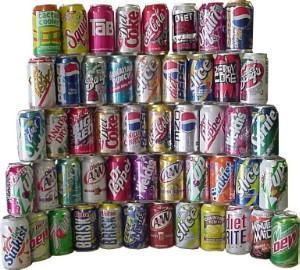 New York Mayor Michael Bloomberg ignited a firestorm on this blog and elsewhere for his proposal to ban all but 16 ounce containers of sodas, energy drinks, sweetened iced teas and other sugary beverages in restaurants, movie theaters, sports arenas and food carts (they will still be available in supermarkets and bodegas). Wondering why he’d make a proposal that could not possibly help him politically and was likely to draw the ire of Big Soda, I did a little research. Here is the abbreviated case against cola:
- Weight Increase. Using high fructose corn syrup as a sweetener, a 20 oz can of soda contains the equivalent of anywhere between 17 (Coke) and 20 (Pepsi) teaspoons of sugar per can. Drinking just one regular 20 oz soda per day adds about 225 calories to our daily diet or about 7000 calories a month which, without concomitant exercise, translates to 2 pounds a month of 24 pounds of weight gain per year. And that’s just one per day. Many American teens average 3 per day. Since 1978, the consumption of sugary drinks has skyrocketed. Back then we soda was a puny 3% of our caloric intake and milk chimed in at 8%. The numbers are now almost reversed with soda making up about 7% of our daily caloric intake. If you’re interested, here’s the sugar content of many popular drinks.
- Insulin Blaster. Americans with type 2 diabetes has tripled from 6.6 million in 1980 to 20.8 million today. Why? One major reason might be soda. Researchers at Brigham and Women’s Hospital in Boston and Harvard Medical School analyzed the data from the Nurses Heath Study II. They concluded that “women who drank one or more sugary drinks a day gained more weight and were 83% more likely to develop type 2 diabetes than those who imbibed less than once a month.” The researchers also noted that, “rapidly absorbed carbohydrates like high fructose corn syrup put more strain on insulin-producing cells than other foods.” When sugar enters the bloodstream quickly, the pancreas has to secrete large amounts of insulin for the body to process it. Some scientists believe that the unceasing demands that a soda habit places on the pancreas may ultimately leave it unable to keep up with the body’s need for insulin.
- Tooth Dissolver. Soda is a known enemy of tooth enamel due to its high acidity. In a series of studies, Professor Poonam Jain, director of community dentistry at Southern Illinois University School of Dental Medicine, tested various sodas by measuring their pH–an indication of acidity. Battery acid, for example, has a pH of 1; water scores a 7. Jain found that sugar-sweetened sodas came in at about 2.5, while diet sodas scored 3.2. “The acidity can dissolve the mineral content of the enamel, making the teeth weaker, more sensitive, and more susceptible to decay,” he contends.
- Bone Dissolver. In the 1950s we drank 3 cups of milk for every one cup of soda. Now those numbers are reversed and we’ve seen an increase in osteoporosis as a result. In 2000, research at the Harvard School of Public Health disclosed that brittle bones were a particular problem for soda drinking adolescent girls. The study of 460 high schoolers found that girls who drank carbonated soft drinks were three times as likely to break their arms and legs as those who consumed other drinks. And the problem continues into advanced age. Grace Wyshak, PhD, a biostatistician and the study’s lead researcher, believes something in colas is interfering with the body’s ability to use calcium. This is a big problem, she says, “because girls will be more susceptible to fractures later in life if they don’t acquire optimal bone mass in adolescence.”
- Caffeine Addiction. Many in the medical community consider caffeine a psychoactive substance. In fact, almost 90% of Americans consume it daily. It reacts with the central nervous system and stimulates the body. The caffeine in just one can of sugar-free diet soda ” is associated with a 48 percent increased risk of ‘metabolic syndrome,’ which plays a major role in heart disease and diabetes.”
Diet soda fairs no better with new research indicating its sugar less formula may well trigger food cravings and thus leads to weigh gain. It contains equal or more amounts of acid and caffeine and provides little in the way of nutritional benefits.
Bloomberg’s proposal then makes sense both from a public health perspective and from the point of view of logic. Why then all the resistance? Are we like spoiled children refusing to “eat our vegetables” because we just don’t want to eat them? Are we afraid of government depriving us of the products we take for granted and really, really like? Or are we just rationalizing our own indulgences under the banner of freedom of choice?
Basically, are we endowed by our Creator with the unalienable right to harm ourselves for our own pleasure and increase the costs to our fellows and our future generations as they are forced to pay for all the bad health choices we make?
What do you think?
Sources: Prevention Magazine; ABC News; Healthy Resources
~Mark Esposito, Guest Blogger
Bob,Esq:
It’s like arguing with an eight-year-old. A bright one maybe, but an eight year old nonetheless. If you want to refute my points go ahead. I ‘m not doing your research for you — especially on bedrock principles of Kant that even you can’t argue with. Any study of Kant’s morality begins with the principles I espoused. You don’t like the conclusion or the logic prove it. And if you can do it without the gratuitous insults so much the better, but, given past history, that’s likely not possible.
By the way, Kant does himself in — philosophically speaking — by premising all of his morality (the “highest good”) on the assumption of the immortality of the human soul and the belief in an anthropomorphic God who cares about the human condition. Precious little proof of either, so I wouldn’t get too worked up about this 18th Century Prussian moralizer or his take on the problems of today.
Sorry, Bob, after all these years there is still no substitute for thinking for yourself.
Mark, Mark, Mark,
You are a slippery little tyrant aren’t you? You were asked what Kant would argue; not to speculate without citation of any sort as to what you think he would argue.
Mespo: “Here we have a classic objective depiction of the consumer’s reckless self-indulgence contrasted to Bloomberg’s politically self-sacrificing act motivated by concern for the public’s well-being. In essence, a duty to the public good as Kant might say.”
How might he say that Mark? How would Kant make the nexus between a duty towards self (duty of virtue) and a juridical duty towards the public? Please, cite me chapter and verse my friend.
Mespo: “Kant never advocated a right to any size soda at the theater and certainly wouldn’t have appreciated a selfish motive as the basis for the “right” to soda in general. Bloomberg would precisely fulfill Kant’s moral imperative as it appears he is acting against self for the good of the public out of sense of duty.”
That’s right Mark; only because your representation of Kant’s schematic of duties is fraudulent and misleading; thus the reason I ask you cite chapter and verse. You have completely glossed over the distinction between juridical duties and ethical duties and the reason the latter cannot be coerced by external legislation.
Did Kant advocate that coercion, in the form of juridical duties, can be used as a hindrance to freedom of choice?
Oh please show us Mark; pretty please.
Mespo: “Come to think of it, Kant makes my case very well. Thanks for the support.”
Show me.
Leander — 90 year old feet means your circulation is impaired.
When the doctor pushes on your skin of your foot, if you’re white, you will see that the “pinkness” leaves, where the finger pushed. Then if it does not quickly get pink again, your circulation in your feet is impaired.
Check it out.
Stay healthy — we need you!
thanks, Bob, Esq., that was wonderful,. Although, I struggled with Kant’s concept of duty, maybe because I read him through the lens of recent German history. Should I give him another chance? Now that we have Kindle, it should be much more easy to find the passage that haunts me. It’s ages ago, but it blocked me, to look further beyond aesthetics, and I never really understood how it fits into his larger “architecture”.
But come to think of it, it may be at the center of my recent troubles with a younger sister; at least the wisdom, she once tried to teach me, against which my whole being rebels. The passage and her wisdom are related. It may well be the ultimate source, long ago as it is by now.
I know a guy who was 18 years old when he became one of the youngsters who liberated Dachau at the end of WWII. His job was to go out into the surrounding area, bring in ordinary civilians, and force them to tour the camp as it was being liberated/dismantled. He was given free cigarettes (yes, soldiers got free cigarettes!) at the time, all he wanted. He was living in a condition of high anxiety, fear, loneliness, perpetual astonishment, loathing, nausea, he was in rotten condition, but those around him were of course worse off. He came back from the War wounded, got his education under the GI Bill and became a therapist.
He also became a smoker and an alcoholic.
He was a very good person, also very smart, etc. etc. He did not live a day that he did not harm himself, and he never stopped being a casualty of the war He was NOT A JEW and not in combat; no bullets ever flew at him. He was aware of what he was doing and he did the best he could. He died of cancer of the liver — that is, slowly he killed himself. He could not do otherwise. I think of him every time I take someone’s keys away because they’re not fit to drive safely; I think of him every time a smoker I know gets a bad diagnosis.
If we want to charge people who harm themselves more for their health care coverage, where will the buck stop? My friend Jack: who should have paid for his cancer treatments — the Nazis who set up Dachau so that his young psyche could get its fatal beat-down on foreign soil 50 years before his death?
Research the correlation between obesity in middle aged women and incest; who pays for the dialysis treatments — “daddies dearest”?
Research the correlation between adult-onset diabetes and depression, and cross-hatch in domestic violence; who pays for the insulin — the wife-beater?
Research the correlation between overproduction of cortisol and half the chronic diseases men get after age 40; who pays for all the NSAIDS, etc., the abusive bosses, hostile workplace managers, etc.?
We can’t get anything right by caring LESS about what has gone wrong so far, and simply piling on a bunch of rules and regulations that basically drain off effort and money preventing something that doesn’t really matter. If we can’t put our legislative zeal into doing something significant to really decrease the harm that comes to ordinary folks, trying to do right, then we should hang it up and go home, not go crazy over cool-aide.
always worried about the “90 year old feet” issue.
Explain, I once heard something similar, even if only half. I think I was about 17/18 years too. I don’t understand what 90 year old feet could be?
Bob,Esq.:
“By all means, elaborate sir.
What did Kant argue? Your statement lulls the reader into thinking that Kant would agree with you somehow.”
**********************************
Probably because he would. You well know that Kant interpreted all actions through the motive of the actor. If the actor’s motives were pure so was the action. Thus if a person acted outed of vested interest the act was non-moral — thus of no moral consequence at all. On the other hand a person acting out of “good will” was acting morally.
Here we have a classic objective depiction of the consumer’s reckless self-indulgence contrasted to Bloomberg’s politically self-sacrificing act motivated by concern for the public’s well-being. In essence, a duty to the public good as Kant might say.
Kant never advocated a right to any size soda at the theater and certainly wouldn’t have appreciated a selfish motive as the basis for the “right” to soda in general. Bloomberg would precisely fulfill Kant’s moral imperative as it appears he is acting against self for the good of the public out of sense of duty.
Come to think of it, Kant makes my case very well. Thanks for the support.
I’ve been addicted to smoking/chewing tobacco…very difficult habit to kick, but after 8 or 9 years of using it really only took me about 6 months to be over the peak and on the downslope.
Soda/Red Bull is far more difficult to kick. I stopped a couple years back for about 9 months, I wasn’t anywhere near getting to the peak and onto the downslope. One red bull vodka at a party kick started my soda habit all back and I’m still on it.
They always tell us Marijuana is the gateway drug. Considering that almost everyone of us has sugar/caffeine by the time we’re 5 or 6, I’d say they’re just a bit off. I had a Mt. Dew at 6 and have been hooked since. I try to be good though, no more than a can a day and only with food in the afternoon. I also try to make up for it by eating healthier.
How many people do you know that make the ‘joke’ about being addicted to caffeine? Almost everyone I work with does.
Where the societal problem comes in is that all of us who have health insurance are tied to each other. We all come out of the same pool and the more expensive the pool the more expensive our buy in (health ins. premiums.) What you put in your body affects me monetarily.
If you have car insurance and you know that the vast majority of people in your pool are driving dangerously causing a huge increase in accidents, therefore driving up your premiums…how are you going to feel about it? Wouldn’t you want the company to surcharge those causing rate increases…especially when they could be more in control?
I think its time that Health Insurance companies are able to charge more premium where more premium is due. If you’re 100 pounds overweight and slugging down 3 bottles of Coke a day, maybe you should be required to carry more of the financial burden because you’re partially responsible for it.
Now it’s gettin’ good!
Bob Esq:
you truly have a great mind.
“Kant made no argument in favor of self-indulgence that harms others.”
Mark,
By all means, elaborate sir.
What did Kant argue? Your statement lulls the reader into thinking that Kant would agree with you somehow.
Do tell!
P.S.
“Any action is right if it can coexist with everyone’s freedom in accordance with a universal law, or if on its maxim the freedom of choice of each can coexist with everyone’s freedom in accordance with a universal law.”
Don’t worry, you’ll still have to explain how Kant categorized a duty towards self as a public duty.
That’ll be fun.
Bob,Esq:
You left off the most important part of the question, too. Kant made no argument in favor of self-indulgence that harms others.
Bonnie:
““are we endowed by our Creator with the unalienable right to harm ourselves for our own pleasure”
Yes.”
**********************
You left out the rest of the question. But even without it, it’s a curious answer.
Yep…
“are we endowed by our Creator with the unalienable right to harm ourselves for our own pleasure”
Mark,
I find it astounding how someone as well read as you could be so clueless as to the parameters of the social compact.
No, on second thought; you have proven yourself to be a control freak in the past so it’s likely that your ignorance is by design.
In any case…from the other thread on Bloomberg…
“All duties are either duties of right, that is, juridical duties (officia juris), or duties of virtue, that is, ethical duties (officia virtutis s. ethica). Juridical duties are such as may be promulgated by external legislation; ethical duties are those for which such legislation is not possible. The reason why the latter cannot be properly made the subject of external legislation is because they relate to an end or final purpose, which is itself, at the same time, embraced in these duties, and which it is a duty for the individual to have as such. But no external legislation can cause any one to adopt a particular intention, or to propose to himself a certain purpose; for this depends upon an internal condition or act of the mind itself.” — Immanuel Kant
Deciding whether or not to ingest an excessive amount of sugary drinks is a duty of virtue; a duty that cannot be enforced by external legislation under any metaphysics of morals.
To promulgate a duty of virtue as if it were a juridical duty, or duty of right, is tyranny per se. Thus referring to Bloomberg as an immoral tyrant is not hyperbole.
“are we endowed by our Creator with the unalienable right to harm ourselves for our own pleasure”
Yes.
CLH, I went off the stuff cold turkey twice: the first time, when I broke my toe (dropped an old reel-to-reel Wollensack tape recorder on it!) in the dorm and they wouldn’t let me go to the infirmary until morning. The doctor there said to me, “What drugs do you take?” I didn’t know caffeine WAS a drug (1967). I said I didn’t take any. He pushed on my foot: “LOOK, you’re an 18 year old woman with 90 year old feet!” I was shocked. When we figured out it was the caffeine, he said, “STOP TAKING IT,” so I did.
I had no idea there was something called “withdrawal.” OMG OMG. I wa so depressed I wanted to throw myself out a window, and so tired I felt like crawling into a cave to sleep forever. Nobody knew what was wrong.
That summer I got back on caffeine to work two waitress jobs, but I tried to be moderate, always worried about the “90 year old feet” issue.
Then I quit cold turkey when I was pregnant, but I was prepared for how it would feel, so I didn’t go nuts. Now I limit myself to 400-600 mg. per day, but only 600 when I’m driving somewhere.
I would tell you this, though. A really good homeopath once told me that coffee had 17 things in it besides caffeine that were bad for my body; he would rather see me popping the pills than drinking the coffee! I don’t like the taste, the trouble or the expense of coffee anyway. But you might want to check on that; there could be a way you could get the JOLT without the damage.
Malisha, that was epic. I am addicted to caffeine myself, but that’s mainly because I use it in lieu of ADHD drugs. I don’t take the pills though, I just drink coffee. I use some milk to help neutralize the acidity, and provide some balance. But I drink a lot of coffee, two or three pots a day, mainly because I work at night at the plant my firm assigned me to doing software and process automation stuff that can only be done when a production line is down. That, and the “little black pill” (it was actually blue) that the military used to give me for staying awake on long assignments, and the caffeine gum, probably didn’t help my addiction any. I won’t take caffeine in any form other than coffee now. My stomach probably looks like a cheese grater at this point.
Leander, for most of my life, when I tell “my stories” in person, the people I am telling my stories TO usually laugh — unless the stories are designed at that time to promote something other than laughter. It is my special gift from nature, divine providence, or the Jew Genes, whatever, but it works. At times, the angrier I get when I slide into “rant mode,” the more I can get the listener(s) to laugh, and in the end, I’m in a circulation-stirring rage and they’re out of breath laughing.
Why that particular pharmacist story never felt funny to ME was probably the fact that I was helpless in a different way from the helplessness I usually exploit in story-telling. See, now that I analyze my story-telling, my helplessness (as I narrate) is founded on the other person in the story (judge, ex-husband, public official who is obviously protecting a pedophile or something, priest or rabbi, Nazi, liar, fool, etc.) deserving to be shown up as an idiot by the way they mistreated me or discounted what I said. This guy just came out of nowhere to refuse to sell me a commodity that was available IN HIS STORE on the open market — for an unknown reason. Perhaps because of the pile-up of misfortunes I was dealing with at the particular moment, I regarded him as particularly malevolent. I don’t know. It was so unexpected. I go to the drug store with money in my hand and the guy won’t sell me caffeine. (Nowadays the drug stores are ALL just like grocery stores so nobody pays attention to what you’re buying; they ring it up; then, it was a small drug store and I had seen him probably 20 times himself and he and I exchanged smiles and friendly greetings as I made my purchases.)
It pleases me that BigFatMike (probably) and you got a laugh out of this story.
About the paternalistic signs, you know, there is something involved there but I have never really thought about it. Recently I took a bus to New York City from Washington DC and right before we got into NY, I saw a huge billboard that said: TRAFFIC IS GOD’S WAY OF TELLING YOU TO SLOW DOWN.
Previously, when I had seen the signs in which Bob Dole spoke about erectile dysfunction, I thought someone had put it up as a gag, but it was real!
I have now seen signs in the subway saying: “YOU CAN LIVE A GOOD LIFE WITHOUT GOD.”
We’re all trying to tell each other something. Sometimes (as with Bob Dole), I don’t want to hear it!
Leander, I thought about that pharmacist a bit earlier this evening, because you asked what he was really trying to do. Imagine if he had said that night, “Miss, you buy an awful lot of caffeine. I worry about you.” And then we could have had the talk.
I would have said, “How kind of you. This very small matter, and you have noticed this about me, and you express your concern. How kind. But you don’t want to know why I do it.”
He could have said, “No, really, I do. It’s not busy tonight. Tell me what’s going on.”
I would have said, “Well, I stupidly married a guy who seemed perfectly all right but I had never met his family. They were immigrants, and we got married before they came over here. Then I was trapped in this situation where he had to show off to his family that he had a rich wife who could buy them whatever they wanted, but he had miscalculated. I was not even rich! So he became very angry and his family and he acted like I had defrauded him to make him marry me and it turned into the world’s worst divorce. I have run out of money for lawyers and have to litigate on my own. It turns out that in Virginia, you can litigate custody over and over again because you can always go to court claiming a “change of circumstances” — I even got sued one time because my ex claimed that the baby was constipated and I couldn’t prove to the court that the child had shat in a timely manner. Meanwhile I work so much overtime I’m always tired. So I depend on caffeine to keep going.”
I would have made it sound funny for him. I might have recited a little rap I had written called “the Constipational Rap.” It went:
Constipation, man, it’s a crime, it’s a sin,
It’s the bitterest condition you could find yourself IN,
’cause it ties your guts in knots when you sit, and you sit,
and you realize, you DON’T GIVE A SHIT!
So he would have come around. He would have sold me the caffeine. His drug store had a little soda fountain type counter, too; he could have bought me a cup of decaff!
We would have parted friends. I wouldn’t have wished ill upon him all these years.
Besides, this and your later comment reminded me of an article by a German director now leading the most well known theater in Vienna, a wonderful woman.
Was, I just noticed, maybe she feels like going back to the province, she has done that before.