By Mark Esposito, Guest Blogger
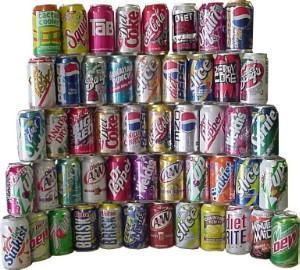 New York Mayor Michael Bloomberg ignited a firestorm on this blog and elsewhere for his proposal to ban all but 16 ounce containers of sodas, energy drinks, sweetened iced teas and other sugary beverages in restaurants, movie theaters, sports arenas and food carts (they will still be available in supermarkets and bodegas). Wondering why he’d make a proposal that could not possibly help him politically and was likely to draw the ire of Big Soda, I did a little research. Here is the abbreviated case against cola:
- Weight Increase. Using high fructose corn syrup as a sweetener, a 20 oz can of soda contains the equivalent of anywhere between 17 (Coke) and 20 (Pepsi) teaspoons of sugar per can. Drinking just one regular 20 oz soda per day adds about 225 calories to our daily diet or about 7000 calories a month which, without concomitant exercise, translates to 2 pounds a month of 24 pounds of weight gain per year. And that’s just one per day. Many American teens average 3 per day. Since 1978, the consumption of sugary drinks has skyrocketed. Back then we soda was a puny 3% of our caloric intake and milk chimed in at 8%. The numbers are now almost reversed with soda making up about 7% of our daily caloric intake. If you’re interested, here’s the sugar content of many popular drinks.
- Insulin Blaster. Americans with type 2 diabetes has tripled from 6.6 million in 1980 to 20.8 million today. Why? One major reason might be soda. Researchers at Brigham and Women’s Hospital in Boston and Harvard Medical School analyzed the data from the Nurses Heath Study II. They concluded that “women who drank one or more sugary drinks a day gained more weight and were 83% more likely to develop type 2 diabetes than those who imbibed less than once a month.” The researchers also noted that, “rapidly absorbed carbohydrates like high fructose corn syrup put more strain on insulin-producing cells than other foods.” When sugar enters the bloodstream quickly, the pancreas has to secrete large amounts of insulin for the body to process it. Some scientists believe that the unceasing demands that a soda habit places on the pancreas may ultimately leave it unable to keep up with the body’s need for insulin.
- Tooth Dissolver. Soda is a known enemy of tooth enamel due to its high acidity. In a series of studies, Professor Poonam Jain, director of community dentistry at Southern Illinois University School of Dental Medicine, tested various sodas by measuring their pH–an indication of acidity. Battery acid, for example, has a pH of 1; water scores a 7. Jain found that sugar-sweetened sodas came in at about 2.5, while diet sodas scored 3.2. “The acidity can dissolve the mineral content of the enamel, making the teeth weaker, more sensitive, and more susceptible to decay,” he contends.
- Bone Dissolver. In the 1950s we drank 3 cups of milk for every one cup of soda. Now those numbers are reversed and we’ve seen an increase in osteoporosis as a result. In 2000, research at the Harvard School of Public Health disclosed that brittle bones were a particular problem for soda drinking adolescent girls. The study of 460 high schoolers found that girls who drank carbonated soft drinks were three times as likely to break their arms and legs as those who consumed other drinks. And the problem continues into advanced age. Grace Wyshak, PhD, a biostatistician and the study’s lead researcher, believes something in colas is interfering with the body’s ability to use calcium. This is a big problem, she says, “because girls will be more susceptible to fractures later in life if they don’t acquire optimal bone mass in adolescence.”
- Caffeine Addiction. Many in the medical community consider caffeine a psychoactive substance. In fact, almost 90% of Americans consume it daily. It reacts with the central nervous system and stimulates the body. The caffeine in just one can of sugar-free diet soda ” is associated with a 48 percent increased risk of ‘metabolic syndrome,’ which plays a major role in heart disease and diabetes.”
Diet soda fairs no better with new research indicating its sugar less formula may well trigger food cravings and thus leads to weigh gain. It contains equal or more amounts of acid and caffeine and provides little in the way of nutritional benefits.
Bloomberg’s proposal then makes sense both from a public health perspective and from the point of view of logic. Why then all the resistance? Are we like spoiled children refusing to “eat our vegetables” because we just don’t want to eat them? Are we afraid of government depriving us of the products we take for granted and really, really like? Or are we just rationalizing our own indulgences under the banner of freedom of choice?
Basically, are we endowed by our Creator with the unalienable right to harm ourselves for our own pleasure and increase the costs to our fellows and our future generations as they are forced to pay for all the bad health choices we make?
What do you think?
Sources: Prevention Magazine; ABC News; Healthy Resources
~Mark Esposito, Guest Blogger
Bob Esq:
I dont know enough about Kant except to say that I am not sure you can use the quote mespo used from the Stanford Encyclopedia without a broader understanding of Kants philosophy.
But I do know that there is much disagreement among experts as to what exactly Kant did mean. I have recently read that there are a handful of people who like Objectivism who wonder if Rand may not have misunderstood what Kant was saying. I wish I could remember where I read that, I imagine they have been “excommunicated” by now.
I am strictly supporting you from a limited government perspective. If these people are being supported by tax payer dollars and their health care costs rise due to their obesity, we the ultimate supplier of their livelihood are impacted. Do we have a right to determine how our money is used? But does the state have a right to do it for us? To take away a big gulp in our name? If my added burden is a $1.50/year for a persons health care due to his consumption of a big gulp a day, then I say have at it. But if it really effects me, say a couple of thousand a year surtax for the added cost due to big gulps then mespo has a point because at that point I am effected by the person’s actions.
But my consumption of meat may have an adverse impact on my health so maybe it all equals out in the wash and the best way to regulate the consumption of meat and big gulps is to let private insurance companies charge a premium for those who engage in risky behaviour or eat foods which cause health problems.
Bron:
Given Bob’s measured replies:
“In his unfettered support of policies that attack our civil liberties, Mark has consistently demonstrated that he does not believe in freedom or the rule of law. He believes first and foremost in assuaging his own anxieties and insecurities; he believes in total control.”
and
“Mark, you don’t believe in freedom or rule of law; all you believe in is control.
You’re a disgrace to the document you swore to defend.”
I thought I’d reply in kind. Just a little tweaking of our little friend for holding his breath until we agree with him on Kant. He’s looking a little blue to me.
Personally I’m still waiting with my breath held to see how he gets out of the trap he so proudly stepped into. I don’t think saying “I didn’t say it” is getting him anywhere with the literate crowd.
Malisha:
Right you are that you are the master of your own reply. Just a tip, you have no obligation to play Bob’s little game … or anyone else’s for that matter. They can ask all the stupid research questions they want to ask. You get to reply however you choose and the readers get to judge ’em.
And Bron,
Thank you for your support.
Bron,
I’m in the middle of replying to Pbh; something you’ll no doubt be interested in.
Meanwhile, I’m curious why you posted that cite from an introduction to logic book.
Also, please correct me if I’m wrong about Mespo deliberately misrepresenting my argument as I discussed above.
I find this slightly ironic, since Kant studies religion as a human (non-empirical) endeavor. The worship of Jefferson is such a human endeavor too. I wonder what he considers his biggest achievement beyond his huge influence in the Declaration of Independence? Driving the Indians out of Virginia, or having kids with his slave, or State rights? I honestly wonder. Or did I misunderstand?
I somehow doubt your position can be supported by Kant, in spite of the fact that he surely is a man of his time. One thing you are obviously not aware of, is how complex his work is. Even more complex is the reception of his work, over the centuries. And Kant is not easy to read in German, it’s much easier in English, I can tell you.
You are trying to do something rather fascinating. Since you don’t like the argument Bob uses, you think, while admitting to being no expert in Kant, you can simply twist something together that serves your own position. Bob’s argument feels much more based in Kant than yours. And I know Kant a little.
I would call that misusing Kant, if you ask me for your own advantage, and it was you that started the strife.
I do not know what dots you connect, it feels it may well be simple facts and numbers, e.g. that the Metaphysics of Morals–notice it is a plural–were written after the French revolution, and thus he must be a hardcore protestant ideologue, if he chooses such a topic during Enlightenment, in spite of the facts that he is an important part of it. Nothing is further from the truth, although I admittedly suspected him to be that at earlier point is life too, and I surely struggled with religion and/as power for longer now.
Consider that he was raised in Pietist circles:
It is obvious that you at no point responded to Bob’s questions, and strictly I wonder, why you feel you should discuss Kant with him, something in which you have apparently have no interest at all.
Strictly I am not interested in your longer strife, but I think I got a vague idea, what its cause could be, during this discussion.
Bob Esq:
“And, as Aristotle intimates, a man who, if you give him time, may be well able to detect a fallacy
by the light of nature, may be placed at a practical disadvantage
by not being able to do it quickly enough : here the systematic study
of fallacies will help him. Nor is it only in arguing with others that
he may reap some benefit from the study ; it will accrue to him also
in the conduct of solitary thinking.
3 It was however chiefly with
reference to the conduct of debate that Aristotle discussed the subject.
It was from this point of view that he observed, that a man
might be suspected of incompetence, who only found fault with an
opponent’s argument, and could not show in what the fault consisted.
4 It may be added, that so far as fallacies are referable to
recognized types, it is a great abridgement of criticism to be able to
name the types, and refer a particular fallacy to one of them.
These are practical considerations ; and it would probably be
found that importance has been attached to the doctrine of fallacies
chiefly by those who have viewed Logic as an instrument for reasoning.
But an use may be found in the doctrine, of a more theoretical
kind. It is intellectually unsatisfactory to see that an argument is faulty, and not to see precisely why. We desire for ourselves,
no less than we owe to our opponent, an analysis of the error.
Otherwise, and if we can only see it, and not see through it, the mind,
as Aristotle expresses it, is entangled, and unable to proceed.”
Introduction to Logic HWB Joseph
Gene,
Exactly why do you hold me to such a higher standard than Mespo? You claim I engaged in the fallacy of composition and I clarified my remarks to satisfy you.
Mespo outright lied about and misrepresented my argument and you said nothing.
What kind of propaganda is that Gene?
You know, I can’t follow the argument and have no time or desire to study the various philosophers and sources cited, but really, how does anyone on any thread presume to pose a question and demand that another person contributing to the thread provide a satisfactory (to the poser of the question) answer? I experienced that on the Zimmerman thread and it was bizarre. “Answer me this, Malisha, or else shut up.” Huh?
If I’m in your employ I guess you can do that; if I’m in your class and you’re the teacher I’m sure you can do that. If we’re contributing to a public discussion forum, where does THAT come from?
Huh? I’m just sayin… (and you don’t have to answer this)
mespo:
I am sort of curious how you conclude Bob thinks there is no duty to society? I have never seen him even imply that position in all the years I have read his musings.
Bob is for freedom certainly but tempered by respect for others and the rule of law. Which of course is the duty we owe to society; respect for others and submission to an objective rule of law.
Bloomberg’s proposal is wrong but it is right in the context of a super state which is in control of many aspects of our life. The necessity to remain healthy as a duty to the state is only made necessary because of that control.
Mespo,
Not all are capable of understanding what they do not understand….. I have a pretty good ideal of what the “rules against perpetuities ” means….. Try explaining that… Which in my opinion was another grab by the court of chancery to redistribute wealth to the state which was run by the church…..
AY:
Agreed. It’s a question of wanting to understand what the other man says versus the other man wanting you to say what they understand — and can attack.
Mespo,
You’ve figured out that even when people hear you….. They may not be able to understand…..
Bob,Esq:
pbh said: “At your prompting, I am jumping into the middle of this discussion ….Which is to say, that by making his small point he is raising the issue, which is not a bad thing.”
********************
Careful what you ask for Bob. Even your “cavalry” thinks your juridical duties argument is full of … er … has some holes in it.
Bob,
“Deciding whether or not to ingest an excessive amount of sugary drinks is a duty of virtue; a duty that cannot be enforced by external legislation under any metaphysics of morals.”
At your prompting, I am jumping into the middle of this discussion and should probably read all of the comments following the above before dropping my two cents on it, but, it seems rather obvious to me that if the Lord Mayor wants me to buy my preferred 64 ounces of sugared soda in eight ounce increments, then I will oblige him by doing so.
The notion that I will drink less because the container is smaller might have some “weight”, but I doubt that restrictions on container size will discourage those who wish to indulge.
There is, however, a larger question here. Should the government be required to stand helplessy by while predatory bottlers target the nation’s youth with life threatening concoctions? Has the body politic no defense whatsoever against those who would use highly sophisticated marketing tactics to target innocent populations for their profit? thereby making of them slaves of Coca Cola? When it is known that these companies are creating generations of victims of heart disease and cancer, what can the people do to prevent this?
Is there no role for the government of the people to prevent this health hazard? What really is the bright line between the FDA approving a new drug for general use or regulating the proper conditions for the distribution of meat and the restriction of foods that are known to be harmful if over-consumed?
Let us not ignore the power of the corn lobby to perpetuate its subsidies and its control over the very grain itself. Not to mention their obfuscation of the manifest difference between cane suger and corn starch, which, by itself is largely the cause of the general health crisis. Is there really nothing that can be done? Can we not at least relieve ourselves of the “obligation” to support these vultures with our taxes?
Bloomberg is responding to all of these questions in his own parochial way, I suppose. And some might well question whether or not he fully appreciates the broad array of issues in play. But, that said, I’ll bet you dollars to sugared doughnuts that he knows the difference between the corn lobby and Brazil nuts. Which is to say, that by making his small point he is raising the issue, which is not a bad thing.
pbh
mespo,
At this point I’m so confused by laughter I think my last name is Heisenberg, but it would be Bohr-ish to assert certainty of the matter. I’m Henkin it might be time for a Belnap, perhaps a dip in the Boole or a Turing of the countryside MacLanes to enjoy the night air. Just so I can clear my head and Novikov Watts Watts before my confusion becomes complete and I fall into a Garfunkel.
Gene H:
Enough Plato-ing around with our friend Bob. And no criticizing our philosopher friend as a Lao Tzu oaf. He-gel you soon enough for the slight. See insults above. Schopenhouer that he has a thick hide. Hume do you think you are?
Sorry Bob but everybody can read exactly what you said and shouting that you didn’t say it or raising all manner of distractions about Jefferson or something or other … well you look a little worse than silly. Admit it. You’re caught in your own foolishness and I’m not inclined to let you out. Go back to your Kant and read instead of spitting venom.
Mespo: “No, Bob, you said I didn’t understand Kant when I explained his moral philosophy was premised on the existence of God and an immortal human soul.”
No Mark.
I asked you to cite me chapter and verse from the books by Kant that you allegedly read to support your grand professor like assertions such as
“Any study of Kant’s morality begins with the principles I espoused.”
Now, had I asked you to cite me a few quotes to support your assertions regarding Jefferson’s thinking, you would never have posted something as general and off topic from an online encyclopedia as “Thomas Jefferson was a social contractarian.” No, you would have quoted him on a point in question because you’ve actually read the works of Jefferson.
Likewise, I asked you specific questions regarding Kant’s Metaphysics of Morals as they relate to the social compact and laws such as the one Bloomberg has proposed.
Instead of answering the questions I posed, demonstrating the knowledge of the subject you professed to have, you paraphrase a portion of an online encyclopedia of philosophy and then falsely stated that I disputed the truth of the matter asserted.
I did no such thing; for doing so would be tantamount to claiming that Jefferson never read Locke, Aristotle or Cicero.
The fact is Mark you couldn’t answer my specific questions regarding Kant’s Metaphysics of Morals because you have no working knowledge of it. Thus your continued attempts to rephrase the issue in broad general and completely off topic terms that you do understand.
Your crap considered:
“you have to admit that either you’re right or the acknowledged expert on Kant in the Stanford Encyclopedia of Philosophy (not Wiki as you assert) I cited is right.”
Simply put, you’re a liar. I never disputed the quote; see social contractarian comment above.
“That Kant premises his philosophy of morals on the existence of an anthropomorphic God and the immortality of the human soul is beyond dispute and amply demonstrates the sand-like basis of his philosophy. Kant calls them “moral certainties.” That you ignore this fact when caught in your ignorance of it explains a lot”
Once again you’re a liar. I never disputed your general comment, I simply stated that it was non-responsive as it completely ignored my specific questions regarding Kant’s philosophy. The only one “caught in ignorance’ here is you.
“For you, Kant’s philosophy means individual freedom unfettered by responsibility to society as a whole.”
How in the name of Christ could that possibly be true? Why struggle with the distinction between duties owed toward self and duties owed towards others and duties that society can enforce against the individual if I’m allegedly disregarding society as a whole. Why read Kant??
Jesus H. Christ.
“Finally, and like I said, I’ll let the readers decide if anything you say about Kant is correct or if you are a mere poser.”
Mark, it’s one thing to throw a tantrum because someone disrespected Jefferson; that was disgusting enough for you. But the crap you tried to pull here is simply inexcusable. Yeah; who’s the poser here?
Ah, the never ending challenge of understanding the particulars of our own epistemic capacities.