By Mark Esposito, Guest Blogger
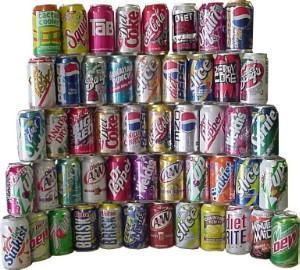 New York Mayor Michael Bloomberg ignited a firestorm on this blog and elsewhere for his proposal to ban all but 16 ounce containers of sodas, energy drinks, sweetened iced teas and other sugary beverages in restaurants, movie theaters, sports arenas and food carts (they will still be available in supermarkets and bodegas). Wondering why he’d make a proposal that could not possibly help him politically and was likely to draw the ire of Big Soda, I did a little research. Here is the abbreviated case against cola:
- Weight Increase. Using high fructose corn syrup as a sweetener, a 20 oz can of soda contains the equivalent of anywhere between 17 (Coke) and 20 (Pepsi) teaspoons of sugar per can. Drinking just one regular 20 oz soda per day adds about 225 calories to our daily diet or about 7000 calories a month which, without concomitant exercise, translates to 2 pounds a month of 24 pounds of weight gain per year. And that’s just one per day. Many American teens average 3 per day. Since 1978, the consumption of sugary drinks has skyrocketed. Back then we soda was a puny 3% of our caloric intake and milk chimed in at 8%. The numbers are now almost reversed with soda making up about 7% of our daily caloric intake. If you’re interested, here’s the sugar content of many popular drinks.
- Insulin Blaster. Americans with type 2 diabetes has tripled from 6.6 million in 1980 to 20.8 million today. Why? One major reason might be soda. Researchers at Brigham and Women’s Hospital in Boston and Harvard Medical School analyzed the data from the Nurses Heath Study II. They concluded that “women who drank one or more sugary drinks a day gained more weight and were 83% more likely to develop type 2 diabetes than those who imbibed less than once a month.” The researchers also noted that, “rapidly absorbed carbohydrates like high fructose corn syrup put more strain on insulin-producing cells than other foods.” When sugar enters the bloodstream quickly, the pancreas has to secrete large amounts of insulin for the body to process it. Some scientists believe that the unceasing demands that a soda habit places on the pancreas may ultimately leave it unable to keep up with the body’s need for insulin.
- Tooth Dissolver. Soda is a known enemy of tooth enamel due to its high acidity. In a series of studies, Professor Poonam Jain, director of community dentistry at Southern Illinois University School of Dental Medicine, tested various sodas by measuring their pH–an indication of acidity. Battery acid, for example, has a pH of 1; water scores a 7. Jain found that sugar-sweetened sodas came in at about 2.5, while diet sodas scored 3.2. “The acidity can dissolve the mineral content of the enamel, making the teeth weaker, more sensitive, and more susceptible to decay,” he contends.
- Bone Dissolver. In the 1950s we drank 3 cups of milk for every one cup of soda. Now those numbers are reversed and we’ve seen an increase in osteoporosis as a result. In 2000, research at the Harvard School of Public Health disclosed that brittle bones were a particular problem for soda drinking adolescent girls. The study of 460 high schoolers found that girls who drank carbonated soft drinks were three times as likely to break their arms and legs as those who consumed other drinks. And the problem continues into advanced age. Grace Wyshak, PhD, a biostatistician and the study’s lead researcher, believes something in colas is interfering with the body’s ability to use calcium. This is a big problem, she says, “because girls will be more susceptible to fractures later in life if they don’t acquire optimal bone mass in adolescence.”
- Caffeine Addiction. Many in the medical community consider caffeine a psychoactive substance. In fact, almost 90% of Americans consume it daily. It reacts with the central nervous system and stimulates the body. The caffeine in just one can of sugar-free diet soda ” is associated with a 48 percent increased risk of ‘metabolic syndrome,’ which plays a major role in heart disease and diabetes.”
Diet soda fairs no better with new research indicating its sugar less formula may well trigger food cravings and thus leads to weigh gain. It contains equal or more amounts of acid and caffeine and provides little in the way of nutritional benefits.
Bloomberg’s proposal then makes sense both from a public health perspective and from the point of view of logic. Why then all the resistance? Are we like spoiled children refusing to “eat our vegetables” because we just don’t want to eat them? Are we afraid of government depriving us of the products we take for granted and really, really like? Or are we just rationalizing our own indulgences under the banner of freedom of choice?
Basically, are we endowed by our Creator with the unalienable right to harm ourselves for our own pleasure and increase the costs to our fellows and our future generations as they are forced to pay for all the bad health choices we make?
What do you think?
Sources: Prevention Magazine; ABC News; Healthy Resources
~Mark Esposito, Guest Blogger
Pbh: “It is entirely reasonable to assert that the container itself is a hazard.”
Yes, just what the world needs; more plastic in the landfills and oceans.
Plastic is forever; people aren’t.
Pbh: “Yes, Bloomberg’s cup ban may be a Pyrrhic response in terms of personal liberties to the problem of public health, but you have to ask what else can he do? Corral the corn lobby?”
Pbh,
Yes, I did confess ignorance as to what you were implying about the corn industry and taxation and yes I did find your post quite informative, but I fail to see how it relates to a discussion regarding the limits of governmental power regarding promulgating an individual’s duties of virtue as if they were duties of right.
If corn syrup is a harmful product then the FDA has the power, and the duty, to do something about it. It doesn’t raise any issue of whether the government is exercising powers prohibited under the social compact.
If you feel the FDA is not carrying out its duty to protect the public from a potentially harmful product, e.g. how about Rumsfeld’s nutra-sweet, it does not follow that you can simply shift the duty to the individual with this:
Pbh: “If we believe in the social compact, then it is our duty to be as healthy as possible. It is also our duty to support healthy activities for others.”
So Landrew, we are all of the body? Who are you kidding? Failure to distinguish duties toward the self from duties owed towards society in a juridical sense renders the social compact illusory. The care of one’s body is not a duty owed to the state and the notion that it could ever be so has been seen as ludicrous for centuries.
John Locke: “We have already proved that the care of souls does not belong to the magistrate. Not a magisterial care, I mean (if I may so call it), which consists in prescribing by laws and compelling by punishments. But a charitable care, which consists in teaching, admonishing, and persuading, cannot be denied unto any man. The care, therefore, of every man’s soul belongs unto himself and is to be left unto himself. But what if he neglect the care of his soul? I answer: What if he neglect the care of his health or of his estate, which things are nearlier related to the government of the magistrate than the other? Will the magistrate provide by an express law that such a one shall not become poor or sick? Laws provide, as much as is possible, that the goods and health of subjects be not injured by the fraud and violence of others; they do not guard them from the negligence or ill-husbandry of the possessors themselves. No man can be forced to be rich or healthful whether he will or no. Nay, God Himself will not save men against their wills.”
Pbh, what you’re arguing for, i.e the underlying principle, is the same one that Jmsiegel was arguing for when he was arguing that the State has the power to protect an unborn fetus from the moment of conception. He argued that the State could exercise power over the individual’s inalienable right of self ownership, vis duties of virtue, during the first trimester. Without that 3 month window before duties toward self become duties towards a potential other, the social compact disappears. The distinction between tyranny and usurpation, alienable and inalienable rights, is lost along with the social compact. and the individual becomes property of the state. They become “of the body” Landrew (Star Trek reference I hope you got).
Now, does the law against big cups for sugary drinks render the social compact illusory. In a word, no. But the reasoning behind it, which you summarized as:
Pbh: “If we believe in the social compact, then it is our duty to be as healthy as possible. It is also our duty to support healthy activities for others.”
MUST be rejected entirely.
Bob,
“Promulgating laws that turn an individual’s duties of virtue (duties owed to the self) into duties owed toward the state, when no direct trespass or negligence threatens the public as in the vaccination scenario above, is tyranny per se because it is the exercise of power over the individual’s inalienable right of self ownership.”
Bloomberg is not telling you that you cannot consume 64 ounces of corn starch infused drinks at every meal. He is merely telling the purveyors of these concoctions that they can only sell their wares in less health hazardous containers.
It is entirely reasonable to assert that the container itself is a hazard.
As for “no direct tresspass” threatening the public, putting aside the obvious repasse on the cost of health care, etc., here is yet another reason for reinstituting the draft: You can’t make a militia out of fat slobs, never mind an army, a navy or an air force.
pbh
Bob,
“The most famous twisting of this logic can be found in J. Holmes decision in “Buck v. Bell” where he equated compulsory vaccinations to compulsory sterilizations; i.e. if the state has the right to vaccinate people for the public good, then it must also have the right to sterilize imbeciles for the public good.”
The unfortunate flaw in the great jurist’s analysis is that while communicable diseases are by definition communicable, imbecility is not.
pbh
Bob,
“Per the cane sugar v. corn syrup debate I’m afraid I haven’t done enough research to render an opinion at this point and I’m not clear on the ‘obligation to support them with our taxes’.”
I’m going to take this statement as the starting point for my response as this is the moment when you admit that you don’t know what you are talking about.
I could refer you to a number of books and articles on the subject, but perhaps the most condensed, readable and popular is “The Omnivore’s Dilemma” by Michael Pollan. In this book Pollan describes the reach of the corn lobby in rather stark terms. The first major point that he makes is that the corn lobby owns the reproductive ability of corn itself. Which is to say that the corn that is sold commercially to corn “farmers” is unable to produce viable seed. You cannot take a husk of modern corn, throw it in the ground and expect to have another corn stalk grow in the next season. Instead, the people who run the conglomerate corn company “farms” must buy new seed every year from the people who employ the corn lobby.
The second point is that the only reason this makes sense is that modern corn is an amazingly successful product. This is because it can contain a higher level of stored energy than any other grain. One might reasonably wonder who is really in control here, the people who consume corn in virtually every product, food and other, that they use or ingest, or the corn itself which has crowded out virtually every other competitor for land, water and air.
The third point is that we produce multiples of the actual amount of corn that we would ordinarily consume. As a result, we have had to find new uses for corn, such as feeding it to cattle, which can’t digest it without antibiotics which, of course, further poison the immoble herd. This also adds to the methane gas that the cattle expel, which is doing greater harm to the environment than all the cars in the U.S.
We have also discovered that corn starch makes a passable substitute for cane sugar. The only problem with corn “sugar” is that it carries so many more calories than cane sugar.
And on and on. How do our taxes support this madness? Are you kidding? Talk about a third rail of American politics. Go ahead, try to cut “farm” subsidies and see what happens. What was originally intended as support for dustbowl impoverished small farms has become a permanent distortion of everything in American commerce, controlled by a handfull of self interested Corporations recently empowered to spend taxpayer subsidies in order to defeat any candidate who does not look like one who will absolutley toe the line.
Did you know that modern corn is forever traceable? That if you feed it to a cow which you later slaughter for your table, your blood will transfer DNA traces of that same corn to your own cells which traces will never leave your body? And which modern forensics can rediscover years after your death?
Yes, Bloomberg’s cup ban may be a Pyrrhic response in terms of personal liberties to the problem of public health, but you have to ask what else can he do? Corral the corn lobby? Not gonna happen. And maybe this cup ban is not much different from the Mandate, but again, given the circumstances, what are you gonna do?
And what disappoints me most is that this entire set of issues goes undiscussed. You would rather wallow in cant than observe the larger context. You are not alone in this.
pbh
Bron
“Bloomberg’s proposal is wrong but it is right in the context of a super state which is in control of many aspects of our life. The necessity to remain healthy as a duty to the state is only made necessary because of that control.”
I was stumped on this question once before in the comments section of the “Mandate” thread. I asserted that support of public health went to the basic duty of citizenship, but I couldn’t connect it to the Constitution. Your statement provides me with a chance to revisit the issue.
Not to indulge in penumbras, but it seems fairly obvious that, just as privacy is an unstated Constitutional right, so is personal health an unstated Constitutional duty.
A body politic that is chronically ill, that perpetually acts as a drain on the economic life of a nation, that prevents individuals from acting by virtue of their need for constant outside support, is not a community that can expect to last long.
If the Constitution presupposes an educated electorate, does it not also presuppose one that is healthy? Could the Constitution even have been written by people whose health was forever marginal, forever dependent, and forever in doubt?
So, no, it is not that state control requires us to be healthy. It is simple self interest. If we believe in the social compact, then it is our duty to be as healthy as possible. It is also our duty to support healthy activities for others.
Which is not to say that unhealthy, self destructive activities do not continue to be an individual right. But, that should never be the goal.
pbh
Bron,
“But my consumption of meat may have an adverse impact on my health so maybe it all equals out in the wash and the best way to regulate the consumption of meat and big gulps is to let private insurance companies charge a premium for those who engage in risky behaviour or eat foods which cause health problems.”
Actually, what happens is that the quarter to quarter profit obssessed private insurance companies simply redline behaviors that are considered too risk prone. The basic principle of insurance underwriting (as opposed to the basic principle of insurance, ie: the law of large numbers) is risk selection. Underwriters who fail to separate very likely losses from unlikely losses don’t last long in the field.
Left to their own devices, private insurers simply refuse to insure obese people, easily identified b/t/w.
And, that is pretty much the situation we have today given that those who cannot afford individual insurance and who do not have employers who provide it tend to be obese. Mind you, I don’t have any stats ready at hand for this last assertion, but I challenge anyone to disprove it.
pbh
mespo727272, I got the message, I better stay out once you jump in to discuss Kant with Bob, but it feels you should only use one of the two tools either demean him by denigrating Kant, or summon an authority on Kant. One says Kant is worthless and so is anybody that is interested in him, the other the opposite, Kant is worthwhile, but only if interpreted by a registered authority of your choice.
Perhaps you and Bob can read Professor Rohlf together. He knows Kant a lot.
This is too commonplace to be offending, but close to it. I choose my “authorities” myself. I winced at the allusion anyway, if that in any way satisfies you.
********************************************************************************
I know what you mean, Malisha. But this felt different to me. The questions–if you mean the same ones–weren’t meant to stir the debate into a completely different direction. This seems to be larger strife where the subject ultimately does not matter, whose sources beyond the apparent political oppositions are completely mysterious to me
In our case there was the preconception everybody that does not believe that Trayvon Martin really endangered George Zimmerman’s life must be following two specific black leaders or must have have thought that e.g. O.J. Simpson was innocent too. Simplistic as that. Neat little boxes.
Leander22:
Yeah, let me second Bob: Thanks. He does need help on Kant even from someone like yourself who admittedly “know(s) Kant a little.” Perhaps you and Bob can read Professor Rohlf together. He knows Kant a lot.
That’s enough fun for one thread. I’m out.
Gene K:
“You cudgel them with the facts of what your position is/was to remove any power their misrepresentation might have.”
***************************
Right you are, Gene. Problem is that Bob hasn’t got any facts unless Kant reveals them to him. I suggest the readers read what Bob said. I cited the words verbatim. Bob’s whining won’t change his statements and that’s why he is in such a desperate search for approval. Kind of amusing when you’re on the other side.
Bob,
Do you really need me to come to your defense?
It’s not as if you two haven’t had some variation of this argument before and you’ve always handled it well enough.
Let’s consider this in martial terms.
You are both well armed and professionals at argumentation.
I pointed out a subtle but minor flaw in your combat. A misplace footing if you will.
If mespo is using straw men, that is neither subtle nor minor. It is the equivalent of bringing a club into an unarmed sparring match.
You should be able to address the tactic. I know you can. I’ve seen you do it before.
What is the best defense against a straw man?
You cudgel them with the facts of what your position is/was to remove any power their misrepresentation might have.
Gene,
My problem with Mespo is that he intentionally misrepresented my argument and then claimed victory based on said argument I never made.
Hmm.. did someone else besides me see it?
leander22: “You [Mespo] are trying to do something rather fascinating. Since you don’t like the argument Bob uses, you think, while admitting to being no expert in Kant, you can simply twist something together that serves your own position. Bob’s argument feels much more based in Kant than yours. And I know Kant a little.”
Apparently so. Seems to me that misrepresenting someone’s argument and holding it against him is a tad more dishonest than a fallacy of composition based on a lack of clarification.
Mike Spindell:
this has everything to do with philosophy and goes to Bloomberg’s state of mind.
If you are willing to be a tyrannt in small things then you will be willing in larger things. It goes to the nature of the individual.
Here is a good article philosophically speeking which addresses altruism I am sure you will love it:
Robin Hoods Don’t Smash Shop Windows
Shouldn’t supposedly selfish conservatives—not idealistic liberals—be producing nasty mobs?
By JOHN AGRESTO
The myth persists that the left—while it might often be naive and unrealistic—still has its heart in the right place. Those who want to redistribute income are the gallant Robin Hoods of contemporary life. “Occupiers” and socialists clearly have real concern for the downtrodden and poor. Those who demand social justice are more sincere, more compassionate, more spiritual, and surely more Christian than the rest of us.
Fairness and decency are the heart of the left; materialism and selfishness the hallmarks of the bourgeoisie, Wall Street, the tea party crowd, and, well, ordinary Americans in general. So we are told.
Of course, every now and then this narrative unravels. An Occupy crowd goes on a rampage smashing the windows of small shopkeepers, stealing, destroying private and public property, throwing bricks at the police, and threatening the lives of ordinary citizens. In social-democratic Europe, gangs of idealistic youths take over universities, riot, and firebomb their way to achieve what they characterize as justice.
“Outliers,” we are told. “Fringe elements,” the media strains to label them. And, yes, so they are. While these men and women are clearly left in their outlook and desires, they’re not your ordinary center-left liberals. Nancy Pelosi may praise their passion, but she doesn’t have it in her heart to join them.
Yet two things seem as obvious as they are curious. Movements and associations of most ordinary Americans seem to lack the elements of destruction and hate we see on the fringes of the ideological left. And there is something about the left that seems to regularly produce a violent, even nihilistic fringe.
Shouldn’t it be exactly opposite—shouldn’t selfish conservatives be the ones to produce nasty mobs and shouldn’t the left, with its vaunted idealism and love of neighbor, produce on its margins those even more idealistic and more loving?
But we’ve all seen the images on television or even, perhaps, been to rallies and demonstrations of the left. And all too often what we see looks like the opposite of compassion and virtue.
Maybe we have the narrative exactly backward. Perhaps it’s the more centrist and even conservative side, with its constant call for individual liberty, for self-reliance, for individual responsibility and hard work, that results in stronger virtue and greater neighborliness—and the left, with its constant striving for equal results, greater redistribution and more entitlements, that results in a weakened moral sense and an erosion of moral character. Perhaps the more we tell people that their problems are always someone else’s fault, that “others” are robbing them of all they are “entitled” to, the more we corrode peoples’ character.
What happens in those supposedly more virtuous places where welfare is “owed” and the expectation that others are morally bound to take care of you has become the rule? Exactly what we see in socialist Europe as it declines, or the street gangs of Britain, or the worst elements of the organized entitlement crowd in the United States: When things do not go well, it’s other people’s fault-the successful, the wealthy, the “speculators,” the powerful, the Jews, selfish and racist Americans, whomever. They all have too much money, aren’t sharing, are unjust, are keeping you down.
And since it’s their fault that you are poorer than they, and their fault that you are not “fairly” being taken care of, we have not only the politics of resentment and envy but the politics of anger and hatred. And it’s hard to make anger and hate into virtues, no matter how much the left likes to vaunt its superior morals.
Whether it be Marxism, Christian Socialism, Rawlsian fairness or legalized economic equality, these movements’ followers come to the same conclusion. We on the bottom are owed, and you supposedly above us owe.
Historically, all the various ideologies that struggle to equalize humans and redistribute their possessions eventually find that they can only do it through force, often the most oppressive totalitarian force. This is not an accident but has a real and unshakable philosophic base.
Those who wish to have what others have worked for, those who think there should be “preferential options” for their kind and those they favor, those who believe that they are entitled to have their desires satisfied, can only see other people as means to their ends and not as ends in themselves.
They can only see that others have what they do not, that others possess what they want, and they command the redistribution of these things to themselves. That principle-that others must give when they demand, that others are means and not ends-is the father not of generosity of spirit, not of love of neighbor, but rather of the worst immorality.
Mr. Agresto is the former president of St. John’s College in Santa Fe., N.M., and the American University of Iraq. He is the author of “Mugged by Reality: The Liberation of Iraq and the Failure of Good Intentions” (Encounter, 2007).
A version of this article appeared June 2, 2012, on page A15 in the U.S. edition of The Wall Street Journal, with the headline: Robin Hoods Don’t Smash Shop Windows.
Leaving aside the inane philosophical discussions which have as much relevance here as the amount of angels that can dance on the head of a pin, the question at hand remains is Bloomberg’s proposed ban one that is justified by either facts, an avoidance of societal harm and/or an emergent need?
Factually, I see much supposition, but little proof that this ban will impact significantly on health problems. The same is true for whether this avoids societal harm by reducing the amount the society (in this case the City of New York) has to pay for health care. It’s true one can make that generalization, but there is no direct chain of evidence that it is actually true that the health care costs to society will be affected significantly. Finally, where is the urgent need for such a ban? The threat is one of supposition and conventionally wise assumption, but little substantive evidence.
My personal belief is that government should put as few restrictions upon individuals as possible. When it comes to businesses there is a greater need to intervene because businesses exist solely to make profit and as such will do just about anything to succeed, including practices harmful to the public and its’ general welfare. This is neither a moral, nor ethical statement, because given their sole purpose of profit, businesses are and should be, amoral, like the scorpion that is their nature.
While I never drink sugared soda and only in extremely rare instances drink diet soda because of their possible health risks, I feel this proposed regulation is an overreach of governmental authority, since there is far from a factual basis that proves the need for such a regulation. Philosophical discussions of governmental duties are indeed sometimes relevant. However, in specific instances such as this sticking with the facts of the case alone should decide whether or not this regulation is a good idea. Personally, I believe that Bloomberg is a petty tyrant willing to beat up on easy targets, while on the large City issues he is merely representing himself and those of his class.
Schopenhouer that he has a thick hide
Schopenhauer does not spell like that, but interesting you mention him.
Bob,
I’m not holding you to a higher standard. Also, as far as mespo’s representation of your argument, exactly how many time have I seen you two argue over Kant? About a million. I figured you had anything from that end covered. I pointed out what I pointed out because it was an overstatement that went to him directly and beyond the scope of your disagreement over Kant and beyond your usual jabs at each other. Had the shoe been on the other foot, I’d have pointed out what mespo said as an overstatement – which is different than a straw man to clear and why I stated the matter as I did. If you think I’m playing favorites though, I’m surprised, Bob. You know me better than that. I hold you both in high regard.
Bron,
I see what you’re saying but keep in mind that the state’s lack of proper health care planning is not the individual’s emergency.
mespo:
I dont think you can argue with Bob about Kant. I know you know a great deal and have read extensively but Kant is a tricky subject and there is a good deal of foundational knowledge for a good understanding. As I said above even the experts disagree so your peer reviewed posting in the SEP [which I use all the time as well] may or may not have the correct interpretation even though it is peer reviewed.
I also know you and Bob look at things through 2 somewhat different philosophical perspectives. Bob is obviously a Kantian and you have Aristotelian leanings not that the 2 are totally incompatible but they do make for interesting reading when 2 intellectual “bulls” go at in the pasture of ideas over a “heifer”.
I tend to support Bob for my well known opposition to government intrusion into the lives of citizens. But I understand how you could say the drinking of soda is a societal issue.
leander22,
Thank you kindly for relieving me of the gaslighting that’s been going on here. I truly appreciate it.
Pbh,
You raised a lot of issues in your post so I’ll attempt to address them all one by one.
Pbh: “The notion that I will drink less because the container is smaller might have some “weight”, but I doubt that restrictions on container size will discourage those who wish to indulge.”
This raises the issue rational basis test; i.e. whether a certain governmental action taken is a reasonable means to a legitimate governmental end. Does the government have a legitimate interest in telling its citizens what sized cups they may drink out of? No, but, I hear you say, large sugary drinks are fattening and we are suffering an obesity epidemic so the public has an interest in limiting the size of sugary drink cups. Let’s assume the state has a legitimate interest in compelling citizens to remain svelte; is there a rational relation between restricting drink cup size and preventing obesity? Perhaps Jon Stewart said it best: “It combines the draconian government overreach people love with the probable lack of results they expect!”
Moving right along…
Pbh: “There is, however, a larger question here. Should the government be required to stand [helplessly] by while predatory bottlers target the nation’s youth with life threatening concoctions?”
Wow Pbh, hyperbole much?
Pbh: “Has the body politic no defense whatsoever against those who would use highly sophisticated marketing tactics to target innocent populations for their profit? thereby making of them slaves of Coca Cola? When it is known that these companies are creating generations of victims of heart disease and cancer, what can the people do to prevent this?”
You know, when I read this I think of the Reverend’s wife in the Simpsons hysterically screaming “Won’t someone think of the children!” First, per the highly sophisticated marketing techniques targeting innocent populations, may I remind you that commercial speech does not get the same protections as regular speech. Thus restricting or prohibiting particular marketing techniques would in fact be legislation rationally related to a legitimate governmental interest of protecting the young. Claiming and or insinuating that the product itself is primary cause of obesity, heart disease and cancer is per se fallacious. I’m told by my cardiologist that I need to lose weight; yet I never drink sugary drinks. Go figure.
Pbh: “Is there no role for the government of the people to prevent this health hazard?”
Is it a health hazard or are you being a tad alarmist and hyper focused on one particular product? That is to say, are you sure you’re being rational or might you have hopped on a bandwagon before inspecting it first?
Pbh: “What really is the bright line between the FDA approving a new drug for general use or regulating the proper conditions for the distribution of meat and the restriction of foods that are known to be harmful if over-consumed?”
Now we’re getting into it. What’s the difference between protecting the public from a harmful product and a product that can become harmful if over-consumed? What if I told you that the former relates to a possible juridical duty while the latter refers to an ethical duty? The reason Kant comes in handy in analyzing this dilemma is, to paraphrase a line from one of your favorite playwrights, “it brings the murky problem into specific relief.” Thank you Aaron Sorkin. LOL
There are times when a duty towards self can become a duty owed to the public. Consider compulsory vaccinations. At first blush, it is clear that the individual owes a duty to himself to keep himself healthy and take appropriate measures to prevent himself from coming down with disease. And because certain disease are COMMUNICABLE and preventable by a simple vaccination, it follows that an individual also owes a duty to the public not to become a carrier and mass spreader of disease upon the body politic. Yet the only enforcement mechanism we have currently for compulsory vaccination is barring the unvaccinated from schools. When parents refuse to vaccinate their children they are putting other children (outside of school assuming a home schooling situation) at risk. While the individual, on behalf of himself or his child, makes a choice not to get vaccinated, he’s also making a choice to put others at risk through what can at the very least be deemed negligence. To argue that the individual has the freedom to make such a choice, on behalf of himself, his child AND THE BODY POLITIC, in the name of avoiding possible adverse reaction risks so mathematically small as to be negligible is farfetched indeed. But that’s only because the action in question is directly related to a duty of care owed towards the public. The most famous twisting of this logic can be found in J. Holmes decision in “Buck v. Bell” where he equated compulsory vaccinations to compulsory sterilizations; i.e. if the state has the right to vaccinate people for the public good, then it must also have the right to sterilize imbeciles for the public good.
Promulgating laws that turn an individual’s duties of virtue (duties owed to the self) into duties owed toward the state, when no direct trespass or negligence threatens the public as in the vaccination scenario above, is tyranny per se because it is the exercise of power over the individual’s inalienable right of self ownership. By depriving the individual of the choices he makes which defines his being you deprive him of everything that makes human existence meaningful. Virtue disappears in a puff of tyranny and all life is to be lived in servitude of the greater good of the state; like that country we beat in the 1980 Olympic Hockey competition.
Pbh: “Let us not ignore the power of the corn lobby to perpetuate its subsidies and its control over the very grain itself. Not to mention their obfuscation of the manifest difference between cane suger and corn starch, which, by itself is largely the cause of the general health crisis. Is there really nothing that can be done? Can we not at least relieve ourselves of the “obligation” to support these vultures with our taxes?”
Per the cane sugar v. corn syrup debate I’m afraid I haven’t done enough research to render an opinion at this point and I’m not clear on the ‘obligation to support them with our taxes’.
Pbh: “Bloomberg is responding to all of these questions in his own parochial way, I suppose. And some might well question whether or not he fully appreciates the broad array of issues in play. But, that said, I’ll bet you dollars to sugared doughnuts that he knows the difference between the corn lobby and Brazil nuts. Which is to say, that by making his small point he is raising the issue, which is not a bad thing.”
Raising the issue is never a problem; ignoring the limits of the social compact and introducing a line of reasoning that could be used to dictate every choice a citizen makes by redefining it as duties owed toward the state does what? Turns Citizens of the United States into Property of the United States.