By Mark Esposito, Guest Blogger
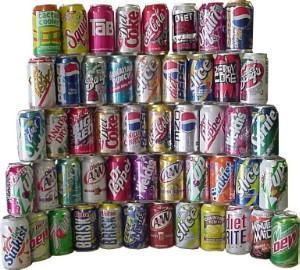 New York Mayor Michael Bloomberg ignited a firestorm on this blog and elsewhere for his proposal to ban all but 16 ounce containers of sodas, energy drinks, sweetened iced teas and other sugary beverages in restaurants, movie theaters, sports arenas and food carts (they will still be available in supermarkets and bodegas). Wondering why he’d make a proposal that could not possibly help him politically and was likely to draw the ire of Big Soda, I did a little research. Here is the abbreviated case against cola:
- Weight Increase. Using high fructose corn syrup as a sweetener, a 20 oz can of soda contains the equivalent of anywhere between 17 (Coke) and 20 (Pepsi) teaspoons of sugar per can. Drinking just one regular 20 oz soda per day adds about 225 calories to our daily diet or about 7000 calories a month which, without concomitant exercise, translates to 2 pounds a month of 24 pounds of weight gain per year. And that’s just one per day. Many American teens average 3 per day. Since 1978, the consumption of sugary drinks has skyrocketed. Back then we soda was a puny 3% of our caloric intake and milk chimed in at 8%. The numbers are now almost reversed with soda making up about 7% of our daily caloric intake. If you’re interested, here’s the sugar content of many popular drinks.
- Insulin Blaster. Americans with type 2 diabetes has tripled from 6.6 million in 1980 to 20.8 million today. Why? One major reason might be soda. Researchers at Brigham and Women’s Hospital in Boston and Harvard Medical School analyzed the data from the Nurses Heath Study II. They concluded that “women who drank one or more sugary drinks a day gained more weight and were 83% more likely to develop type 2 diabetes than those who imbibed less than once a month.” The researchers also noted that, “rapidly absorbed carbohydrates like high fructose corn syrup put more strain on insulin-producing cells than other foods.” When sugar enters the bloodstream quickly, the pancreas has to secrete large amounts of insulin for the body to process it. Some scientists believe that the unceasing demands that a soda habit places on the pancreas may ultimately leave it unable to keep up with the body’s need for insulin.
- Tooth Dissolver. Soda is a known enemy of tooth enamel due to its high acidity. In a series of studies, Professor Poonam Jain, director of community dentistry at Southern Illinois University School of Dental Medicine, tested various sodas by measuring their pH–an indication of acidity. Battery acid, for example, has a pH of 1; water scores a 7. Jain found that sugar-sweetened sodas came in at about 2.5, while diet sodas scored 3.2. “The acidity can dissolve the mineral content of the enamel, making the teeth weaker, more sensitive, and more susceptible to decay,” he contends.
- Bone Dissolver. In the 1950s we drank 3 cups of milk for every one cup of soda. Now those numbers are reversed and we’ve seen an increase in osteoporosis as a result. In 2000, research at the Harvard School of Public Health disclosed that brittle bones were a particular problem for soda drinking adolescent girls. The study of 460 high schoolers found that girls who drank carbonated soft drinks were three times as likely to break their arms and legs as those who consumed other drinks. And the problem continues into advanced age. Grace Wyshak, PhD, a biostatistician and the study’s lead researcher, believes something in colas is interfering with the body’s ability to use calcium. This is a big problem, she says, “because girls will be more susceptible to fractures later in life if they don’t acquire optimal bone mass in adolescence.”
- Caffeine Addiction. Many in the medical community consider caffeine a psychoactive substance. In fact, almost 90% of Americans consume it daily. It reacts with the central nervous system and stimulates the body. The caffeine in just one can of sugar-free diet soda ” is associated with a 48 percent increased risk of ‘metabolic syndrome,’ which plays a major role in heart disease and diabetes.”
Diet soda fairs no better with new research indicating its sugar less formula may well trigger food cravings and thus leads to weigh gain. It contains equal or more amounts of acid and caffeine and provides little in the way of nutritional benefits.
Bloomberg’s proposal then makes sense both from a public health perspective and from the point of view of logic. Why then all the resistance? Are we like spoiled children refusing to “eat our vegetables” because we just don’t want to eat them? Are we afraid of government depriving us of the products we take for granted and really, really like? Or are we just rationalizing our own indulgences under the banner of freedom of choice?
Basically, are we endowed by our Creator with the unalienable right to harm ourselves for our own pleasure and increase the costs to our fellows and our future generations as they are forced to pay for all the bad health choices we make?
What do you think?
Sources: Prevention Magazine; ABC News; Healthy Resources
~Mark Esposito, Guest Blogger
Pbh: “Let me repeat: Bloomberg is not telling anyone that they cannot consume 64 ounces of caffinated, corn starch suffused drinks at each and every meal. He is merely telling McDonalds’ that they can’t sell all 64 ounces of it in a single container.
Get it? No restriction on personal (pre Santa Clara) liberty. None. Nada.”
Now let me repeat:
Now, does the law against big cups for sugary drinks render the social compact illusory. In a word, no. But the reasoning behind it, which you summarized as:
Pbh: “If we believe in the social compact, then it is our duty to be as healthy as possible. It is also our duty to support healthy activities for others.”
MUST be rejected entirely.
Pbh: “Here again you reveal a lack of historical perspective, perhaps even knowledge. Coca Cola, maybe you have heard, once contained Cocaine. That was the original secret formula. Until it was outlawed.”
Actually Pbh, it wasn’t outlawed, it was removed about a decade before the Harrison Tax Act. But I must say your sugar and caffeine hysteria is reminiscent of the hysteria surrounding cocaine; such as the claim that cocaine use would turn normal peaceful Negroes into rapists of white women and murderers.
Would you like to discuss the real reasons behind drug laws next?
Pbh: “As for whether or not modern sodas, bereft of cocaine but well supplied with caffine and corn starch, served in gargantuan containers, constitute “fraud and violence”, one need only reflect on the history of cigarettes which were once peddeled as “healthy” to understand how soulless and indifferent the average corporation is to the health of the republic.”
That’s a questionable analogy Pbh. Unlike tobacco smoke, there is nothing inherently unhealthy about sugar and caffeine. When I was admitted to the hospital last fall, I was not asked “when was the last time you had Big Gulp Mountain Dew.” I was asked when was the last time I smoked cigarettes. Apparently, the fact that I stopped smoking in the late 1980’s was still relevant.
And if your problem is with the indifference of the average corporation, why are you harassing the individual?
Pbh: “There is a tryanny being executed over the population by these entities which prefer to force feed unhealthy products rather than behave responsibly. These entities marshal the extraordianry resources of data mining, profiling, and target marketing to corral human subjects in much the same way that they herd other living things for profit. And these entities are allowed to claim the rights of living citizens to defend their right to do so.”
“Force feed?” Really? I too have a problem or two with data mining and direct advertising based on snooping on my internet activities; but to claim or even imply that the purveyors of sugar and caffeine are the prime movers behind this type of marketing is disingenuous. No one is forcing me to drink anything.
Pbh: “Meanwhile, sitting comfortably in Kant’s armchair, you claim that these dominant, undying, profit seeking entities have no rights “other than those specific fictions created by the legislature. It is all well and good to argue abstracts. I would throw Aristotle up against Kant any day of the week.”
The law is abstract as well Pbh; imagine if it had to be specific for every imaginable scenario. And what does Kant have to do with this?
Pbh: “But we are currently beset by much greater challenges than any such dialogue. You think that your arguments cannot be distorted? The 14th Amendment was co-opted by corporate “persons” in 1879.”
I’m well aware of the existence of corporate person-hood Pete, but the rights granted to corporations by the legislature bears absolutely no relevance to the rights NECESSARILY retained by individuals within the social compact.
You want to take on the corporations, I’m all for keeping them in line and on a playing field commensurate with their permissible existence in society. But if you’re gonna attempt to redefine the parameters of the social compact simply because you’re running out of ideas to take on the corporations directly… well, I can’t tolerate that.
pbh51:
That’s ok. I enjoy your little flights of philosophical fancy with Bob, Esq., our resident Kant expert and bomb thrower. I’ll just worship you and your typing skills from afar. LOL.
pbh:
“There is a tyranny being executed over the population by these entities which prefer to force feed unhealthy products rather than behave responsibly.”
I see no fast food or food production corporation forcing me to buy a big gulp or a package of HoHo’s.
There is such a thing as free will. People do have a choice in whether or not they will purchase a big gulp or a bottle of Snapple Ice Tea.
Do you believe in free will?
pbh:
“In my view, a menu offering only a choice between an 18 oz, a 32 oz, and a 64 oz serving of caffinated, corn starch infused, largely addictive soda water is “the fraud and violence of others” from which the law should attempt to protect the less informed members of the society to which I belong.”
Dont you think the reason they are sold is because that is what people are asking for? The thing with business, because of rational self interest, is that they give the consumer what it wants. A good business will create a need for the consumer.
The pendulum is slowly starting to swing back to the direction of good health and smaller portions. Bloomberg probably recognizes this and is really jumping on the band wagon rather than promoting something radical. He should have used his position as mayor to enlighten the masses rather than trying to implement a draconian prohibition.
By the way Locke would disagree with you as he was saying the law cannot protect you from yourself.
When I buy a “medium” coke at Wendy’s, I dont drink the entire amount because it is too big.
One big change to control obesity would be for parents to quit telling children to finish all the food on their plate. If they dont eat it put it the fridge and save it for later. Bloomberg should pass a law requiring parents to cease and desist. 🙂
mespo
“I starting to like you.”
Me not likely to reciprocate.
By I recollection, other person was astonishingly rude in all of we prior correspondence.
Me think apology would be a good start. Me think not likely.
Me think other person imagine that because me have fun with Bob other person can jump in and splash around.
No. Not at all. Not welcome.
pbh
Bob,
“How about prioritizing our concerns? How about not wasting precious governmental time and resources on attempting to live other peoples lives for them and focusing on helping the people who could benefit from society better fulfilling its existing obligations of protection.”
Let me repeat: Bloomberg is not telling anyone that they cannot consume 64 ounces of caffinated, corn starch suffused drinks at each and every meal. He is merely telling McDonalds’ that they can’t sell all 64 ounces of it in a single container.
Get it? No restriction on personal (pre Santa Clara) liberty. None. Nada.
Bob, I know how you love to argue. You are good at it, and you are most interesting and entertaining all the while. But, in this instance, I think you have painted yourself into a corner from which you Kant escape. At least not until the paint dries.
pbh
Bob,
“Soda pop existed long before the advent of corn syrup. Further, to state that soda is so addictive as to consist as a “fraud and violence” to others, ventures beyond hyperbole and enters the realm of hysterics.”
Here again you reveal a lack of historical perspective, perhaps even knowledge. Coca Cola, maybe you have heard, once contained Cocaine. That was the original secret formula. Until it was outlawed.
As for whether or not modern sodas, bereft of cocaine but well supplied with caffine and corn starch, served in gargantuan containers, constitute “fraud and violence”, one need only reflect on the history of cigarettes which were once peddeled as “healthy” to understand how soulless and indifferent the average corporation is to the health of the republic.
There is a tryanny being executed over the population by these entities which prefer to force feed unhealthy products rather than behave responsibly. These entities marshal the extraordianry resources of data mining, profiling, and target marketing to corral human subjects in much the same way that they herd other living things for profit. And these entities are allowed to claim the rights of living citizens to defend their right to do so.
Meanwhile, sitting comfortably in Kant’s armchair, you claim that these dominant, undying, profit seeking entities have no rights “other than those specific fictions created by the legislature.”
It is all well and good to argue abstracts. I would throw Aristotle up against Kant any day of the week.
But we are currently beset by much greater challenges than any such dialogue. You think that your arguments cannot be distorted? The 14th Amendment was co-opted by corporate “persons” in 1879.
You and Mr. Kant can shout at the referee all you like. Meanwhile, there’s something happening out there, Mr. Stone, and you don’t [seem to] know what it is.
pbh
Anon,
“I often feel dumber after having read through the comments here.”
Take two aspirin and call me in the morning.
pbh
“are we endowed by our Creator with the unalienable right to harm ourselves for our own pleasure and increase the costs to our fellows and our future generations as they are forced to pay for all the bad health choices we make?”
Society, like the individual, must work within the bounds and restrictions of the social compact to achieve its ends. Society’s lack of planning is not the individual’s emergency.
If money is all it takes to warrant voiding the social compact then how much would I have to pay or contribute to society before I can own the right to kill a man?
Pbh: “In my view, what both you and Turley fail to understand, at least insofar as these questions suggest, is that this is not just a question of the liberty to “harm ourselves”. This is much more significantly a question of the liberty to use the leverage of good government to defend ourselves.”
Pbh any tyrant can dream up new ways to improve the State; it’s the social compact that protects us citizens from being used as property of the United States in the process. I’m sorry if that bothers you.
Pbh: “All through this thread I read endless nonsense about personal liberty, duties of virtue, etc. Meanwhile, some corporate thug is mugging all of you. And paying the judge with the money it took straight from your own pocket to throw you in the clink if you complain.”
Nonsense about personal liberty? Am I babbling here?
pbh51:
“All through this thread I read endless nonsense about personal liberty, duties of virtue, etc. Meanwhile, some corporate thug is mugging all of you. And paying the judge with the money it took straight from your own pocket to throw you in the clink if you complain.”
*********************
I starting to like you.
Pbh: “In my view, a menu offering only a choice between an 18 oz, a 32 oz, and a 64 oz serving of caffinated, corn starch infused, largely addictive soda water is “the fraud and violence of others” from which the law should attempt to protect the less informed members of the society to which I belong.”
Pbh,
Soda pop existed long before the advent of corn syrup. Further, to state that soda is so addictive as to consist as a “fraud and violence” to others, ventures beyond hyperbole and enters the realm of hysterics. That we are even discussing this is proof positive that you don’t consider promulgating duties of virtue as if they were duties of right to be out of bounds. Your duty as a good citizen is to work within boundaries of the system that preserves the possibility of any government at all; the social compact.
How about prioritizing our concerns? How about not wasting precious governmental time and resources on attempting to live other peoples lives for them and focusing on helping the people who could benefit from society better fulfilling its existing obligations of protection. Instead of thinking of ways to meddle with people’s consumption beverages, perhaps we can think of new policies and methods of rescuing kidnap and slave trade victims. Just off the top of my head, do you think the NSA should be charged with teh duty of working with local law enforcement to locate missing persons while the police are still holding hope that the victim is still alive? Etc.
Pbh: And, in your zeal to defend the interests of this unnatural, abstract individual, you fail to convey or express any concern about the need for any defense against this “fraud and violence”.
I have not created an unnatural abstract individual; I’ve merely attempted to bring a murky problem in to specific relief by describing the territory being discussed.
Pbh: “Have you even given any thought to the possibility that your arguments could be twisted completely out of shape once applied to unnatural, abstract, individual corporations, as they were in Santa Clara v. Southern Pacific?”
Let’s go over it again. Man exists in state of nature with ALL RIGHTS. Man leaves the state of nature and enters into a social compact. Man gives up certain rights to society, such as the power to tax and other sovereign powers, so that society will protect the other rights he retains. BUT, in order to prevent the possibility of the state deciding it will do whatever the hell it wants, e.g. compel the people by force of penal law to live healthy lives, the social contractarians distinguished ALIENABLE RIGHTS from INALIENABLE RIGHTS. They defined the exercise of power over alienable rights as USURPATION and the exercise of power over inalienable rights as TYRANNY.
Long story short, duties of virtue exist as sticks in the bundle of an individuals inalienable right of self ownership. Thus when the State attempts to exercise power over an individual’s duty of virtue and promulgate it as a duty of right, or duty owed to the state, that is AN EXERCISE OF POWER OVER AN AN INALIENABLE RIGHT AND IS THEREFORE TYRANNY PER SE.
That’s not unnatural law; that’s NATURAL LAW.
Your corporation, as I told you before, WAS NOT BORN INTO A STATE OF NATURE AND HAS NO RIGHTS other than those specific fictions created by the legislature. Thus, the only way my arguments could be “twisted completely out of shape and applied to unnatural, abstract, individual corporations” is through sheer ignorance of the patently obvious schematic of the social compact.
Pbh,
FYI
The author of the article that started this thread is Mark Esposito; aka Mespo.
“The unfortunate flaw in the great jurist’s analysis is that while communicable diseases are by definition communicable, imbecility is not.”
Dunno. I often feel dumber after having read through the comments here.
Bob,
“I fail to see how it relates to a discussion regarding the limits of governmental power regarding promulgating an individual’s duties of virtue as if they were duties of right. ”
That wasn’t the question that started this thread:
“are we endowed by our Creator with the unalienable right to harm ourselves for our own pleasure and increase the costs to our fellows and our future generations as they are forced to pay for all the bad health choices we make?”
If you want to rephrase that in your Kantian way, I have no objection. I merely observe how this misses the real point.
In my view, what both you and Turley fail to understand, at least insofar as these questions suggest, is that this is not just a question of the liberty to “harm ourselves”. This is much more significantly a question of the liberty to use the leverage of good government to defend ourselves.
All through this thread I read endless nonsense about personal liberty, duties of virtue, etc. Meanwhile, some corporate thug is mugging all of you. And paying the judge with the money it took straight from your own pocket to throw you in the clink if you complain.
This is what I consider being duped.
pbh
Bob,
“Laws provide, as much as is possible, that the goods and health of subjects be not injured by the fraud and violence of others; they do not guard them from the negligence or ill-husbandry of the possessors themselves.”
By this, I understand that Locke would grasp my meaning even while you perform the typical tit for tat.
My concern is with regard to the predatory nature of modern commerce while you spend all your time arguing for the rights of some abstract individual untrammeled by the gigantic economic forces currently in play.
In my view, a menu offering only a choice between an 18 oz, a 32 oz, and a 64 oz serving of caffinated, corn starch infused, largely addictive soda water is “the fraud and violence of others” from which the law should attempt to protect the less informed members of the society to which I belong.
And, in your zeal to defend the interests of this unnatural, abstract individual, you fail to convey or express any concern about the need for any defense against this “fraud and violence”.
Have you even given any thought to the possibility that your arguments could be twisted completely out of shape once applied to unnatural, abstract, individual corporations, as they were in Santa Clara v. Southern Pacific?
I am fairly certain Kant can’t have anticipated that. To his credit, however, Madison did.
pbh
Bron,
“The social contract is not a device to give the state unlimited power over our bodies or our actions.”
Agreed, although I would use the term “social compact”. When I speak of a duty to be healthy I am not supposing a condition that the state can require or penalize at every turn. I am rather thinking of an obligation that we owe each other within any social system. We cannot protect ourselves or any one else if we are not healthy.
This, it seems to me, is fundamental to citizenship.
There are obviously going to be exceptions, but society does require a minimum of healthy behavior. There are laws against drunk driving, after all.
pbh
David Gutierrez
Natural News
April 3, 2011
In a response to a lawsuit filed by the Farm-to-Consumer Legal Defense Fund (FTCLDF), the FDA has articulated its belief that there is no such thing as a right to health or to purchase or consume any given food.
(sorry, but WTF?)
The FTCLDF has sued the FDA for banning the interstate shipment or sale of raw milk products, alleging that the policy deprives consumers and a food buying group owner “of their fundamental and inalienable rights of (a) traveling across State lines with raw dairy products legally obtained and possessed; (b) providing for the care and well being of themselves and their families, including their children; and (c) producing, obtaining and consuming the foods of choice for themselves and their families, including their children.”
In a legal response, the FDA countered that “there is no ‘deeply rooted’ historical tradition of unfettered access to food of all kinds.” As evidence for this position, the agency cites “the dietary laws of biblical times.”
The FDA goes further, stating that “there is no absolute right to consume or feed children any particular kind of food [because] comprehensive federal regulation of the food supply has been in effect at least since Congress enacted the Pure Food and Drugs Act of 1906. …
Thus, plaintiffs’ claim to a fundamental privacy interest in obtaining ‘foods of their own choice’ for themselves and their families is without merit.”
In other words, the agency has stated that because Congress has given FDA the authority to regulate food, there is no such thing as a right to acquire any given food.
Furthermore, the FDA says, “there is no generalized right to bodily and physical health.”
But the state is subsidizing HFCS each and every year. We are NOT allowed to see this process of HFCS production in any factory. HFCS has been found to be contaminated with high levels of mercury, a deadly heavy metal.
Lets ban this substance instead of subsidizing it with tax dollars. And then lift the sugar tariffs.
We should be subsidizing fruit and vegetable growers if we are going to have food subsidies of any kind.
PBH:
“So, no, it is not that state control requires us to be healthy. It is simple self interest. If we believe in the social compact, then it is our duty to be as healthy as possible. It is also our duty to support healthy activities for others.”
I am reading the Social Contract by JJ Rousseau and find it very distasteful and at odds with a free society. So I strenuously disagree that we have a duty to society [an amorphic conglomeration of individuals] to remain healthy.
Do you have a duty to your neighbor to remain healthy? You and your neighbor and millions more constitute society. There is no Constitutional duty to maintain good health. This would imply the ability of the state to kill those who, through no fault of their own or because of themselves, become infirm. This is what Rousseau believes and states in the Social Contract. Obviously this is wrong on many levels.
This is always the problem with an implied duty to the state, the state does not grant us our right to life. We have no duty to the state other than to follow laws which do not limit our individual rights. And we must not infringe on the just rights of others. Those are the only duties owed to government. The social contract is not a device to give the state unlimited power over our bodies or our actions.
People should be healthy because it is good for them, not because it is good for me, that sounds like the relationship a child has to his parents. If he does something to please his parents he is praised, if he does something to anger his parents he is punished. The state is not our mother and father.