By Mark Esposito, Guest Blogger
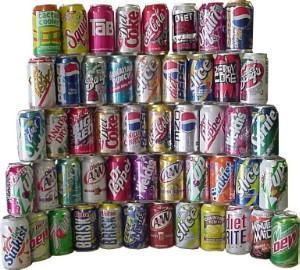 New York Mayor Michael Bloomberg ignited a firestorm on this blog and elsewhere for his proposal to ban all but 16 ounce containers of sodas, energy drinks, sweetened iced teas and other sugary beverages in restaurants, movie theaters, sports arenas and food carts (they will still be available in supermarkets and bodegas). Wondering why he’d make a proposal that could not possibly help him politically and was likely to draw the ire of Big Soda, I did a little research. Here is the abbreviated case against cola:
- Weight Increase. Using high fructose corn syrup as a sweetener, a 20 oz can of soda contains the equivalent of anywhere between 17 (Coke) and 20 (Pepsi) teaspoons of sugar per can. Drinking just one regular 20 oz soda per day adds about 225 calories to our daily diet or about 7000 calories a month which, without concomitant exercise, translates to 2 pounds a month of 24 pounds of weight gain per year. And that’s just one per day. Many American teens average 3 per day. Since 1978, the consumption of sugary drinks has skyrocketed. Back then we soda was a puny 3% of our caloric intake and milk chimed in at 8%. The numbers are now almost reversed with soda making up about 7% of our daily caloric intake. If you’re interested, here’s the sugar content of many popular drinks.
- Insulin Blaster. Americans with type 2 diabetes has tripled from 6.6 million in 1980 to 20.8 million today. Why? One major reason might be soda. Researchers at Brigham and Women’s Hospital in Boston and Harvard Medical School analyzed the data from the Nurses Heath Study II. They concluded that “women who drank one or more sugary drinks a day gained more weight and were 83% more likely to develop type 2 diabetes than those who imbibed less than once a month.” The researchers also noted that, “rapidly absorbed carbohydrates like high fructose corn syrup put more strain on insulin-producing cells than other foods.” When sugar enters the bloodstream quickly, the pancreas has to secrete large amounts of insulin for the body to process it. Some scientists believe that the unceasing demands that a soda habit places on the pancreas may ultimately leave it unable to keep up with the body’s need for insulin.
- Tooth Dissolver. Soda is a known enemy of tooth enamel due to its high acidity. In a series of studies, Professor Poonam Jain, director of community dentistry at Southern Illinois University School of Dental Medicine, tested various sodas by measuring their pH–an indication of acidity. Battery acid, for example, has a pH of 1; water scores a 7. Jain found that sugar-sweetened sodas came in at about 2.5, while diet sodas scored 3.2. “The acidity can dissolve the mineral content of the enamel, making the teeth weaker, more sensitive, and more susceptible to decay,” he contends.
- Bone Dissolver. In the 1950s we drank 3 cups of milk for every one cup of soda. Now those numbers are reversed and we’ve seen an increase in osteoporosis as a result. In 2000, research at the Harvard School of Public Health disclosed that brittle bones were a particular problem for soda drinking adolescent girls. The study of 460 high schoolers found that girls who drank carbonated soft drinks were three times as likely to break their arms and legs as those who consumed other drinks. And the problem continues into advanced age. Grace Wyshak, PhD, a biostatistician and the study’s lead researcher, believes something in colas is interfering with the body’s ability to use calcium. This is a big problem, she says, “because girls will be more susceptible to fractures later in life if they don’t acquire optimal bone mass in adolescence.”
- Caffeine Addiction. Many in the medical community consider caffeine a psychoactive substance. In fact, almost 90% of Americans consume it daily. It reacts with the central nervous system and stimulates the body. The caffeine in just one can of sugar-free diet soda ” is associated with a 48 percent increased risk of ‘metabolic syndrome,’ which plays a major role in heart disease and diabetes.”
Diet soda fairs no better with new research indicating its sugar less formula may well trigger food cravings and thus leads to weigh gain. It contains equal or more amounts of acid and caffeine and provides little in the way of nutritional benefits.
Bloomberg’s proposal then makes sense both from a public health perspective and from the point of view of logic. Why then all the resistance? Are we like spoiled children refusing to “eat our vegetables” because we just don’t want to eat them? Are we afraid of government depriving us of the products we take for granted and really, really like? Or are we just rationalizing our own indulgences under the banner of freedom of choice?
Basically, are we endowed by our Creator with the unalienable right to harm ourselves for our own pleasure and increase the costs to our fellows and our future generations as they are forced to pay for all the bad health choices we make?
What do you think?
Sources: Prevention Magazine; ABC News; Healthy Resources
~Mark Esposito, Guest Blogger
The best stake I ever had was a silver one, it was in the heart of this really creepy werewolf in London.
“The best stake I ever had was a silver one, it was in the heart of this really creepy werewolf in London.”
Malisha,
I’ll bet his hair was perfect!
Mike S.,
The best steak I ever had was at Dukes in Honolulu. It melted in my mouth.
BigFatMike: You don’t register for those ration cards. They will come to you in the mail when you have complied with the requirements.
And taken the oath.
First, drink no soda.
Pete,
Cut the crap. Both I and leander22 took exception with your argument that something inherent in the corn being produced today was not only more fastening but made the meat by the animals that consumed it more fattening as well.
I did not take issue with your assertions regarding the result of the QUANTITY of corn being consumed; rather I took issue with your absurd and beyond speculative assertions regarding the QUALITIES of the corn itself.
To suggest the opposite, as you did in your last post, is simply dishonest.
I don’t drink soda, but the best steak I ever ate was at a place called Dreisbach’s in Grand Island, Neb. in 1975 as I was driving cross-country to Seattle. Liked it so much I drove through there again on my way back to NY. That was Nebraska corn fed beef and the marbling was slightly yellowish. I’m just sayin.
Malisha
“It was decided that certain large soft drinks would be banned and the requirement for at least bi-weekly intercourse (or, in the case of certain religious orders, daily masturbation instead) would be instituted, provided that ration cards could be budgeted by the office of how to do what to whom.”
Point taken.
pbh
@Malisha
Now that’s a health plan we can all live with.
Where did you say we register for those ration cards?
You don’t suppose someone might file a law suite on the basis of the commerce clause do you?
But I am pretty sure of one thing – it ain’t broccoli.
Bob,
“But instead of doing that, you decided to simply insult me by calling me ignorant. ”
I didn’t call you anything. I merely asked you to be very careful not to read anything that might change your state of mind from uninformed ignorance to informed awareness.
And, now that you have defied my request, you further demonstrate that you are unable to fully digest what you have read.
For instance:
“Corn accounts for most of the surplus calories we’re growing and most of the surplus calories we’re eating. As then, the smart thing to do with all that surplus grain is to process it, transform the cheap commodity into a value-added consumer product—a denser and more durable package of calories.”
and:
“Considering that the human animal did not taste this particular food until 1980, for HFCS to have become the leading source of sweetness in our diet stands as a notable achievement on the part of the corn-refining industry. . . .”
finally,
“In fact, since 1985 our consumption of all added sugars—cane, beet, HFCS, glucose, honey, maple syrup, whatever—has climbed from 128 pounds to 158 pounds per person.”
None of this makes any sense to you, even when you quote it yourself. You spend all of your time trying to find some overstatement in my assertions rather than trying to understand the larger issue. And all of this is done in order to avoid dealing with the short sightedness of your own Kantian argument.
I suppose I should be satisfied that you at least appear to have read Pollan’s book despite my strong objection.
pbh
“Research presented to the Legislative Committee suggested that there may be promise in restricting the public’s access to those agents that may cause or exacerbate obesity among those segments of the population if and when they are provided in certain quantities for certain prices responding to certain economic factors within the city limits. In addition, some proposed documentation of the historical relationship between obesity, genetics, family values, inadequate amounts of sex, and corn were offered for speculation and analysis. It was decided that certain large soft drinks would be banned and the requirement for at least bi-weekly intercourse (or, in the case of certain religious orders, daily masturbation instead) would be instituted, provided that ration cards could be budgeted by the office of how to do what to whom.”
Pete,
Your inability of late to state your case clearly and concisely truly astounds me.
When I asked you to tell me the difference between high fructose drinks and sugar drinks, in terms of the human body digesting them, you said what?
Nothing.
I then showed that the Mayo Clinic stated that the nexus between corn syrup and obesity essentially comes down to the amount of calories consumed rather than the nature of the sweetener itself.
Turns out that Mr. Pollan said the same damn thing.
First, he delineates all the major contributing factors to obesity which we discussed above:
“You hear plenty of explanations for humanity’s expanding waist-line, all of them plausible. Changes in lifestyle (we’re more sedentary; we eat out more). Affluence (more people can afford a high-fat Western diet). Poverty (healthier whole foods cost more). Technology (fewer of us use our bodies in our work; at home, the remote control keeps us pinned to the couch). Clever marketing (supersized portions; advertising to children). Changes in diet (more fats; more carbohydrates; more processed foods).
All these explanations are true, as far as they go. But it pays to go a little further, to search for the cause behind the causes. Which, very simply, is this: When food is abundant and cheap, people will eat more of it and get fat.”
(Michael Pollan, The Omnivore’s Dilemma, p. 102)
And what crop, pray tell, has made food more abundant and cheap of late?
“Before the changes in lifestyle, before the clever marketing, comes the mountain of cheap corn. Corn accounts for most of the surplus calories we’re growing and most of the surplus calories we’re eating. As then, the smart thing to do with all that surplus grain is to process it, transform the cheap commodity into a value-added consumer product—a denser and more durable package of calories. In the 1820s the processing options were basically two: You could turn your corn into pork or alcohol. Today there are hundreds of things a processor can do with corn: They can use it to make everything from chicken nuggets and Big Macs to emulsifiers and nutraceuticals. Yet since the human desire for sweetness surpasses even our desire for intoxication, the cleverest thing to do with a bushel of corn is to refine it into thirty-three pounds of high-fructose corn syrup.
That at least is what we’re doing with about 530 million bushels of the annual corn harvest—turning it into 17.5 billion pounds of high-fructose corn syrup. Considering that the human animal did not taste this particular food until 1980, for HFCS to have become the leading source of sweetness in our diet stands as a notable achievement on the part of the corn-refining industry, not to mention this remarkable plant. (But then, plants have always known that one of the surest paths to evolutionary success is by gratifying the mammalian omnivore’s innate desire for sweetness.) Since 1985, an American’s annual consumption of HFCS has gone from forty-five pounds to sixty-six pounds. You might think that this growth would have been offset by a decline in sugar consumption, since HFCS often replaces sugar, but that didn’t happen: During the same period our consumption of refined sugar actually went up by five pounds. What this means is that we’re eating and drinking all that high-fructose corn syrup on top of the sugars we were already consuming. In fact, since 1985 our consumption of all added sugars—cane, beet, HFCS, glucose, honey, maple syrup, whatever—has climbed from 128 pounds to 158 pounds per person.
This is what makes high-fructose corn syrup such a clever thing to do with a bushel of corn: By inducing people to consume more calories than they otherwise might, it gets them to really chomp through the corn surplus. Corn sweetener is to the republic of fat what corn whiskey was to the alcoholic republic.” (Michael Pollan, The Omnivore’s Dilemma, pp. 103-104)
Unlike you Pete, Pollan does not make the unqualified assertion that the cause of the obesity epidemic lay in the nature of the corn itself! There’s nothing magic about the corn other than it’s more abundant and cheap.
Thus when I asked:
“If corn fed to animals causes the human that consumes the animal to ingest more calories or become obese, how does that happen? How does the corn survive the digestive tract of the animal that used it to survive?”
and
“So what didn’t make the beef or chicken fatty (else I wouldn’t eat it) will make me fat?”
you said
Pbh: “Yes, Bob, yes it will.”
Since you sounded so sure of yourself, I asked you to show me HOW; what scientific facts are you relying on? But instead of doing that, you decided to simply insult me by calling me ignorant.
Here’s what Mr. Pollan says
“As our diet—and the diet of the animals we eat—shifted from one based on green plants to one based on grain (from grass to corn), the ratio of omega-6 to omega-3 has gone from roughly one to one (in the diet of hunter-gatherers) to more than ten to one. (The process of hydrogenating oil also eliminates omega-3 s.) We may one day come to regard this shift as one of the most deleterious dietary changes wrought by the industrialization of our food chain. It was a change we never noticed, since the importance of omega-3s was not recognized until the 1970s. As in the case of our imperfect knowledge of soil, the limits of our knowledge of nutrition have obscured what the industrialization of the food chain is doing to our health. But changes in the composition of fats in our diet may account for many of the diseases of civilization—cardiac, diabetes, obesity, etc.—that have long been linked to modern eating habits, as well as for learning and behavioral problems in children and depression in adults.
Research in this area promises to turn a lot of conventional nutritional thinking on its head. It suggests, for example, that the problem with eating red meat—long associated with cardiovascular disease— may owe less to the animal in question than to that animal’s diet. (This might explain why there are hunter-gatherer populations today who eat far more red meat than we do without suffering the cardiovascular consequences.)” (Michael Pollan, The Omnivore’s Dilemma, p. 268)
As I said before “No one other than you is asserting that corn fed beef and chicken or trace amounts of corn found therein are causing the rising obesity rate in America.”
Unlike you, Pollan qualifies his remarks as pure speculation with words like “may,” “promises,” “suggests”, etc.
“Research PROMISES to turn a log of conventional nutritional thinking on its head” BECAUSE IT HASN’T DONE SO YET!
Bob,
More stuff that you should willfully ignore:
“Because of corn’s rare carbon signature, Pollan writes, it’s possible to discern from flesh or hair samples how much corn contributes to the formation of human bodies. “When you look at the isotope ratios, [U.S. residents] are corn chips with legs,” a biologist tells him.”
Please do not read anything from the following link:
http://grist.org/article/philpott1/
Ignorance is Ignorance.
pbh
Bob,
Again, please do not bother to read.
Please do not click on the link I have provided.
Pleeeeeaaaaase do not read the following futher excerpt from that link:
“To illustrate how pervasive corn’s influence is, Pollan gives us the example of the chicken nugget, which he says “piles corn upon corn: what chicken it contains consists of corn” (because the chickens are corn-fed), as does “the modified corn starch that glues the thing together, the corn flour in the batter that coats it, and the corn oil in which it gets fried. Much less obviously, the leavenings and lecithin, the mono-, di-, and triglycerides, the attractive golden coloring, and even the citric acid that keeps the nugget ‘fresh’ can all be derived from corn.”
“So dominant has this giant grass become that of the 45,000-odd items in American supermarkets, more than one quarter contain corn. Disposable diapers, trash bags, toothpaste, charcoal briquettes, matches, batteries, and even the shine on the covers of magazines all contain corn. In America, all meat is also ultimately corn: chickens, turkeys, pigs, and even cows (which would be far healthier and happier eating grass) are forced into eating corn, as are, increasingly, carnivores such as salmon.”
pbh
Pete,
No one other than you is asserting that corn fed beef and chicken or trace amounts of corn found therein are causing the rising obesity rate in America.
Bob,
Please do not read anything that I have suggested. Please continue to live in your fully uninformed state. Please refuse to investigate this matter any further than what you learned in Philosophy 201.
All the best.
pbh
Pete,
There is nothing in that quote to even remotely support the assertion you made.
Bob,
“But to suggest that corn can be consumed by animals as food and then consumed AGAIN by the humans that eat the animals …
Give me a break Pete.”
No.
“If you doubt the ubiquity of corn you can take a chemical test. It turns out that corn has a peculiar carbon structure which can be traced in everything that consumes it. Compare a hair sample from an American and a tortilla-eating Mexican and you’ll discover that the American contains a far larger proportion of corn-type carbon. “We North Americans look like corn chips with legs,” says one of the researchers who conducts such tests.”
http://michaelpollan.com/reviews/were-living-on-corn/
Do some basic research.
pbh
If I had taken a little more time, I could have avoided the repetitions, but there you go.
I agree with Bob here again. My problem with conventional chicken surely isn’t that they are fed with fructose, but more how they are kept and the fact that tests show that that results in high doses of antibiotics. We just had another series of scandals and test that show that every second chicken carries multi-resistant germs. One of the series of scandals in in the nutrition field.
Apart from that, I find it highly unlikely that whatever the chickens are fed result in highly different calories depending on the nutrition.
Here a link concerning fructose, on a site called lowcarbdiets.about.com
Which brings us back to the biblical balance that is the problem and not the size of a bottle, which I must not drink up the same day after all. 😉
Pete,
I’m not saying you haven’t offered meaningful observations; I’m saying you’re just pointing to the wide existence of corn in the food chain and saying nothing more than “there you go.”
The difference between high fructose drinks and sugar drinks, in terms of the human body digesting them, is what?
Here’s what the May Clinic says:
http://www.mayoclinic.com/health/high-fructose-corn-syrup/AN01588
If corn fed to animals causes the human that consumes the animal to ingest more calories or become obese, how does that happen? How does the corn survive the digestive tract of the animal that used it to survive?
When I asked: “So what didn’t make the beef or chicken fatty (else I wouldn’t eat it) will make me fat?”
You said
Pbh: “Yes, Bob, yes it will.”
HOW??
Now if you were going to argue that animals fed soy tend to have higher amounts of cholesterol, I wouldn’t have a problem with you showing some research supporting your assertion simply because the soy was converted into cholesterol by the animals digesting it.
But to suggest that corn can be consumed by animals as food and then consumed AGAIN by the humans that eat the animals …
Give me a break Pete.
Bob,
“So what didn’t make the beef or chicken fatty (else I wouldn’t eat it) will make me fat?”
Yes, Bob, yes it will.
Meanwhile, your love of argument appears to make you almost impervious to a causal chain. You pick over each detail without attempting to understand the larger picture.I recall you had similar problems with the science behind the destruction of the WTC.
I have given you plenty of evidence, I have offered source material, and I have had fruitful conversations with others here who seem to consider my observations meaningful, but none of that is enough for you.
You claim I don’t have a thesis? That is your own myopia. I can’t educate those who refuse to learn.
B/t/w, it is not “sugary drinks”, it is high fructose drinks. The difference is all.
pbh
Pbh: “I didn’t say it was the only thing, but it is the principal means by which high caloric foods are transmitted.”
Pbh,
So what are you arguing?
You began by claiming sugary drinks are responsible for the nation’s obesity, then it was the corn lobby, and now you’re waiving your finger at any products that have ever come in contact with corn. So what didn’t make the beef or chicken fatty (else I wouldn’t eat it) will make me fat? FYI, I don’t eat fertilizer.
Are you arguing that genetic mutations to the corn trigger some sort of obesity reaction in any animal that ingests it, e.g. us? Honestly Pete, this is probably the first time I’ve lost track of your argument for simple want of a thesis.
Pbh: “Nor did I say that anyone is brainwashed.”
When you use loaded language like “force fed” and “victims of predatory marketing techniques” the “brainwashed” is clearly implied.
Pbh: “I have suggested the means by which you can educate yourself on this issue. Give it a shot.”
Educate me on your argument first.
The Omnivore’s Dilemma, Shano, I think Michael Pollan’s observations concerning organic food, are worth thinking about.
The moment there is mass demand you may be well on the road to making the same mistakes as conventional production. The problem over here seems to be that EU regulations tend to be partial to bigger production, at least that is what I was told by farmers over here. The other problem is we have only a select few monopolists or giants in the food market, and they offer organic food selectively for some time now. They have the power to dictate prices which in turn kills the smaller farmers. And yes, I like Polland’s story about the farmer in the lecture above. Last time I looked admittedly about two decades ago, there were only four giants. It may be even less now, at least not long ago I noticed one being in troubles. These two things seem to go together. Regulations modelled on the need of the food giants.
One of the most ridiculous outcomes it feels to me, is that e.g. apples all need to have exactly the same size. EU regulations tend to be hundreds of pages long. That’s something a farmer should be forced to deal with? You only get “normal” apples from local farmers. With all the others the package size dictates apple size. Isn’t that ridiculous? But it is obviously connected to longer transport routes with the resulting necessity to force nature into specific shapes.
Some things I noticed some time ago, e.g organic fields next to one of the most frequented highways. Well that doesn’t look very sensible to me.
Strictly I prefer vegetable and fruits from the local farmer’s markets even to the ones sold in the by now multiple organic food chains. It’s harvested shortly before it is sold, it’s not on the road for days. Strictly food production should go much more local, but yes that is an illusion. And even on our farmer’s markets there many merchants that do not sell their own product.
Besides if you have conventional fields, even genetically engineered crops next to organic ones how is that going to work? Doesn’t the stuff get into the earth and the surrounding automatically, e.g. as part of the rain cycle? Who tells me the poison stays were it belongs? Couldn’t an organic field next to genetically engineered crops result in possible mutations? I don’t know, but I ask.
From the EU link below:
still?
Ages ago I learned from a farmer’s family in a little town in the Black Forest, they would never eat the cattle they raised to be sold on the meat market themselves. Why do you think that was? Well simple, the market and connected regulations dictate prices. Organic producers are in the same economic circle.
Polland’s story about the happy chickens in an organic farm are actually funny. I rarely eat chicken and if I do, I only buy from farmers I know. My conventional farmer only sells very few chicken, it’s part of the products he sells. The market stall next to him sells eggs and chicken only. I imagine that my farmer’s chickens are much more happy, at least up to the point they end up on his stall.
I haven’t looked at this but here are the EU regulations concerning organic food. Do you know yours?
Now let me tell you a very peculiar story. For some years now I only use biodegradable detergents in my household. Initially I thought, it was much more expensive than conventional ones, but I wanted to contribute to the environment in my own little ways. To my utter surprise I noticed it is not all the case, it may actually be cheaper, for a very simple reason, you need much less. The lady administering purchases e.g. for the cleaning crew in Freiburg university arrived at the same conclusion, and I have seen her calculations. Her comparison shows it very clearly. She was just as surprised as me, since she initially tested the products of the same little firm I use for the reasons I did.