 There is an interesting contracts controversy brewing over at the Smithsonian. Yes, it is possible to have an interesting contracts controversy. In this case, the contract was signed in 1948 between the estate of Orville Wright and the Smithsonian. The contract required that, in exchange for the famed Wright flyer, the Smithsonian would never recognize that anyone else was first in flight. That does not sit well with historians who believe that the first in flight was actually German immigrant Gustav Whitehead. Putting aside the historical debate, a contract requiring the museum legally to deny historical claims is plainly unethical. Is it an unenforceable unconscionable contract?
The 1948 contract states:
“Neither the Smithsonian Institution nor its successors, nor any museum or other agency … or its successors shall publish or permit to be displayed a statement or label in connection with or in respect of any aircraft model or design of earlier date than the Wright Aeroplane of 1903, claiming in effect that such aircraft was capable of carrying a man under its own power in controlled flight.”
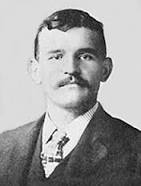
 Accordingly, the Smithsonian has long insisted the first flight occurred on Dec. 17, 1903 with the Wright Brothers on their historic flight at Kitty Hawk, North Carolina. However, a recently uncovered photograph has been cited to support the claim of Whitehead that he went airborne on Aug. 14, 1901. In the end, it does not matter. A contract remains in effect that contradicts the very foundation of museum ethics. Here is the code. This includes: “Curators are responsible for ensuring that all verbal and written interpretation is accurate and accessible, physically and cognitively, whether prepared by themselves or their subordinates.” Curators are also required to “ensure the integrity and objectivity of their scholarship and research projects by compiling reference materials and supporting documentation, keeping abreast of current scholarship.”
The question is whether this contract with the Wright family is enforceable. For example, the family could demand the plane back if the museum denies the required claim. The conflict presents a curator’s version of the “Rule Against Perpetuities” in property. That analogous rule in property states that a will cannot limit “future interests that do not vest within the time permitted and “limit[s] the testator’s power to earmark gifts for remote descendants.” In this case, the museum was given ownership for $1 but the family could claim that the sale was invalidated by the continuing condition. Even if this were true however it would be better to lose the plane than the integrity of the museum. My guess is that the Wright family would be responsible if asked to waive the condition. At least I hope they would be. If not, I would as interested to see the contract put on display in place of the plane.
Source: Fox
I don’t see how the contract is unconscionable. There was no disparity in bargaining power between the parties. The museum was and is under no obligation or undue pressure to exhibit the Wright plane. If the museum wants to breach the contract, then I would think it’s free to do so, but not free to keep the plane.
I remember seeing Crossfield tell that story on a TV documentary.
Too bad about his loss. Even with all that time and experience, flying into embedded thunderstorms is a losing propositon.
a contract requiring the museum legally to deny historical claims is plainly unethical. Is it an unenforceable unconscionable contract?
The museum isn’t legally obligated to deny historical claims. They are simply required to ignore them IF they want to keep the plane. Two completely different things.
OS I guess he had more confidence in Cessna than was warranted, but at least we have gotten the controllers now to call out radar returns far more often as a result. While it may be a pain, I much prefer that to NOT knowing what they are seeing. I don’t know if he had radar on board or if it was working. In any case, it was a great loss to all of us.
Randy,
I agree on the F-104. Never flew a Pitts. I shudder to think how the Gee Bee R-2 might act if the noise stopped.
I believe that Jimmy Doolittle found out how the Gee Bee flew when the noise stopped. He was probably one of the few pilots who could successfully land it and walk away from it. The procedure for the F-104 was to simply eject when the engine quit and no dead stick landings. Scott Crossfield had that happen once, but he thought he was good enough to land it without power. He is one of the few who did it and lived to talk about it. Unfortunately, he forgot that the brakes on it were only good for one shot after landing, so he was so proud of his achievement that he tried the Bob Hoover thing and used his momentum to coast to the hangar at Edwards. When it came time to stop, he found he had no brakes at all, and coasted into the hangar missing all the planes, but the door on the other side was closed and he got stopped by that as he crashed into it. They said that the saying was that Yeager broke the sound barrier, and Crossfield broke the hangar door.
I almost forgot. Both Whitehead and Langley built aircraft with low aspect ratio wings. Some of the early Wright gliders had low aspect ratio wings and the did not perform well either. They used their wind tunnel to test different airfoils and wing shapes. They discovered a long narrow wing lifted more with exactly the same area, than a short broad wing. The documentation was extensive. High aspect ratio wings are much more efficient at lifting than low aspect ratio. That is why high performance gliders have extremely long narrow wings.
It is safe to say the Wrights invented the high aspect ratio wing, which meant they had the best chance of succeeding where both Whitehead and Langley did not. Take a look at the photo at the link below, and compare that wing shape with that of the “Langley Aerodrome” and the “Whitehead Number 21.”
http://www.pbs.org/kcet/chasingthesun/images/plane_wright_65_lg.jpg
My suspicion is that the Wright family wanted the Smithsonian to have the Flyer, but did not trust the management. Not surprising given their past history at the time. I agree with ARE on that.
randyjet,
It is well known that your observation about power is true. The F-4 is proof that given enough power, even a brick will fly.
OS Hell the F-104 does not even have wings! Those things are just directional stabilizers. The Pitts aircraft are much the same too. Power off landings are a real trip with that plane.
ARB,
Thank you for your reasoned comment. A photograph alone, without a paper trail, doesn’t prove Whitehead was the first to fly. Over decades, rumors and gossip can overcome facts, which might explain the Wright family’s contract.
In aviation there is a saying that with enough power, you can make a barn fly. So absent any further substantiation, one photo proves nothing at all. The Wrights had photos, actual measurements of wind speed and distances, and witnesses, Cars and horses have flown thanks to tornadoes and hurricanes, but no rational person would contend that such cars can fly or that Pegasus is real. Then I thank the many lawyers who provide me some mirth by their willingness to throw out the findings of US courts with very little proof.
ARE:
I agree with your observation regarding Langley. No doubt he tried to invent an airplane, but he never invented a way to control it. Although scale models of the Langley Aerodrome flew, the full sized one was probably too heavy to fly. Glenn Curtiss flew a highly modified Langley machine in 1909, as part of his lawsuit with the Wrights, but Curtiss still lost the court decision. Although the Langley machine flew for Curtiss after he modified it extensively, it just barely flew.
When I was a kid, the ongoing propaganda by Langley’s promoters and defenders at the Smithsonian was hard to miss. That PR effort was in all the aviation magazines. Funny thing, in all the decades I subscribed to Air Trails, I don’t remember them ever publishing the plans for a model of the Langley Aerodrome. There were several plans published for both the Wright Flyer and the Vin Fiz. As far as I can recall, no one ever published plans for a model of Whitehead’s machine either. I have seen pictures of it and articles about it, but I am skeptical that it actually flew in controlled flight. Guillow’s, the great model airplane company famous for their rubber powered scale models, has a great kit of the Wright Flyer.
Somebody once wrote that the Wrights really did not invent the airplane, they invented flying. There is a vast difference between a machine that will get off the ground, and one that can be maneuvered.
It’s to my understanding that the Wrights did not want to give the Flyer to the Smithsonian unless they stood by the Wrights as first in flight. If they don’t, the Flyer simply reverts back to the family. That’s how I would want it to if I were the Wrights. Obviously they don’t want to give up the airplane, so they are doing everything they can short of agreeing….which I find disappointing.
The reason for the stipulation was the the Smithsonian had long ago abandoned historical truth since they insisted that the head of the Smithsonian, Langley, had designed and had the first heavier than aircraft flown under his direction. They deemed that a flight off of a houseboat in the Potomac which fell off the top into the water constituted the first flight. The US Navy went so far as to name its first aircraft carrier the Langley. Langley and Bell were politically connected, and the Wrights were rather pissed off at this chicanery, so they put the Wright Flyer in the British Museum since the Smithsonian refused to acknowledge the simple truth.
I have read the claims for Whitehead and I am not convinced at all since there are so many questions that have not been answered to sustain the claim. There is no question that he was engaged in flying experiments and did make the engines for aviation buffs. The problems with his claim are many. First the Wright brothers have a huge paper trail of their research. Whitehead to my knowledge has little or none. I visited the Air Force Museum at Wright-Pat and the most important device I think was the wind tunnel that they constructed. If you can show me a wind tunnel that Whitehead developed or notes he made on airfoils and props, THEN I will concede that Whitehead has a valid claim. The fact is that the Wrights acted like real pilots. When they first got off the ground, they did NOT STOP. They kept on flying that same day until they finally crashed and wrecked the airplane which forced them to stop. It beggars my mind to think that after having gotten into the air, Whitehead would simply stop after one flight, and then never fly again! Then if he had succeeded why did he not file any patent? That is also rather incredible.
The good thing about filing patents is that you have to prove your contention in court. I will be persuaded when Whitehead’s heirs or advocates go to court to prove the claim. Simply having one photo is insufficient proof unless you can provide the plans details, research, etc.. to back up the claim. Langley could and DID claim that his machine flew when it fell into the water. The same could be true of the photo since we do not know the circumstances of the weather such as wind speed, measurements to prove it flew a fixed distance into the wind, etc.. We can look at the post flight actions of the Wrights. They went home and kept on making flights and improving on their machines and becoming better pilots. Whitehead did nothing of the kind. At the very best case for Whitehead, assuming that he did fly, it is like the “discovery” of America. We all know Columbus was NOT the first European to get to America, since the Vikings came here long before, and some Irish claim that they did too. The FACT is that Columbus was the only voyage that really mattered since it changed world history. The same if true of the Wrights, plus they have legal judgements on their side. I find it rather funny that a blog with a lot of lawyers would dismiss the findings of US courts in this matter.
Just the facts, Smithsonian, and if the Wright’s want their flyer, tell them to come and get it.
Tell ya what Smithsonians, I will build a replica of Whitehead’s plane and donate it with the stipulation that you throw the Wright Bros plane back to the family and let them take it on the road.
I would assert, on behalf of the museum if there is a lawsuit, the two related defenses, the defense of estoppel by silence and the defense of estoppel by laches. Silence is similar to laches. The family kept quiet all these years in spite of talk and examples in the museum of who might have been first ot fly. Silence is golden, laches is when you sit on your rights– similar. I would also assert the defense of spelling. That the Wright Brothers could not get the name spelled Right to begin with. If ya brought in the Donald you could trump lies with truth. Next the Wright Brothers family will say that because they were first in flight, that they were first in space as in outer space. Some of the ducks over here at the marina have a quibble with the first in flight thing. How about circus acts? They were right up there.
The doctrine of estoppel would apply. The family heirs, who are not the original liars, would be estopped to enforce a contractual provision which is false, and requires the opposing party to assert a falsehood. A falsehood is one who wears a hoodie but is not really a thief. The Smithsonian is the one to assert the defense of estoppel. There are three genre of estoppel. Estoppel by judgment is the first. I will leave it to BarkinDog to explain the rest. I got estopped from humpin PunkinDog because she already had a stoppel. So, I just know a little. BarkinDog was a lawyer in a prior life as a human and he is chimning in with the dogpac about the Smithsonian and the first in flight thing as I bark.
Keeping w/ interesting contracts, I’m reading The Baseball Trust. It’s penned by UCLA law prof, Stuart Banner and is a detailed history of baseball’s reserve clause. It’s quite good so far but I’m only ~50 pages into it. A book for baseball fans, attorneys, and a double bonus for baseball fan attorneys, which I know reside here.
The Wrights were pretty good self-promoters, and also litigious. They invented wing warping for roll control, but others invented ailerons, which Glenn Curtiss patented. Ailerons made it possible to build a sturdy wing that did not have to be warped, paving the way for highly maneuverable and fast airplanes. They sued Curtiss and won, but he was able to drag it out with legal maneuvering, until the matter became irrelevant.
The Wrights engaged in so many legal challenges, that it hurt their reputations, both at home and in Europe. Legal wrangling took up much of their time. This meant they did not continue developing the airplane as they could have if it were not for the lawsuits.
I like Gene’s idea of putting the contract on display. It will speak for itself. At the same time, it will show how the Smithsonian sold its integrity to get the Wright Flyer.
Maybe it could be said the museum does not necessarily have to deny that someone flew before the Wright Brothers, it just cannot display any model or wording showing someone doing this.
“Even if this were true however it would be better to lose the plane than the integrity of the museum. My guess is that the Wright family would be responsible if asked to waive the condition. At least I hope they would be. If not, I would as interested to see the contract put on display in place of the plane.”
Yep.
It makes me wonder what the conditions were that inspired the Wright family to require the term.
Why would the Wright family want to falsify history or force others to, especially a prominent museum?
Strange.