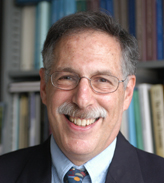
 The Nobel Committee may think a lot about MIT economist Peter Diamond, but he is currently blocked as a nominee for the Board of Governors of the Federal Reserve. Sen. Richard Shelby has objected that Diamond is not qualified for the Board because his specialty is not in monetary policy.
The 2010 Nobel Memorial Prize in Economic Science was awarded on Monday to Peter A. Diamond, Dale T. Mortensen and Christopher A Pissarides for their work on labor markets and other markets where buyers and sellers have difficulty finding each other.
What is curious about the hold on Diamond’s nomination is that three of the five board members are not specialists in monetary economics and one of the Bush appointees did not even have an advanced economics degree.
Source: Washington Monthly
Gyges:
I am an older guy so I really don’t care either way, hell in a more regulated, socialist economy I would probably make out pretty well and you and Buddha would be supporting me. I like the irony of that. 🙂 But morally it Inst right.
I was not using the Soviet economy as a straw man. But as the worst possible outcome with a centralized planning economic model.
What do you think?
What does wealth creation mean? What is wealth? Does wealth end poverty? What is a yardstick for individual wealth, is it a net worth of 100 million or 25k?
Byron,
What’s your definition of better?
Gyges:
“You don’t even define what it’s better at.”
allocation of resources.
Byron,
Again we get to the question “what is the goal?” You just keep asserting that the free market is better. You don’t even define what it’s better at.
Is it better at creating wealth? Probably. Is the creation of wealth the sole reason that countries and laws exist? Should it be?
Also, outside of your often resurrected straw man (that reminds me: Buddha, you should check out Jay Lake’s “City Imperishable” Novels), nobody thinks we should enter into a Soviet style economy. I know you don’t see shades when in comes to the economy, but the rest of us aren’t color blind when it comes to degrees of government intervention.
Byron,
lol
Don’t tell economists or those Wall St. quants they can’t do predictive modeling or regression analysis! Many of them will run hide under their desk in fear of losing their jobs.
As to 100% accuracy? Models don’t have to be 100% accurate to be of value. Models by their nature are approximations of reality. Surely you know this being in a construction related field that a building almost never gets erected as it is modeled (designed) on paper.
Gyges/Buddha:
you can model it all you want, I just don’t think it would be accurate enough to take decisions about allocation of resources. Which would be the goal of an economic model of the type we are talking about. The Soviets couldn’t do it for the same reason. In addition, say you have a computer powerful enough to actually be able to “model”, how do you account for the unknowns? Human behaviour is not exactly consistent, nor is the weather and neither are the insects that pollinate our crops.
In my mind the market is a huge organic computer that efficiently allocates resources based on the billions of individual inputs it receives on a daily basis.
Anyway just some thoughts.
Buddha,
As I see it Byron just extends the system of “The Market” to be so large that it can’t be modeled.
It’s similar to me saying that we can’t model the behavior of the human genome because my poor eyesight could effect my height if I rely on it to gather my food I would be underfed, and therefore wouldn’t end up at the height I would if I had better nutrition.
Byron,
He can only partially model because unlike biological systems, economics are regularly impacted by forces of nature and unforeseeable supervening factors of human creation like wars (both martial and trade). But demand, like supply (when not under the natural constraint of finite resources which may have effect beyond human influence), can and often is deliberately manipulated by humans for profit motives. Just look at how OPEC jerks around oil prices or how movies are promoted. At least that was my understanding.
Slarti? Care to chime in?
Mmmmmm.
Circular.
Byron,
The goal of flipping the light switch is to light up the room. The light bulb works for doing that.
So, the goal of having a free market is to have a better society while having free market? That’s what your statement reduces down to.
Having a free market works better at having a free market than not having a free market does. I can’t really argue that point.
Buddha:
Slarti has never said he could model a market, he said he could kinda sorta model a market with a good many holes in his model.
Does the cost of orange juice affect the price of steel? Now combine that with about 100 other variables and then add another 100 variables for each of the initial hundred variables and that is only for a price fluctuation in orange juice.
Gyges:
You may work toward a goal, say digging a hole. But if the light turns on when you flip the switch, then the light bulb works as does the switch and the electricity.
So the “goal” is human betterment and achievement in a free society with government as a referee to prevent and punish force as a means of coercion.
Byron,
“They Work” implies a goal. What’s the goal?
Byron,
Slarti as a mathematician who specializes in modeling complex systems and specifically organic systems has pointed out on numerous occasions that your assertion about modeling markets is false. The market is not nearly as complex as you seem to think.
Professor Turley,
This article has been one of my conversational standbys the past two days. Everyone gets a real kick out of it.
Bdaman….are you a SoFla surfer dude???????
Gyges:
Quite simply because they work. But on a deeper level because I believe in individual rights and that a person has a right to the labor of his body which he and no other owns. I also don’t believe in the use of force to coerce people to behave in a certain manner if they are not engaged in the use of force against others.
Government, through regulation, is a coercive force which has the power to alter the trajectory of individual lives should they do something opposed to government. A free market allows people to make decisions based on their best interest and it allows companies to rationally contend with market forces and not have to contend with irrational regulations that are irrational because they can in no way anticipate all the permutations.
Almost everyone on this blog either wants to force people to behave a certain way economically or they think that human beings can control an organism (the market) that is many more times as complex as an actual living organism.
Elaine,
I was talking about that with Byron on one of threads today … The Gramm–Leach–Bliley Act (GLB)or Financial Services Modernization Act of 1999
Gyges,
Right! CDS’s, CDO’s, etc. I believe one of the major causes of our financial problems was the repeal of the Glass-Steagall Act in 1999.
Blouise,
Don’t forget the increasingly arcane instruments of investment that are floating out there.