
 Below is my column today on the Perry indictment. I have previously raised my serious reservations about the factual and legal basis for a criminal charge. We obviously do not know what evidence will be presented, particularly evidence of back channel communications that might have occurred over the threatened veto. Such conversations can have a highly damaging effect on jurors as shown by the trial of Illinois Democratic Gov. Rod Blagojevich. They can also damage someone politically by exposing uninhibited moments or comments. I have heard from reporters in Texas that there might have been communications between Perry and Lehmberg about her resigning but I have yet to see clear accounts of such communications. However, at the moment, I cannot see the basis for these charges. Perry publicly stated his intent to use his lawful power to veto the line item for the office budget if Lehmberg did not resign. I do not see how the use of such a lawful power in this case would rise to the level of a criminal act.
At the moment, I see a compelling case for dismissal as a threshold legal question for the court. However, the degree to which the court views this matter as turning on the factual allegations as opposed to the legal questions, it could be held over for trial. That is the problem with such ambiguously written provisions is that the court may feel more constrained in dismissing the counts. The result for Perry can be damaging even if he is acquitted as was former U.S. Senator Kay Bailey Hutchison two decades ago. Hutchinson was charged with using state employees to plan her Christmas vacation in Colorado and write thank-you notes. The case was so weak that it took only 30 minutes for the jury to find her not guilty on all charges. The political danger is the exposure of private communications. Few of us are as crude as Blagojevich or his wife even in private but none of us is likely to look good if our unguarded comments were played out for a national audience. Once again, only time will tell what type of evidence was heard by the grand jury. Yet, my view is that this indictment is very problematic from a constitutional standpoint and offers little to support such a major prosecution.
Here is the column:
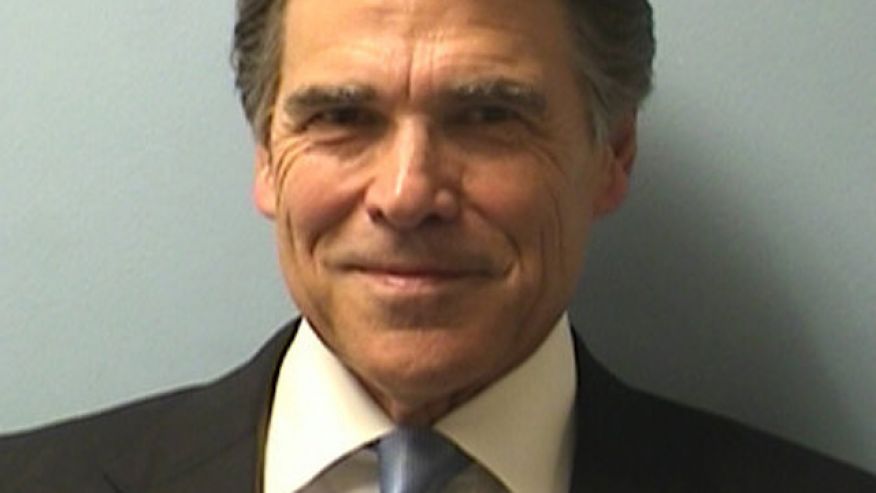
The news of the indictment of Texas Gov. Rick Perry late Friday thrilled many of his critics around the country, but it perplexed anyone who actually read the indictment. The charges against Perry, who was scheduled to be booked on Tuesday, stem from his carrying out a threat to veto the funding of a “public integrity” office after its chief prosecutor was incarcerated. How a seemingly political act became an alleged criminal offense is a Texas tale more twisted than the Brazos.
The controversy began on April 12, 2013, when someone called 911 to report a vehicle driving dangerously. Inside the car, the police found District Attorney Rosemary Lehmberg. Inside Lehmberg they found almost three times the legal level of alcohol. Worse yet, videos showed a combative Lehmberg badgering officers, invoking her status as district attorney and, according to police, acting so violent that she had to be restrained.
Many people (including Perry) called on Lehmberg to resign, particularly after she was sentenced to 45 days in jail. Lehmberg refused.
Perry then publicly threatened that he would veto the budget for her office if she remained in her position. In my view, he was wrongheaded in making such a threat, particularly given Lehmberg’s position heading the Public Integrity Unit with jurisdiction over politicians like Perry. However, Perry made good on his word and, when the budget came through, he vetoed the $7.5 million in funding for the Travis County Public Integrity Unit.
The threat led a liberal watchdog, Texans for Public Justice, to file a complaint alleging a variety of crimes, including an implausible allegation of bribery, against Perry.
The indictment in Texas v. Perry is based on two state laws, including one that is maddeningly vague and another that has little applicability to this type of circumstance. The charge, Abuse of Official Capacity, refers to public servants who “intentionally or knowingly” misuse government property or services or personnel. It is a provision that would be more fitting if Perry used the $7.5 million for a romp in Vegas. The state provision is incredibly ambiguous, and there is no direct precedent for its use in this type of case. Indeed, such vague provisions are often passed because most prosecutors practice discretion and restraint — both of which was missing here.
The second count refers to attempting to influence “a public servant in a specific exercise of his official power or a specific performance of his official duty.” The “specific exercise of his official power or a specific performance” in this case would be the resignation from office. That is obviously not the intent or purpose of this law.
Perry made this threat publicly. He was using (unwisely) the threat of a budget cut to deal with someone that he (wisely) viewed as a disgrace to her office. There is no precedent directly supporting this charge against Perry, but at least one case seems to contradict it. In 1990, a Texas appellate court ruled that a threat of a lawful action cannot constitute coercion of a public official. Perry is allowed under the Texas Constitution to veto a budget item, and the legislature may override him. Indeed, most of this case turns not on the vetoing of the appropriations line, but threatening to do so in advance. Had he simply cut the funding with little more than a smirk, he would have presumably been free and clear.
When you decide to criminally charge a governor in a case with serious constitutional implications, you should have strong facts and clearly applicable law. Few people (including Perry) would have been put on notice that such laws could be used to criminalize this political dispute. Michael McCrum, the special prosecutor handling the case, had to pound very hard to get these square facts into round holes. A bit too hard.
The problem is that such constitutional concerns can get lost in a trial, as shown by the trial of another governor: Illinois Democratic Gov. Rod Blagojevich. Blagojevich was given a 14-year sentence for seeking a quid pro quo arrangement in exchange for the appointment of a replacement for the Senate seat Barack Obama vacated to become president. Many of us criticized the indictment for criminalizing common political horse-trading. However, Blagojevich was hurt by witness testimony and recordings with vulgar and raw exchanges between politicians. It reaffirmed the view of many that politicians are untrustworthy and sleazy.
In fairness to the prosecutor in Texas, we have not seen the evidence he intends to bring to court. Raw behind-the-scenes testimony can color a case and distract from what might seem abstract arguments based on inherent executive authority. Many jurors find it a challenge to give any politician a presumption of innocence in any forum.
However, at the moment, this indictment is short on the law and even shorter on the facts. It looks like what they call people in Texas who dress up to look like cowboys but have never gotten closer to a steer than a T-bone at an overprized Dallas steakhouse. To put it simply, the Perry indictment is “all hat, no cattle.”
Jonathan Turley is the Shapiro Professor of Public Interest Law at George Washington University and a member of USA TODAY’s board of contributors.
August 21, 2014 USA Today
mespo,
Perry’s all hair…no cattle.
Perry wants to extinguish any investigation of his administration. This DA was vulnerable so he pounced. Nothing too original but I like to see a good ol’ fashioned comeuppance for the Texas figurehead. Plus wouldn’t you love to just mess up that “ken” hair of his just one time.
BTW Elaine it’s the not the first time you’ve been proven to be the bigger person.
mespo – thought you were on vacation.
Yes….. We each kept our hands in our own pockets…
Quit picking on Elaine…
Do you think Perry’s wife will move out since he has been indicted? Maybe she will move to the rectory…
I think Perry should be required to submit his birth certificate so it can be examined for its authenticity….
But being that both if his parents were male…. He has a legitimate birth certificate …. Hmmm…. Since when were A$$hole baby’s recognized as human…..
How do we know that Perry’s parents were even citizens….was this Perry an anchor baby….
Paul, I am an honorable man and would have to recuse myself as judge. And, some folks look upon competition as gauche and a male construct that is antithetical to their values.
Perry has TWO CITIZEN-PARENTS.
I think the ELF should pass out cole slaw to everyone.
Who has seen Perry’s birth certificate…
AY – Perry should show his birth certificate in the same timely manner that Barack Obama did.
So, who picked up the tab? Split the check or whose client(s) got billed for the lunch?
The governor of New York and possible future presidential candidate may have tried to shield his donors
http://www.salon.com/2014/07/23/report_andrew_cuomo_under_federal_investigation_for_allegedly_thwarting_ethics_inquiries/
U.S. attorney threatens to investigate Andrew Cuomo for witness tampering
Preet Bharara sends letter to guv threatening to investigate claims that Cuomo thwarted his own ethics commission
http://www.salon.com/2014/07/31/u_s_attorney_threatens_to_investigate_andrew_cuomo_for_witness_tampering/
Binder, a resignation for criminal acts and moral turpitude is not a “specific exercise of official power or a specific performance of official duty.”
“A person commits this offense if … he influences or attempts to influence a public servant in a specific exercise of official power or a specific performance of official duty.”
Cuomo Under Investigation by Feds for Shuttering Corruption Commission
http://www.newsweek.com/rain-your-wedding-day-cuomo-under-investigation-feds-shuttering-corruption-260898
Poll: New York Gov. Cuomo Is Part of Culture Of Corruption, Voters Say
http://www.ibtimes.com/poll-new-york-gov-cuomo-part-culture-corruption-voters-say-1664252
“Bob Binder
Perry was trying to force a duly elected Travis County DA to resign, which he’s not allowed to do. Not just exercising a veto.”
Force:
1. coercion or compulsion, especially with the use or threat of violence.
“they ruled by law and not by force”
2. make a way through or into by physical strength; break open by force.
“they broke into Fred’s house and forced every cupboard door with ax or crowbar”
3. make (someone) do something against their will.
Perry employed no physical force or violence. Perry employed the power of the veto which he had. Perry SUGGESTED PUBLICLY to a convicted felon that she voluntarily resign. Vetos and resignations are separate and have no legal nexus. Moral turpitude clauses are ubiquitous. There was no covert coercion. Executives accept resignations.
Many convicts of DUI suffer a loss of self esteem and are embarrassed to the point of seeking refuge from further public exposure and scrutiny. It is a component of being noble and having honor. Obviously, this woman has neither and believes that the ends justify the means. Hold whatever power you can by any means per Rules For Radicals and the Communist Training Manuel. Progressivism/liberalism/socialism/communism will wither on the vine if left to its own devices. Parasites feed off their hosts. The American Founders required honorable and moral men for the republic to exist. The republic may be in decline.
U.S. Attorney Warns Cuomo on Moreland Commission Case
http://www.nytimes.com/2014/07/31/nyregion/us-attorney-warns-cuomo-on-ethics-case-.html
Federal Investigation Looks at Cuomo and Moreland Commission Referrals
U.S. Attorney Wants to Know if Cuomo or Staff Directed Anticorruption Panel to Keep Cases From Prosecutors
http://online.wsj.com/articles/federal-investigation-looks-at-cuomo-and-moreland-commission-referrals-1407459680
If there was honor Perry would show us his birth certificate….
Gov. Andrew Cuomo under fire for meddling in corruption investigation
http://www.cbsnews.com/news/gov-andrew-cuomo-under-fire-for-meddling-in-corruption-investigation/
Cuomo’s Office Hobbled Ethics Inquiries by Moreland Commission
http://www.nytimes.com/2014/07/23/nyregion/governor-andrew-cuomo-and-the-short-life-of-the-moreland-commission.html?_r=0
Again, Much of our culture depends on honor. And when honor becomes rare, changes need to be made to adjust to that dysfunctional paradigm shift. I asked a question earlier if anyone thought Lehmberg was correct in not stepping down. No one thought she was correct, or at least no one said so. Rules were made when there was honor. Time for new rules. Because I don’t see honor returning.
I have a question…. Is Perry’s Birth Certifucate accurate? I want to see it…. For all we know he was born in Kenya…..
• Coercion of a public servant: “A person commits this offense if … he influences or attempts to influence a public servant in a specific exercise of official power or a specific performance of official duty.”
Perry tried to get the DA to resign. That is certainly an attempt to influence a public servant (the DA) in a specific exercise of official power (holding the office and using it) as well as performance of official duty (resigning in and of itself involves performance of official duty).
• Abuse of official capacity: “A public servant commits this offense if, with the intent to obtain a benefit or with the intent to harm or defraud another … he intentionally or knowingly misuses government property, services, personnel or any other thing of value belonging to the government..
Perry intended to harm the DA by depriving her of her job. He misused his office, which involves personnel and services and is a thing of value belonging to the government, but threatening to force another duly elected public servant in a constitutionally created office, not under his control or employment, to resign.
Sorry we see this differently, but we do. You want him to have taken an ax handle to her (figuratively speaking) or something else physical. Things of value don’t have to be physical.
Leaving office for the day.