By Mark Esposito, Weekend Blogger
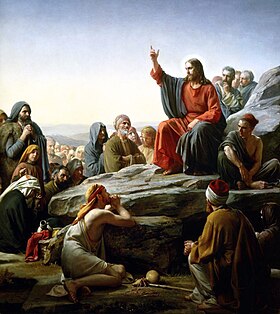 Can religious beliefs actually retard our intuitions for justice and fairness? Research seems to suggest it might well. The Christian religion has imbued Western thought with the fundamental belief that God presides over a just world – one where sin is punished and rightly-held beliefs and actions are rewarded. We see this attitude in every aspect of human interaction. Today, in some sparkling sports stadium an earnest athlete is bound to thank his deity of choice for the good fortunes that befell his team or his game changing performance. By extension, the loser ( a value loaded word if ever there was one) will decry his lack of luck. From the Book of Job to Pinocchio and Cinderella, this belief in what some psychologists call “immanent justice” or “The Just Word Hypothesis” seeks to explain our plight and our success. It also hardens our attitudes about the poor, victims of crimes and those folks either buoyed or sunk by pure chance.
The Book of Job gets us into the mindset. A saintly man if ever there was one as the Bible itself acknowledges, God allows Satan to test Job with all manner of suffering to determine his worthiness. Stripped of his wealth, prestige and power, Job then loses his children and ultimately his health and vigor. Still, Job endures and never ever curses his fate – or his God. He does consult his friends for some inkling as to the cause of his travails. Their answer, which comes like a thunderclap is: “Behold,” one of them declares, “God will not cast away an innocent man, neither will he uphold evildoers” (Job 8:20). Classic “Blame the Victim” mentality from this coterie of advisers.
Puzzled but resolute, Job however concludes that despite his worldly righteousness, he can never know divine justice and according to the story prostrates himself silent before his Master’s “Just World.’ For that, he is rewarded with the resumption of his wealth and status. He even replaces his children with seven new ones. The clear message to the world however is the same: God handles the world’s justice and we are powerless to exact our own except on only the most superficial level.
Jesus himself gets in on the act in the New Testament. Addressing the multitude in the Sermon on the Mount, he has two distinct things to say about justice and our expectations of it: Blessed are…..those who hunger and thirst for righteousness: for they will be filled. (Matt. 5:6) and Blessed are those who are persecuted for righteousness’ sake: for theirs is the kingdom of heaven. (Matt. 5:10). In modern speak, “Don’t worry God will handle it in his own way and, if you let him do so, you’ll get the whole enchilada. The pearly gates, the mansions, those singing and harp-playing cherubim … you, my faithful believer, get it all.”
Job and Jesus illustrate the two transcending features of Just World Hypothesis: The world is just and if it isn’t in your opinion, it’s still not your problem. Grin and bear it and you’ll get rewarded. As for your neighbor’s suffering the words of that saying from India keeping ringing through my head, “ The tears of your neighbor are just water.”
The same notion has transcended the ages in everything from fairy tales to modern songs. Pinocchio is punished for his lies by the ever-growing nose. Cinderella is rewarded for her suffering. Not through her own works mind you, but through a deity stand-in –her fairy godmother – who whisks her off into a magical world of wealth and power that her tormenting family can never hope to achieve. In our own times, the belief in a Just World has musical accompaniment. Here’s country music star Craig Morgan telling us the value of suffering and what that our reaction to it should be: “It ain’t nothing,” he sings.
“So what?” you are probably asking. Nothing new here. Well, as author and observer to religion, Sam Harris is wont to remind us “Beliefs have consequences.” And research tells us that beliefs in a Just World promote negative attitudes towards victims and the poor and reinforce undesirable attitudes in those unafflicted including emotional callousness, indifference and victim blaming. In one shocking Florida case cited by researchers Claire Andre and Manuel Velasquez, a 22-year-old rape victim saw her confessed attacker exonerated by jury because according to the foreman “We all feel she asked for it [by] the way she was dressed.” Her provocation to the knife-wielding Georgia drifter who raped her twice? Wearing a white lace miniskirt, a green tank top, and no underwear.
Writing on the Santa Clara University website Ethics Page (here), Andre and Velasquez attempt to explain the phenomenon:
The verdict of the jurors in the Fort Lauderdale rape trial may have been influenced by a widespread tendency to believe that victims of misfortune deserve what happens to them. The need to see victims as the recipients of their just deserts can be explained by what psychologists call the Just World Hypothesis. According to the hypothesis, people have a strong desire or need to believe that the world is an orderly, predictable, and just place, where people get what they deserve.

“Get what they deserve” is a ubiquitous rationalization in all manner of situations but most prominently in cases like the one unfolding in Ferguson, Missouri. “They” is the operative word as those using this corollary to Just World Hypothesis always tend to distance themselves from the plight of the victim. Here’s one observer’s reaction to the gunning down of unarmed teenager Michael Brown by an overly-militarized police mindset. Former Prosecutor and Fox News’ Kimberly Guilfoyle offered this little piece of legal advice for those who want to avoid police shootings: “Don’t go out and commit crimes.” Less that insightful on the topic of carnage in the streets but revealing on the mindset of Just World Hypothesis.
We shouldn’t judge Kimberly too harshly. She has lots of company. In the seminal study published in 1966, psychologist Max Lerner observed student reactions to apparently painful electric shocks inflicted on fellow students. The students watching the agony were given the choice to “reassign” the victims to a “reward condition” – stopping the pain and pay a monetary award for the victims’ troubles. Virtually all of the students “jury” voted to stop the pain and dole out the cash. But things changed dramatically when the student “jury” was told they could do nothing about the plight of the victims except watch. In the latter instance, the attitude toward the victim changed. When asked, the student “jury” rejected the suffering of the victim and suggested that the victim somehow deserved the punishment. Aversion reaction? Maybe. But more likely the “Just World Hypothesis” kicking in.
Zick Rubin of Harvard University and Letitia Anne Peplau of UCLA (here) have taken Werner’s work a step further to analyze the attitudes of the student “jurors.” Their findings, published in Journal of Social Issues in 1975, found subscribers to Just World Hypothesis tend to be religious, authoritarian, conservative and admire social institutions and authority figures. Further, the adherents to Just World Hypothesis harbor negative attitudes toward the underprivileged including the poor. They also tend to “feel less of a need to engage in activities to change society or to alleviate plight of social victims.”
These attitudes also shape the mindset of society’s privileged classes as terrific blogger Michael Spindell has written many times on this blog (here and here). The rich truly do think differently than the rest of us and we culturally reinforce the perception. Science proves it. In an earlier study in 1965, Lerner had deduced that student subjects routinely equated success with virtue. In that study Lerner demonstrated this “perceptual link between reward and virtue. Subjects who learned that a fellow student had been awarded a cash prize as a result of a random drawing were likely to conclude that he had in fact worked especially hard. “
A recent article in Salon illuminates (here). Why do the headlines always remind us that rich people are different – and better. “What The Middle Class Doesn’t Understand About Rich People,” “9 Things Rich People Do Differently Every Day,”“15 Surprising Ways Rich People Think Differently” scream the banners. They are “better” aren’t they? They have to be in a Just World.
Study after study says “no”. Researcher Paul Piff finds those with more modest incomes are more generous, charitable, helpful and give a larger percentage of their disposable income to charitable causes than the wealthy. Other studies find that drivers of luxury cars are more likely to cut you off in traffic than drivers of less expensive models. The wealthy are more likely to endorse lying and cheating than their less well-heeled contemporaries reasoning that they are entitled to do so due to superior intellect or work-ethic. Just World Theory?
Zick Rubin and Letitia Anne Peplau say probably “yes” and the successful are prettier, too (here):
The converse of the tendency to blame the victim also seems to be common: Success is often taken as a sign of virtue. Newspaper features on state lottery winners frequently mention the winner’s hard work, good deeds, and admirable qualities, as if these characteristics helped to account for his or her purchase of the lucky ticket. Recent studies have documented people’s tendencies 68 ZICK RUBIN AND LETITIA ANNE PEP1AU BELIEF IN A JUST WORLD 69 to view physically attractive people as more sensitive, kind, and better-natured than less attractive people (Berscheid & Walster, 1974), suggesting that even the “reward” of beauty is often seen as deserved.
Even more perversely we tend to agree with our haughty, rich friends reasoning it must all happen for a reason and in a Just World its got to be merit and not mere happenstance. We are orderly beings despite what you see in other people’s houses on the next episode of Hoarders and we want to believe that merit makes the world go ’round.
What does all this mean? Seemingly, religious culture and our intuitions for justice are at odds despite the seeming congruity. Conservative attitudes shape perceptions of justice and it takes some doing to overcome the “Blame The Victim” mentality. None of this bodes well for those hoping for a peaceful and just outcome for the Michael Brown case. When coupled with institutional racism, Just World Hypothesis takes on the pernicious role of divider along social-economic, racial, and ideological fissures.
Will we ever accept that we are responsible for social justice and that “someone else will do it” just won’t work? As one of my favorite philosophers, Stevie Wonder, says; “Lord, Heaven help us all.”
Sources: See throughout
~Mark Esposito, Weekend Blogger
By the way and for better or worse, the views expressed in this posting are the author’s alone and not necessarily those of the blog, the host, or other weekend bloggers. As an open forum, weekend bloggers post independently without pre-approval or review. Content and any displays of art are solely the author’s decision and responsibility. No infringement of intellectual property rights is intended and will be remedied upon notice from the owner. Fair use is however asserted for such inclusions of quotes, excerpts, photos, art, and the like.
The “theology of suffering” is way too complex for this blog post, but you’ve done sort of a good job as far as it goes. I would agree that certain shallow understandings of the subject yield an ugly victim-blaming mindset, and I would also agree that this mindset is far too common, especially in the US.
In a similar vein, the idea that the rich and the poor think very differently is also a bit facile: both tend to adopt an ego-centric view that is in some sense a comfort to them, and in that sense they are exactly alike. I pointed this out recently here:
http://strikelawyer.wordpress.com/2014/08/11/rich-man-poor-man/
Finally, it’s just my opinion but I think the pernicious aspects of the “just world hypothesis” are primarily a protestant problem, and to the extent they are more pronounced in the US that’s probably because the US is the world’s only protestant country that was actually founded as such. Attempting to understand Christian ideas in a vacuum isolated from a broader understanding of western thought is an effort bound to go astray.
Interesting post, though.
Schulte, with the appeal to authority fallacy….
“However, theology is not your field…”
It doesn’t have to be his field for him to be right.
Sullivan digs up the “Islam is a bunch of murderous thugs” BS today.
http://t.co/iOkskepkSp
Ta-Nehisi Coates replied with two tweets:
> “most Christians” rejected religious violence after 30 Yrs War–not counting Holocaust, slavery, colonialism.
> People who lynched black people thought they were doing Christ’s work–and said so, very loudly.
But, hey, we have an even better example right here with Schulte himself… warmongering for more Crusades, the death penalty, cutting spending for the poor, racist voting laws… The GOP’s game plan which Paul eagerly wakes up every morning to defend from the DFHers and the Evil Muslims, and anyone else who doesn’t agree with him.
Paul: Could your ad hominum, empty criticism be any more blatant. Not one response to anything that was written.
Powerful.
Once again, religion gives forth what people decide to take from it. Much like a good beer. Drink one, see what it has to offer, respect it for all the goodness it provides, and don’t overdo it.
Nice article Mespo, but a horrible disservice to the Sermon on the Mount. Point still made though.
We live in a world of choice and chance.
Greet the ever-new dawn. Today is the day I am living. Yesterday a memory; tomorrow is multiple possibilities. Choices, choices … good luck!
Justice …
He was a big, big man in town, you see.
He rubbed his shoulders with the leaders there.
He came to be involved within a crime.
He lied, accusing someone he had said he hated.
He had his friend, the prosecutor
Bring charges against this innocent.
The accusation that he made was false
That accusation was believed by most.
The case resolved, the charge dismissed,
The judge who was his friend, he ruled
That there should be a gag decree
So no one knows that it was false.
The DA is immune from any suit.
The system worked, you see, and there was
Justice.
To paraphrase, Religion is the mother lode of bad ideas.
BarkinDog –
Were your ancestors from the Dog Star?
I’m a Frisbeeterian. We believe that when you die, you soul goes up on the roof, and you can’t get it down.
I was right about the comet, and I’m right about this. We invite you to join.
Thanks for the Candide reference at 10:05 am, Al O’Heem. That made me chuckle at our old friend, Dr. Pangloss. I love Voltaire.
I am an Eighth Day Dog Adventist. We are not Xtian by any means and reject all notions of a human Christ character. We believe that on the 8th Day God Created Dog to Provide Guidance To Humans. Dogs spread throughout the globe. In some places they are doing a good job and humans are acclimated to dog. In other places like Morocco you will find a market with dogs hanging by their feet still alive and ready for sale for human food consumption. But, after God established a good dog profile God withdrew from watching over mankind and left it up to Dog. A human can pray to God all day long and there will be no ear. However, if you have a dog nearby you can obtain some solace and some positive reinforcement for correct behavior. Bad reinforcement for bad human behavior. If you beat your wife your dog will fart and probably drop a turd on the rug. If you had a bad day at the office or orifice the dog will sit by you and give some consolation. Then cheer you up by playing a dog game or pushing a bone around on the floor to distract you from depression. When you are good to others and kind to strangers the dog will wag the tail and invite you to pet him. When you are mean to others a dog will grimace and hunker down. Christopher Hitchens had a dog by the way.
Most of our good Presidents had dogs. Under those Presidents our nation was guided wisely. Right now our President has a good dog named Bo. You should all be thankful that Bo does his duty and obligations each day and night.
If you do not have a dog then think about yakking with the neighbor dog. When no one else is around you may relate in full English language your thoughts and travails. The dog will lead you in the righteous path.
Dog spelled backwards is God.
Many dogs were humans in prior incarnations and vice versa. Dogs recall their prior human existence whereas humans do not. Unless they are hypnotized. If you are curious go see a good hypnotist and ask him to ask the right questions. Quit the barking when you are out of the trance. Be good out there. Beware Of Dog signs have their purpose. We watch out over good humans and deliver them from evil ones.
Nuff said. Most of you wont believe any of this and will go off to Sunday sunrise service with Bible in hand. Good luck.
For me to be able to make intelligible sense of human destructiveness, I found that I needed to have an intelligible model, one that is scientifically testable and scientifically refutable if actually false, of what, in the “big bang model of cosmology, generated the “bang.”
Human destructiveness is, methinks, as though an echo of the state of existence which preceded material existence, much as the approximately 2.3 Kelvin microwave background radiation may be modeled as the lingering echo of the “big bang” itself.
Within what I find to be an intelligible model of “big bang cosmology,” there is a curious logical property to the entire realm of existence, one that my indicate what the core nature of the enigma (if there is an enigma) of the human condition may be. This logical property is to be found within the philosophy of set theories.
Given the existential observation that existence exists at least as observation, imagine that something exists which could stop all of existence from existing, and imagine that said something set about to stop all of existence from existing. What would happen?
The something that was stopping all existence from existing would stop itself from existing before all of existence could be stopped. Existence, from a set theory perspective, exists because, if for no other reason, it is impossible for existence to not exist because nothing can exist which can stop all of existence from existing.
Perhaps the title of a book by Paul Tillich may illumine, The Eternal Now, Charles Scribners Sons, 1963.
As a bioengineer, I find it useful to imagine that existence, as it is observable, may be the interior of a singularity, such that, within that Eternal Now Singularity, what exists is a process of superposition; The Eternal Now keeps adding to what it has, in the immediate now, already done; or, the process of The Eternal Now is of evolving creativity and creative evolution. Every philosophical paradox I have come upon seems to me to vanish identically with a model of existence as being the creative evolution of evolving creativity, and that seeming circular reference is the essence of existence as best I can yet model it.
I have been reading, and re-reading a sociology of religion book, Carolyn Marvin and David W. Ingle, Blood Sacrifice and the Nation: Totem Rituals and the American Flag (Cambridge Cultural Social Studies), Cambridge University Press, 1999.
I began to formally study the sociology of religion during my freshman year at Carleton College (1957-1958), and have continued that effort ever since. I recently became an Emeritus/Retired member of the American Sociological Association.
A few years ago, or so, I posted a comment on the Turley Blog to the effect that I find the American Adversarial System of Law and Jurisprudence, in the United States of America, to be of the form and function of an established religious cartel. My view was, as I observed, as though summarily rejected on this blog. I posted my comment then as a method for learning how my view might be scientifically falsified. No such falsification has yet come to my attention and awareness.
When I first posted my view about religion and the American Adversarial System, I had not done the bioengineering based sociology field work that has made clear to me the religious establishment nature of the American Adversarial System.
Because I work as a Wisconsin Professional Engineer, in accord with the Code of Ethics of the National Society of Professional Engineers, and because said Code requires that I hold paramount the public safety, until was able to field test the methodology of repair of American Law and Jurisprudence, and know, from field experience, that the methodology of repair will successfully hold paramount the public safety, it was unethical for me to proceed.
I have, and have had, for a while, Émile Durkheim, Joseph Ward Swain, tr. The Elementary Forms of the Religious Life: A Study in Religious Sociology, George Allen & Unwin, Ltd., London, 1915.
Oh, yes, one of my Carleton professors was the late Ian G. Barbour, whose life work was on the relationship of science with religion; I find that my education prepared me well to do the work I do now, in the public safety interest.
A system of law and jurisprudence which makes it impossible for anyone to accurately understand the law and possible subsequent law enforcement if an infraction is deemed to have happened, is a system of entrapment.
Given that the law is what the judge says it is, and the judge only says what the law is after an event which garners the judge’s attention and effort, it is actually impossible for anyone, including the judge, to know without error what the law will be said to have been when the judge “finds” the original legislative intent only after the event which starts the finding of the original legislative intent. That intent does not actually exist until the judge “finds” (or, is “confabulates” a more accurate word?) it.
Thus the judicial theory espoused is that the intent existed at the time of the legislative act, whereas the judicial theory in use requires that the supposed original legislative intent actually, and truthfully, be purely ex post facto.
What is the repair methodology for the American System of Law and Jurisprudence? Remove from the interpretation of the law(s) any and every form of the deception and dishonesty of time-corrupted learning. Time-corrupted learning is, I find, rather well explained in the published work of neurologist Robert C. Scaer, as, e.g., in The Trauma Spectrum, W. W. Norton, 2005. I find the first page of Chapter 3, titled, “Trauma as Imprisonment of the Mind,” to be profoundly pertinent.
Alas, myths are often created and sustained to confirm cognitive biases and preserve power. Powerful biases are captured and exploited by advertisers, demagogues, and various religious enterprises, “to name but a few.” Your essay does a good job exploring ancient and modern unconscious bias vs. an enlightened pursuit of justice.
Unfortunately, many conventional thinkers will read and react exclusively through the filter of their own immutable controlling cognitive bias. In 2014, Copernicus is as unpopular as gay weddings at the local Baptist Church,
Also, I wouldn’t expect anything different to come out of the mouth of Fox news babe Kimbely Guilfoyle, as one of ‘The Mean Girls’.
Dictators, theocrats, preachers and vicious maurading terrorists have used this “just world” claim to explain, excuse and otherwise legitimize every brutual and unjust action and those who benefit by a closeness to the leader have counseled the oppressed by telling them that if they have been wronged god will punish the wrong doers and compensate the afflicted in the next world. This has lead many a population to be passive and accepting in order to avoid god’s punishment in the next world while the relgious leaders enjoyed all this world had and has to offer. Some religions have gone through a period of enlightenment wherein they learned at least one thing–overt violence doesn’t make the world a better place even for god’s chosen so they use more subtle methods; others refuse to accept even that obvious truth.
This doesn’t mean all religious people subscribe to the “slash and burn in the name of god” view but unfortunately it doesn’t take many to turn a region into a pit. Theocracies and blasphemy laws are dangerous and anti human. I say save the humans.
“Religion poisons everything.” Christopher Hitchens RIP
There is dual “justice” everywhere. There are people who attempt to appear just by exclaiming they use tough love. There are people who live by “There for my the grace of God go I”. We see the two mindsets here on this blog every single day as well as in the population at large. It is uncanny and disturbing that those who identify as religious tend to be those who show the least amount of empathy, desperately searching for verses out of Holy text to bolster their own disregard for others. Of course one won’t be popular among these folks when pointing out the points Mespo made in his article. OF COURSE we can expect to see attacks on his intelligence, his sincerity, his explanation of a truth many of us have recognized. Those who recognize that it takes constant battle to see social justice implemented understand this already. Excellent thoughtful article Mespo, it’s wonderful to have an article that forces one to face uncomfortable truths and to continue to endeavor to chehange the system that allows injustice.
Tout est pour le mieux dans le meilleur des mondes
Scientists have said for some time that Ebola may be spread through coughing, sneezing, and other aerosol transmission.
The top American health agency – the U.S. Centers for Disease Control – has denied this for months. But CDC has finally been forced to admit that it’s true.
The Los Angeles Times reports today:
Some scientists who have long studied Ebola say such assurances are premature — and they are concerned about what is not known about the strain now on the loose.
http://thecrux.com/the-cdc-just-made-a-shocking-admission-about-ebola/
Will the meek inherit the earth? Will sinners die an agonizing death?
Is the final justice approaching us all?
Blaming the victim is wrong and is an abuse of religion, not something that is necessarily prescribed by it. Christianity teaches justice only over the long run and in the Bible often it takes years or even generations before justice is finally done.
Mike, I can follow your line of reasoning (though I disagree with your interpretation of the passages of the Sermon on the Mount – I see it as a call to strive for justice, especially Social Justice, even when you are in an uphill fight against authorities or public opinion), but as you advance your argument to support your original contention I think some of the linkages get tenuous. I is easy to see that the privilidged are often more callous, and that there is a lot of “blame the victim” going on – but I don’t think you can lay the blame for that at the feet of Christianity per se. Perhaps there are sects of it teaching just that – certainly there are sects of Islam and Himduism teaching it, however it is the antithesis of the Christian beliefs that I was taught.
mespo – if you were a theologian, I would take this article seriously. Just as seriously as I would from the Archbishop of Canterbury (who I think is either agnostic or atheistic). However, theology is not your field and in this case you are way out over your head. Still, I just have to ask. Did you have a bad week? Was someone unjust to you?