 Deputy PD, Erika Ballou, has refused to comply with a judicial order to remove a Black Lives Matter pin from her blouse — a clear violation of court rules. As we recently discussed with regard to such pins, judges maintain basic rules of decorum and dress in their courtrooms, particularly in barring political symbols that may influence a jury or witnesses. What is astonishing is not just that Ballou defied the court but that Clark County Public Defender Phil Kohn was standing next to her and a dozen defense lawyers stood behind her in support.
The Nevada Code of Judicial Conduct states that “a judge shall require order and decorum in proceedings before the court.”
Judge Douglas Herndon of Clark County was consistent with most judges in demanding that lawyers remove such political buttons. He stated that the button “is making a political statement, that, ‘I wear this in protest of how the court is treating minority defendants.'” Herndon’s order was well within the powers articulated in prior cases like Burner v. Delahanty. In that case, the court explained the facts:
The defendant, Thomas E. Delahanty, II, is an associate justice of the Maine Superior Court. On October 31, 1995, Berner was seated in the gallery of Judge Delahanty’s courtroom, waiting for his turn to appear before the court. Berner wore a circular button pinned to his lapel. The button was approximately two inches in diameter and bore the words “No on 1-Maine Won’t Discriminate.” This legend expressed opposition to a statewide referendum that Maine voters were scheduled to consider during the November election.1 Neither the pin nor its message were related to Berner’s business before the court.
The court upheld the power of the judge and rejected the same type of free speech claims made by Ballou:
Judge Delahanty’s order compelling Berner to remove his political-advocacy button while in the courtroom fits comfortably within this apolitical paradigm. Emblems of political significance worn by attorneys in the courtroom as a means of espousing personal political opinions can reasonably be thought to compromise the environment of impartiality and fairness to which every jurist aspires. As an officer of the court, a lawyer’s injection of private political viewpoints into the courtroom, coupled with the judge’s toleration of such conduct, necessarily tarnishes the veneer of political imperviousness that ideally should cloak a courtroom, especially when the partisan sentiments are completely unrelated to the court’s business.
Here, Judge Delahanty stated clearly that he was ordering Berner to remove the button because participants in the judicial process ought not simultaneously “take sides” in extraneous political debates.5 This explanation is entirely consistent with a desire to ensure that the courtroom remains free from the appearance of political partisanship. Evaluating the professed justification, as we must, “in light of the purpose of the forum and all the surrounding circumstances,” Cornelius, 473 U.S. at 809, 105 S.Ct. at 3453, we discern no reason why a judge may not even-handedly prohibit lawyers from wearing political paraphernalia in the courtroom.
Notably, public defenders in this office have previously had confrontations with judges who say that they have refused to comply with orders.
The rules for the Tenth Judicial District are typical in prohibiting certain clothing items but does not expressly reference buttons or other symbols:
Rule 10. Courtroom conduct and attire. Proceedings in court should be conducted with fitting dignity and decorum.
The following attire shall be required for all court appearances:
A. Attorneys:
1. All male attorneys shall wear full length trousers, dress-type shirts, coats and ties.
2. All female attorneys shall wear suitable dresses or pantsuits.
B. Litigants, witnesses and jurors (minimum requirements):
1. Male: Long or short sleeve dress-type shirts; slacks or dress-type denim trousers; dress shoes or boots.
2. Female: Dresses; dress slacks or skirts and blouses; dress shoes.
3. Law enforcement personnel may elect to wear uniforms.
In no event will t-shirts, tank or halter tops, shorts, soiled or unkempt clothing, thongs, sandals or casual exercise apparel be allowed.
[Added; effective November 6, 1987]
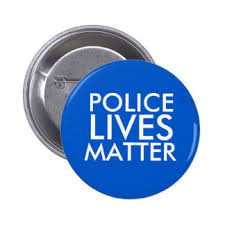 Clark County Public Defender Phil Kohn appears to believe that lawyers can insist on wearing political symbols or buttons despite orders for a court and also refuse to leave a case when found in defiance or contempt. That raises serious question over the judgment and conduct of both Kohn and Ballou. Kohn says that he does not view the pins as political speech. If not, what are they? Moreover, Ballou defended her actions on free speech grounds. Since this is not religious speech, it is hard to see what free speech Ballou is referencing other than political speech. Moreover, symbols tied to other causes from cultural to sports can be deemed as currying favor with jurors, judges or witnesses. What if a prosecutor started to wear a “Police Lives Matter” button?
What do you think?
Now that the public’s thoroughly aware that judicial fairness is predominantly reserved only for those who can readily afford the untold thousands it takes just to stick one toe into any court’s murky waters, it isn’t at all astonishing that disrespect for the system has infiltrated the system itself.
There was a Federal Judge in Madison, Judge John Shabazz,. who ran a tight ship. I would love to have seen him handle Cat Ballou on this one.
“John Shabazz”? Was he Malcolm X’s nephew or something?
Only a fool would select Paul on such a jury panel.
Dr. Green – one of the question they do not ask is “Do you think I am a fool?”
On a roll today!
Personally, I would like to see each attorney, defendant, plaintiff, and judge to be a walking billboard. Sorta like NASCAR drivers, LOL. Now, that would some attire. Why, they could even paste some bumper stickers on their suit jacket. Actually, I am LMAO. Yes, even some attorneys are dumb clucks. This one, Deputy PD, Erika Ballou, probably slept through this class. Just another example of the Dumbing Down of America.
It’s passing strange that Prof. Turley retains his quaint belief in the rule of law.
Because we’re long past that point.
We are now in a post-constitutional quasi-democracy in which the President rules by decree and his SOS Clinton violated laws at will, fearing no prosecution.
Rules are arbitrary and capricious, too numerous to comprehend, so that one is always in violation of some federal, state or local diktat.
As such, prosecution is applied mainly for political purposes, and pour encourager les autres.
10 years ago I would have agreed: remove the damn pin and litigate, it’s your job.
Now?
Phhhthth.
Who cares?
It’s completely arbitrary, dependent on the judge in front of you.
As long as the political class is not held to the rule of law then they should NOT be afforded the presumption of innocence with anything they do. That right belongs to those being judged according to the rule of law. Those elected to political office or nominated into public service that take an oath to honor the rule of law should be required to prove they HAVE honored that oath in order to be eligible for reelection or continuation into the positions they were nominated. Term limits be damned; it’s about time the people take back this republic and require the political class PROVE they HAVE honored the oath rather than ASSUMING they have.
KCFleming – when they said that ignorance of the law was no excuse they had all the laws in a book about 3 inches thick and all educated people read the newspaper. Now, between city, county, state and feds the laws stack 20-30 feet high (we’re are not including rules from bureaucracies here) and hardly anybody reads the legal section of the newspaper.
Exactly.
Enforcement is entirely erratic, dependent primarily on your political class, need for revenue, or the prosecutor’s desire for advancement/publicity.
Again, that’s not the state courts, except in exceptional cases.
The Penal Law of the Consolidated Laws of New York amounts to about 1 modest volume, and that’s with publisher’s annotations included. The most rococo part of it would be the sentencing rules.
You’re not going to find much in the Penal Law that would confound an ordinary person. You’ve got some gimmicky enhancements (“yada yada yada within 500 yards of a school”), likely instituted with session laws with popular names drawn from an unfortunate moppet. The provisions on racketeering are vague. Otherwise, the only things which would surprise an ordinary citizen are relict provisions not enforced (e.g. Adultery, a class b misdemeanor in New York).
You’re referring to the federal courts, with their ‘innovative’ big budget prosecutors. At the state level, unless it’s one of those godawful ‘high profile’ cases, it’s assembly line processing of cases. An ADA in New York when I worked for the courts would carry to a verdict about 160 cases a year (and I cannot recall how many others wherein the charges were dropped), of which > 95% consisted of plea bargains The defendants were the predictable sort and were seldom aught but guilty guilty guilty.
You funny people. If an American flag lapel pin should be banned in an American courtroom then just go full-blown banana republic and allow anything. Eliminate jurors while your at it as they cannot be trusted to be unbiased. Same with da judge. Hell, skip the whole trial thingy and post the case on social media and have the public vote. Majority wins.
Olly, you crack me up! Trial by Twitter? =)
here is a good rule for all lawyers to remember: argue BEFORE Judges, don’t argue WITH Judges.
This hopefully young-can-still-learn-the-rules attorney should be briefly jailed and heavily fined. Her boss also. Those standing behind her, fined. Hope the Judge has some guts and doesn’t mind showing that the rule above is absolute.
Here’s a situation where ‘god’ given ‘inalienable’ rights are curtailed for a higher ideal; the concept that if you express an ideal, even with visual presentation only, you just might move along closer to said ideal. Someone who puts their individual ‘god given and inalienable’ rights ahead of the good of the society is unlikely to change their mental bent simply because they can’t parade that bent in public while acting as an instrument of justice. For some, it’s common sense. For others it’s George Washington whispering in their ear.
This is that murky area in the middle; murky for some but not all.
Also anything blue such as clothing or shoes would indicate “Crippin”.
Reblogged this on Matthews' Blog.
She is likely suffering from Post Traumatic Slavery Disorder, the disabling condition described in numerous “scholarly articles”.
She may try to force special courtroom accomodations( e.g., wearing the pin she requires) for her condition.
Maybe the geniuses on the 9th circuit will back her up if she argues that the ADA allows an exception for her.
tnash – I don’t think the 9th Circuit would stoop so low as to back up the wearing of that pin. Judges usually have each others backs unless the behavior is outrageous. We have seen some of that on here. 😉
The pin should have been removed.
So the court is there to uphold freedom of speech, except on its own premises…
Sure is too complex for my little head….
Justice = just-this…. supposed to be simple, you know. A monkey knows.
If they are not picking a jury then the right to wear political badges stands.
Pietro – if I am on the jury, if they are wearing a political sign, I vote guilty for their client.
Paul,
I really hope that was just some bad joke and not an indication of your willingness to violate your oath as a juror for such a petty reason.
fiver – the attorney represents (stands in for) the client. I think BLM is a thuggish organisation that bullies or brutalizes others. If the attorney stands for that, so does the client. I don’t think officers should wear their uniforms to court because it gives them an extra air of authority when they testify. I do think judges need to lighten up on the dress code or judges and lawyers should wear the same gowns and wigs they do in England. That would take care of the problem.
I have taken all the dealer’s markings off my car and would not have Sun Devil plates, but my wife surprised me with them for a bday present. I would not have bought them myself. I have no stickers on my car, except one for TripAdvisor (who I write reviews for) and it is magnetic and they gave it to me for writing so many reviews.
I think these defense attorneys should instead of spending court time advocating their own opinions and political views, they devote more attention and effort toward defending their clients. These counselors should stop being so selfish.
Why are you assuming they can’t do both? I think some of the other posters hit the nail on the head – the judges in general are not even-handed on what they allow and what they don’t allow. They allow police officers to testify in full uniform and then get bent out of shape with a simple pin. The system is often stacked against defendants, this might seem a small matter, but unless there’s a jury, what’s the harm?
She’s likely an utter mediocrity, which would diminish her effectiveness as a public defender. From the behavior of the department head, I’ll wager mediocrity is congruent with the culture of that office. Not merely mediocrity, but obstreperous mediocrity.
You have no idea, so why disparage her? There are excellent public defenders and bad ones. Why jump to conclusions based on no evidence at all?
I do have an idea. Adhering to a nonsense cause like Black Lives Matter is an indicator that the woman is pig ignorant, suffused with malice, or ignorant and malicious at the same time. Stick a fork in her and her boss.
Tinker v. Board of Education of Des Moine, IA. Heard of that case?
I regularly see attorneys wearing American flag lapel pins and tie tacks and cuff links in the shape of hand cuffs. All such symbols should be prohibited if all political sentiments must be prohibited. If the standard is anything that might curry favor with jurors, witnesses, or court personnel or compromise impartiality, then special ties or other paraphernalia that indicate support for various ethnic or nationality groups should be prohibited, like green ties on St, Patrick’s day or Christmas symbols in December, etc. And what about allowing police officers to testify in uniform? That certainly can have a prejudicial affect on jurors and judges. I don’t question a judge’s right to make such rules for the courtroom, I just believe they should be evenhanded in applying such standards.
Lamar Hankins – I am with you about police testifying in uniform and also about the specialized cufflinks, etc.
The gold-fringed flag that openly besmirches the Constitution is by far the most jarring symbol in the courtroom.
Spot on, Lamar
While it’s possible this judge also prohibits American flag pins or police uniform patches with department mottoes such as “Honesty, Integrity and Wonderfulness,” it’s not likely. Moreover, there doesn’t appear to have been a jury or venire in court at the time, so what is the judge’s problem?
… other than he personally didn’t like the content of the speech so he used his governmental power to suppress it.
All such symbols should be prohibited if all political sentiments must be prohibited.
Of course. It might offend the large population of attorneys and criminals who despise the country which succors them.
Someone should wear an old Avis pin that says, WE TRY HARDER.
Am I dating myself?
If you were dating yourself, that would be OK. I guess you could even marry yourself if you wanted. All the old rules about that kind of thing don’t apply any more.
Squeeky Fromm
Girl Reporter
PS: Even “anymore” is OK any more.
My local mechanic whose son is a SWAT K9 handling cop created a “Badge Lives Matter” emblem. It’s very cool and I give out stickers whenever I encounter a cop patrolling in my ‘hood. I personally think “ALL lives matter” and all folks whether civilian or officers who violate the law should be held accountable.
In the case of Ballou I think it is inappropriate to wear any political pins in the court room. This to me is a clear example of identity politics overriding common sense. I don’t understand why she can’t be held in contempt? But then again, I am not an attorney.
It is clearly political speech and the judge should drop the hammer on her and the rest of the public defenders who were standing with her.