 With Congress moving to give the Trump Administration authority to withhold grants from sanctuary cities, California is moving to become a sanctuary state. Under Senate Bill 54, the “California Values Act,” state and local law enforcement would be prevented from cooperating with the federal government in the deportation of illegal immigrants. The bill would bar such actions even for undocumented immigrants who have committed serious crime (given a narrow definition of “serious felonies”).
Category: Constitutional Law
 As many on this blog know, I am hold a near absolutist view of free speech that has led me to long criticize hate speech laws around the world. We are seeing a steady expansion of criminalized speech, often under ill-defined or highly subjective standards. That is why a recent decision of a court in Cape Town caught my eye. A controversial art display inSouth African National Gallery entitled Fuck White People was reviewed by the Cape Town Magistrate. The court declared that the display, including both art, tee-shirts, and other items was not hate speech. I am always relieved when free speech prevails over criminalization. However, there is still uncertainty over the standard. Because the artist invoked the struggle of Albert Luthuli and Nelson Mandela, the campaign was deemed non-hateful speech. Would that have been the same result is an Afrikaner printed works and tee-shirts with the same message about Black people? Again, the point is not to disagree with the ruling. The point is that speech regulation often rests on uncertain and shifting standards.
Continue reading “Court: “F**K White People” Not Hate Speech”

It must be challenging to be a columnist in an authoritarian Kingdom where you are expected to heap praise on the King while avoiding the line that divides utter fawning and divine worship. It appears that Ramadan al-Anzi crossed that line and is now suspended for using praise reserved to the Almighty as opposed to the merely magnificent.
Continue reading “Saudi Government Suspends Columnist For Praising King With Words Reserved For God”
By: Cara L. Gallagher, weekend contributor
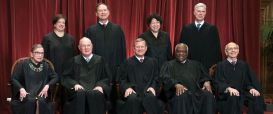
It was back to the Supreme Court for me this week. An unusually sleepy end of the October 2016 term, except for gossip of a potential retirement (Kennedy, not Ginsburg, this time), came to a dramatic end when the Chief Justice announced in the final minutes of the Court’s last day that they would hear the travel ban/pause cases next term.
There were two clear victories on Monday with this announcement that the Justices would hear the government’s cases defending President Trump’s two executive orders. One was for an imam named Dr. Ismail Elshikh, whose mother-in-law in Syria will now be able to travel to the United States. The other went to John Doe, an anonymous lawful resident who has been trying to get his wife home from Iran. Their victories came in the form of exceptions to the orders which allow their families to be reunited.
The rest of the Court’s 13-page order largely holds onto the spirit of the executive orders issued by the President, with some caveats.
Using the text of the decision, below is what the Supreme Court said in the grant, followed by the potential effects of those decisions, what all this means, and what happens next.
Background and the previous cases
Continue reading “The real winners in SCOTUS’s decision on the travel ban orders”
 Without fanfare, the Justice Department dropped the long fight over stripping the trademark protections from the Washington Redskins football team as an offensive term. I have long been a critic of the action taken by the U.S. Patent and Trademark Office and said at the time that the action was flagrantly unconstitutional. Now millions have been spent but the case is withdrawn in light of the recent decision in Matal v. Tam.
Continue reading “Sacked: Justice Department Drops Fight To Strip Redskins of Trademark Protections”
 A letter from fifty-eight Republican lawmakers calls upon Justice Ruth Bader Ginsburg to recuse herself in the travel ban case scheduled to be argued in October. While there is a fair chance that the case could be moot by October as I previously discussed, a recusal is highly unlikely despite that fact that Ginsburg’s comments were highly inappropriate and troubling. I have been a long critic of Ginsburg’s public speeches and comments as raising serious ethical issues and undermining the integrity of the Court. However, the Court has long declared itself outside of the enforcement of the Code of Judicial Ethics. The result is a dreadful record of self-regulation and Ginsburg is only the latest disturbing example. Ironically, while the media has rightfully raised inappropriate public comments about Trump, it has shown little interest in the inappropriate comments of Ginsburg.
Nguyen Ngoc Nhu Quynh, 37, is a leading Vietnamese blogger known as “Mother Mushroom” has been writing for years to expose the torture and oppression of the one-party state. This week Vietnam showed the world that, despite its portrayal as one of the world’s emerging economies, it remains an authoritarian warmed-over Communist regime. It convicted Quynh and sentenced her to 10 years in jail. For telling people the truth about their government.
Continue reading “Blogger Sentenced To Ten Years In Jail In Vietnam”
 Below is my column in the Hill Newspaper on the Supreme Court order lifting the stay over the Trump immigration order. With the exception of those with bona fide relationships, the Trump Administration has the authority to enforce its travel limitations. As discussed earlier, the order could prove not the next but final chapter of the immigration controversy given the 90 day period set under the Trump order. However, a more immediate issue of concern should be the prior coverage and court decisions leading up to the unanimous order of the Supreme Court.
Continue reading “The Immigration Order and the Regaining Objectivity In the Media and the Courts”

 The victory of the Trump Administration in securing the lifting of much of the injunction on the immigration order consumed much of the analysis yesterday. The Court voted unanimously to lift the injunction for every one except those with “bona fide relationships” in the United States. The latter exception was a bit incongruous with the overall deference to the Executive Branch and led three justices — Clarence Thomas, Samuel Alito, and Neil Gorsuch — to dissent. They would have lifted the ban without exceptions. What was most interesting however was what was not in the order: a hearing date for July. The reason is that it was not requested by the Trump Administration. Given the 90 days expiration of the order, that leads to the question of whether this appeal is a case of “planned obsolescence.”
Continue reading “Is The Supreme Court Immigration Appeal A Case Of Planned Obsolescence?”
It appears that the Battle Royale over immigration is on. The Supreme Court issued the following order: “We grant the petitions for certiorari and grant the stay applications in part.” The Court also reversed in the state in the major religious clause case in Trinity Lutheran. Continue reading “Supreme Court Reinstates Part of Immigration Order In Clear Victory For Trump”
 The Supreme Court handed down a stinging defeat for the Trump Administration in a unanimous decision in Maslenjak v. United States, where the Administration sought to strip an immigrant of U.S. citizenship over a false statement made on an immigration form. In a decision by Justice Elena Kagan, the justices declared that the government could not strip citizenship from Divna Maslenjak because she falsely stated that her husband had not served in the Bosnian Serb army in the 1990s. Notably, the Obama Administration had taken the same hard position in the case and the Trump Administration continued that position on the appeal.
Continue reading “Supreme Court Rules 9-0 Against Trump Administration in Immigration Case”

 That did not take long. Director of National Intelligence Dan Coats and National Security Agency Director Adm. Mike Rogers met with Special Counsel Robert Mueller to discuss the subjects that they declined to discuss with Congress. Congress then released the information. It now appears that congressional briefings from the Special Counsel are proxy press conferences in this increasingly strange process. As expected, Coats and Rogers admitted that Trump did in fact ask them to tell the public that there was no evidence of collusion between his campaign and the Russians. That was, again, an inappropriate and ill-considered request. However, the disclosure raises a far more worrisome questions with regard to the role of White House Counsel Donald F. “Don” McGahn II. The two intelligence chiefs said that they took anticipated the questions over their conversations and asked McGahn if there was an executive privilege assertion. McGahn simply never responded. That is a highly disturbing account. Executive privilege is not some tactical toy. It has been defended as a core protection of inherent presidential powers. No high ranking officials should be sent into a committee without a clear understanding of the status of information or conversations relevant to congressional inquiries. The non-response was either negligence by the White House Counsel or, more likely and more seriously, a conscious decision to avoid the politically risky decision of either allowing answers or publicly preventing answers.
In the coming weeks, I will be addressing a number of novel constitutional issues that are being raised in relation to the Russian investigation. The first such issue has been widely discussed: is there a constitutional barrier to any federal charge against President Donald Trump for obstruction of justice.
Here is my recent column in USA Today:
Continue reading “Is President Trump Immune From An Obstruction of Justice Charge?”
The U.S. Supreme Court handed down a major victory for free speech on Monday in striking down a provision of the Lanham Act that barred registration for “disparaging” trademarks. The decision came in Matal v. Tam, a case that we have been following. I have previously written about my disagreement with the U.S. Patent and Trademark Office decision to rescind federal trademark protections for the Redskins as a racially disparaging name. As predicted, the ruling answered the question raised in the prior column in controversies like the denying of trademark protection to the Washington Redskins. The decision is good news for Washington’s NFL team, which lost its trademark because its name is disparaging to Native Americans.

 For many weeks, I questioned the need for a Special Counsel in the Russian investigation because it seems like a coverup in search of a crime. I still do not see the evidence of a crime and simply saying “collusion” does not supply an actual crime. However, when President Donald Trump fired James Comey, I supported the appointment of a Special Counsel to investigate obstruction of justice, even though I remained skeptical of the basis for an actual obstruction charge. I still fail to see the compelling basis for an obstruction case without stretching the criminal code to the breaking point. Nevertheless, I continue to support the need for an independent investigation.
The investigation of a sitting American president however must itself be beyond question as to any bias or influence. For that reason, I have been questioning the propriety of Rod Rosenstein to continue in his current position vis-a-vis the Russian investigation. From the outset, Rosenstein seemed to me to be an inevitable and important witness. Ironically, the recent leak magnified this problem. The leak seemed calculated to protect Mueller from being terminated by publicly identifying Trump as a possible target. However, whatever benefit the leak brought Mueller, it undermined Rosenstein. If Mueller is investigation Trump for obstruction, Rosenstein should immediately recuse himself.
It is not clear if Mueller has an equal conflict of interest. There is reason to be concerned. If Mueller discussed the Comey’s termination with Trump as a candidate for the next FBI Director, he might also be considered a witness in any obstruction investigation. It would seem highly material to the investigation to learn of how Trump described his decision and what he said (if anything) to Mueller about the ongoing Russian investigation. At a minimum, the Special Counsel should address what is a reasonable question about his own knowledge of (and participation in) any meetings with Trump on the Comey termination and the Russian investigation. I do not agree with the campaign to discredit Mueller and strongly object to attacks on his character. I believe Mueller to be a person of integrity and I hope that he recognizes that such a meeting raises some legitimate questions that should be addressed.
Here is the column:
Continue reading “Do Rosenstein and Mueller Have Conflicts of Interest in the Trump Investigation?”