 Submitted by Gene Howington, Guest Blogger
Reasonable people tend to agree there is both a right to privacy and that it is necessary. But what exactly is the right to privacy? Justice Brandeis famously said in Olmstead v. U.S., 277 U.S. 438, 479 (1928), “The makers of our Constitution undertook to secure conditions favorable to the pursuit of happiness. They recognized the significance of man’s spiritual nature, of his feelings and of his intellect. They knew that only a part of the pain, pleasure and satisfactions of life are to be found in material things. They sought to protect Americans in their beliefs, their thoughts, their emotions and their sensations. They conferred, as against the government, the right to be let alone-the most comprehensive of rights and the right most valued by civilized men. To protect, that right, every unjustifiable intrusion by the government upon the privacy of the individual, whatever the means employed, must be deemed a violation of the Fourth Amendment. And the use, as evidence in a criminal proceeding, of facts ascertained by such intrusion must be deemed a violation of the Fifth.” Plainly put, at its heart a right to privacy is simply a right to be let alone.
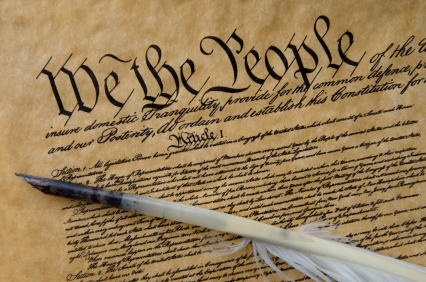 However, do we need to specifically protect it or generally protect it? Is that right absolute? Laws, by definition and the nature of entering a social compact, are restrictions on absolute liberty found in the state of nature. One of the larger disagreements at the Constitutional Convention was about whether enumerated rights would serve to unjustly limit those rights versus a failure to enumerate rights would result in rights not being properly protected. This is a valid question surrounding this issue, especially since some would advocate enumerating the right to privacy by Constitutional amendment. There are advantages and disadvantages to both approaches. While specifically defining/enumerating a right creates a foundation for arguments surrounding said right, leaving a right’s definition nebulous allows jurisprudence greater leeway to evolve around fact specific instance and questions that in the long run can result in a more nuanced understanding and application of the right without the constraints a foundational definition might impose. In this light, consider the right to privacy.
There is no denying the intimate interrelation between technology and privacy. This relationship has been long recognized by jurists. As Justice Brandies along with his law partner Samuel Warren noted in an 1890 Harvard Law Review article discussing the technology/privacy nexus, “Recent inventions and business methods call attention to the next step which must be taken for the protection of the person, and for securing to the individual what Judge Cooley calls the right ‘to be let alone.’ Instantaneous photographs and newspaper enterprise have invaded the sacred precincts of private and domestic life; and numerous mechanical devices threaten to make good the prediction that ‘what is whispered in the closet shall be proclaimed from the house-tops.'” [cites omitted] All questions of applied technology and law can be a double-edged sword; one side honed by often valid public policy concerns and legitimate purpose, the other honed by the caprice of unintended consequences. If the proposed solution to bolstering the right to privacy lay in Constitutional amendment, the wording of such an amendment would need to be very carefully made. A recently proposed EU law on its face seems to be an attempt to bolster the right “to be let alone”. Dubbed the “right to be forgotten” on the Internet and set to go into effect in 2014, this law illustrates some of these unintended and potentially dangerous consequences of either being too specific or in lacking enough specificity in defining rights. Let’s examine the scope of the issue by first looking at the EU law and its potential consequences followed by examining the contrast provided by American jurisprudence surrounding the right to privacy.
The dangers presented by the proposed EU law stem largely from the definition of privacy being overly broad. Jeffery Rosen’s excellent article, “The Right to be Forgotten” by Jeffery Rosen, 64 Stan. L. Rev. Online 88 (2012), served as introduction to the proposed legislation. Rosen clearly points out the hazards presented. “Although [. . . ] depicted [. . .] as a modest expansion of existing data privacy rights, in fact it represents the biggest threat to free speech on the Internet in the coming decade. The right to be forgotten could make Facebook and Google, for example, liable for up to two percent of their global income if they fail to remove photos that people post about themselves and later regret, even if the photos have been widely distributed already. Unless the right is defined more precisely when it is promulgated over the next year or so, it could precipitate a dramatic clash between European and American conceptions of the proper balance between privacy and free speech, leading to a far less open Internet.
In theory, the right to be forgotten addresses an urgent problem in the digital age: it is very hard to escape your past on the Internet now that every photo, status update, and tweet lives forever in the cloud. But Europeans and Americans have diametrically opposed approaches to the problem. In Europe, the intellectual roots of the right to be forgotten can be found in French law, which recognizesle droit à l’oubli—or the ‘right of oblivion’—a right that allows a convicted criminal who has served his time and been rehabilitated to object to the publication of the facts of his conviction and incarceration. In America, by contrast, publication of someone’s criminal history is protected by the First Amendment, leading Wikipedia to resist the efforts by two Germans convicted of murdering a famous actor to remove their criminal history from the actor’s Wikipedia page.
European regulators believe that all citizens face the difficulty of escaping their past now that the Internet records everything and forgets nothing—a difficulty that used to be limited to convicted criminals. When Commissioner Reding announced the new right to be forgotten on January 22, she noted the particular risk to teenagers who might reveal compromising information that they would later come to regret. She then articulated the core provision of the ‘right to be forgotten’: ‘If an individual no longer wants his personal data to be processed or stored by a data controller, and if there is no legitimate reason for keeping it, the data should be removed from their system.’
In endorsing the new right, Reding downplayed its effect on free speech. “It is clear that the right to be forgotten cannot amount to a right of the total erasure of history,” she said. And relying on Reding’s speeches, press accounts of the newly proposed right to be forgotten have been similarly reassuring about its effect on free speech. In a post at the Atlantic.com, Why Journalists Shouldn’t Fear Europe’s ‘Right to be Forgotten,’ John Hendel writes that although the original proposals a year ago ‘would have potentially given people the ability to cull any digital reference—from the public record, journalism, or social networks—they deemed irrelevant and unflattering,’ Reding had proposed a narrower definition of data that people have the right to remove: namely ‘personal data [people] have given out themselves.”According to Hendel ‘[t]his provision is key. The overhaul insists that Internet users control the data they put online, not the references in media or anywhere else.'” This is a fine distinction, but unfortunately not reflected by the final form of the legislation.
Rosen goes on to note “Hendel seems not to have parsed the regulations that were actually proposed three days later on January 25. They are not limited to personal data that people ‘have given out themselves’; instead, they create a new right to delete personal data, defined broadly as ‘any information relating to a data subject.’ For this reason, they arguably create a legally enforceable right to demand the deletion of any photos or data that I post myself, even after they’ve gone viral, not to mention unflattering photos that include me or information about me that others post, whether or not it is true.”
Citing a blog post made by Peter Fleischer, chief privacy counsel of Google, Rosen goes on to discuss the EU law in light of the three categories of take down notice Fleischer notes the legislation would effectively create. The “right to be forgotten” as discussed in Europe and proposed at the end of January arguably covers all three of Fleischer’s categories. He goes on to illustrate how each of these categories and applications pose progressively greater threats to free speech.
“The first category is the least controversial: ‘If I post something online, do I have the right to delete it again?’ This involves cases where I post a photo on Facebook and later think better of it and want to take it down. Since Facebook and other social networking sites already allow me to do this, creating a legally enforceable right here is mostly symbolic and entirely unobjectionable. As proposed, the European right to be forgotten would also usefully put pressure on Facebook to abide by its own stated privacy policies by allowing users to confirm that photos and other data have been deleted from its archives after they are removed from public display.
But the right to delete data becomes far more controversial when it involves Fleischer’s second category: ‘If I post something, and someone else copies it and re-posts it on their own site, do I have the right to delete it?’ Imagine a teenager regrets posting a picture of herself with a bottle of beer on her own site and after deleting it, later discovers that several of her friends have copied and reposted the picture on their own sites. If she asks them to take down the pictures, and her friends refuse or cannot be found, should Facebook be forced to delete the picture from her friends’ albums without the owners’ consent based solely on the teenager’s objection?
According to the proposed European Right to Forget, the default answer is almost certainly yes. [. . .] For a preview of just how chilling that effect might be, consider the fact that the right to be forgotten can be asserted not only against the publisher of content (such as Facebook or a newspaper) but against search engines like Google and Yahoo that link to the content. The Spanish Data Protection authority, for example, has sued Google to force it to delete links to embarrassing newspaper articles that are legal under Spanish law. And suits against third party intermediaries are also threatening freedom of speech in Argentina, as the case of Virginia Da Cunha shows. The Argentine pop star had posed for racy pictures when she was young, but recently sued Google and Yahoo to take them down, arguing that they violated the Argentine version of the ‘right to be forgotten.’ Google replied that it could not comply technologically with a broad legal injunction demanding the removal of the pictures, and Yahoo said that the only way to comply would be to block all sites referring to Da Cunha for its Yahoo search engines. Nevertheless, an Argentine judge sided with Da Cunha and after fining Google and Yahoo, ordered them to remove all sites containing sexual images that contained her name. The decision was overturned on appeal, on the grounds that Google and Yahoo could only be held liable if they knew content was defamatory and negligently failed to remove it. But there are at least one hundred and thirty similar cases pending in Argentine courts demanding removal of photos and user-generated content, mostly brought by entertainers and models. The plaintiffs include the Sports Illustrated swimsuit model Yesica Toscanini; when a user of Yahoo Argentina plugs her name into the Yahoo search engine, the result is a blank page.
Finally, there is Fleischer’s third category of takedown requests: ‘If someone else posts something about me, do I have a right to delete it?’ This, of course, raises the most serious concerns about free expression. The U.S. Supreme Court has held that states cannot pass laws restricting the media from disseminating truthful but embarrassing information—such as the name of a rape victim—as long as the information was legally acquired.
The proposed European regulation, however, treats takedown requests for truthful information posted by others identically to takedown requests for photos I’ve posted myself that have then been copied by others: both are included in the definition of personal data as “any information relating” to me, regardless of its source. [. . . ]
It’s possible, of course, that although the European regulation defines the right to be forgotten very broadly, it will be applied more narrowly. Europeans have a long tradition of declaring abstract privacy rights in theory that they fail to enforce in practice. And the regulation may be further refined over the next year or so, as the European Parliament and the Council of Ministers hammer out the details. But in announcing the regulation, Reding said she wanted it to be ambiguous so that it could accommodate new technologies in the future. ‘This regulation needs to stand for 30 years—it needs to be very clear but imprecise enough that changes in the markets or public opinion can be maneuvered in the regulation,’ she declared ominously. Once the regulation is promulgated, moreover, it will instantly become law throughout the European Union, and if the E.U. withdraws from the safe harbor agreement that is currently in place, the European framework could be imposed on U.S. companies doing business in Europe as well. It’s hard to imagine that the Internet that results will be as free and open as it is now.” [cites omitted]
Meanwhile, back in the United States, there is no right to privacy proper recognized in the Constitution, i.e. privacy is not an enumerated right. For this reason, many Originalists argue that there is no right to privacy protected by the Constitution. However, that is not only a reflection of the precise concern some of the Framers had about creating enumerated rights, it is also not borne out by the document itself. There are other rights specifically protected that include privacy components.
The 1st Amendment’s Free Exercise and Establishment Clauses protect the private choice of religious practice.
Congress shall make no law respecting an establishment of religion, or prohibiting the free exercise thereof; or abridging the freedom of speech, or of the press; or the right of the people peaceably to assemble, and to petition the Government for a redress of grievances.”
The 3rd Amendment protects the privacy of your home.
No Soldier shall, in time of peace be quartered in any house, without the consent of the Owner, nor in time of war, but in a manner to be prescribed by law.”
The 4th Amendment protects the privacy of your property (including your home) from unwarranted search and seizure.
The right of the people to be secure in their persons, houses, papers, and effects, against unreasonable searches and seizures, shall not be violated, and no Warrants shall issue, but upon probable cause, supported by Oath or affirmation, and particularly describing the place to be searched, and the persons or things to be seized.”
The 5th Amendment recognizes that your private thoughts cannot be compelled as evidence against you in criminal court.
No person shall be held to answer for a capital, or otherwise infamous crime, unless on a presentment or indictment of a Grand Jury, except in cases arising in the land or naval forces, or in the Militia, when in actual service in time of War or public danger; nor shall any person be subject for the same offense to be twice put in jeopardy of life or limb; nor shall be compelled in any criminal case to be a witness against himself, nor be deprived of life, liberty, or property, without due process of law; nor shall private property be taken for public use, without just compensation.”
The 9th Amendment arguably recognizes a general right to privacy.
The enumeration in the Constitution, of certain rights, shall not be construed to deny or disparage others retained by the people.”
The 14th Amendment, Cl. 1, recognizes a liberty interest (the Liberty Clause) similar to the 9th Amendment and applies that interest to the states via the Equal Protection Clause.
1. All persons born or naturalized in the United States, and subject to the jurisdiction thereof, are citizens of the United States and of the State wherein they reside. No State shall make or enforce any law which shall abridge the privileges or immunities of citizens of the United States; nor shall any State deprive any person of life, liberty, or property, without due process of law; nor deny to any person within its jurisdiction the equal protection of the laws.”
Some 10thers (i.e. people who don’t recognize/understand the precedent that has evolved around the 1oth Amendment and State’s Rights) would argue that the 10th Amendment creates a specific right to privacy because it’s not enumerated and “[t]he powers not delegated to the United States by the Constitution, nor prohibited by it to the States, are reserved to the States respectively, or to the people.” This is specious reasoning because there is a clearly a Federal interest in privacy created by the 1st, 3rd, 4th, 5th, 9th and 14th Amendments. Many if not most 1others have an expressed interest in circumventing Federal anti-discrimination laws which are largely based upon the 14th Amendment by improperly invoking the issue of State’s Rights. For the purposes of this discussion, the use of the 10th Amendment for invoking privacy is not only improper, but unnecessary. While there may be valid State’s Rights issues out there, privacy isn’t one of them. It’s a right the Founders clearly considered (and considered important) even if they were not specific in addressing it.
In addition, there is considerable precedent developed in the jurisprudence surrounding the right to privacy defining both the right and the valid Federal interest in it. For the sake of brevity, general cites to all cases referred to in the following paragraph are provided at the end of the article. Meyer v. Nebraska held that there is a privacy interest in allowing schools to teach foreign languages to children earlier than the 8th grade. The reasoning in Meyer was based largely upon a failure by the state to show a compelling interest, but it recognized a common law liberty interest in “acquiring useful knowledge” and equated that interest to free exercise interests which are protected by the 1st Amendment. Meyer and the 14th Amendment were later the basis for the ruling in finding a privacy interest Pierce v Society of Sisters in making private and/or parochial schools available and overturning a state law that would have effectively banned them. Griswold v. Connecticut held there is a privacy interest in the possession, sale, and distribution of contraceptives to married couples based largely upon the 9th and 14th Amendments. Based on the 1st and 4th Amendment, in Stanley v. Georgia, the Court unanimously held there is a privacy interest in possessing and viewing pornography even if that pornography was otherwise actionable against a manufacturer or distributor. Famously in Roe v. Wade, the Court expounded upon the 9th and 14th Amendment privacy rights found in Griswold to recognize women have a privacy right to have an abortion. Some courts have expanded the right to privacy and others have imposed limits. Using the rationales of both Griswold and Stanley in addition to protections found in the Alaska State Constitution, the Supreme Court of Alaska in Ravin v. State found constitutional protection for the right of a citizen to possess and use small quantities of marijuana in his own home. In contrast, the 14th Amendment reasoning for privacy was limited by SCOTUS in Kelly v. Johnson, where a local regulation defining proper grooming for police officers didn’t violate the officer’s 14th Amendment rights, but noted that a regulation defining proper grooming for the public probably would (baggy pants attackers take note!). Cruzan v. Missouri Dep’t. of Health found a protected privacy interest in the decision to withdraw from life prolonging medical treatments while recognizing the state had a valid interest in imposing certain conditions on the exercise of rights in such decisions. SCOTUS also reaffirmed a broad interpretation of privacy based on the 14th Amendment’s Liberty and Due Process Clauses in Lawrence v. Texas where they found Texas guilty of unconstitutionally infringing upon the rights of two gay men to their private lives and determine the nature of their private sexual lives by prosecuting them for a state law prohibiting sodomy.
Although it may seem unwieldy to prefer a case by case analysis of a nebulously defined right, it is clear that doing so does indeed allow for a more nuanced understanding of a right and allows better for unidentified challenges of that right to arise and filter through the courts where a more specific definition might prematurely terminate causes of action that could have merit and benefit greater justice for all. Consider this flexibility in light such events as the advent of HIPPA and the repeated issues that appear around the privacy and opt out policies of electronic social networks like Facebook, Google and Twitter. Clearly there is a right to privacy and that right needs to be protected as does free speech and freedom of the press. However, it seems to be just as easy to create conditions ripe for infringing upon free speech, freedom of the press and create an environment of historical revisionism as the EU law might in pursuit of privacy. Just so, it easy to not go far enough as many in the U.S. think is their current situation concerning privacy.
Would a right to privacy be better served by Constitutional amendment? Or by relying upon precedent and regulation as technology evolves? Should those protections be specific or as general as possible? Can you foresee other potentially negative consequences of specifically defining and protecting privacy? Of generally defining and protecting privacy? How should America better protect the privacy rights of citizens?
What do you think?
Source(s): “The Right to be Forgotten” by Jeffery Rosen, 64 Stan. L. Rev. Online 88 (2012), Commission Proposal for a Regulation of the European Parliament and of the Council, art. 4(2), COM (2012) 11 final (Jan. 25, 2012) (.pdf), U.S. Constitution, The Atlantic.com, Meyer v. Nebraska, 262 U.S. 390 (1923), Pierce v. Society of Sisters, 268 U.S. 510 (1925), Olmstead v. U.S., 277 U.S. 438 (1928), Griswold v. Connecticut, 381 U.S. 479 (1965), Stanley v. Georgia, 394 U.S. 557 (1969), Roe v. Wade, 410 U.S. 113 (1973), Ravin v. State, 537 P.2d 494 (Alaska 1975), Kelley v. Johnson, 425 U.S. 238 (1976), Cruzan v. Missouri Dep’t. of Health, 497 U.S. 261 (1990), Lawrence v. Texas, 539 U.S. 558 (2003), “The Right To Privacy” by Samuel Warren and Louis D. Brandeis, 4 Harvard L. Rev. 193 (1890) (reprinted by University of Louisville)
UPDATE: Shortly after I posted this story, MSNBC ran a related story about privacy and Facebook, Google and Twitter. Can legislation and precedent help address this issue or is amendment needed? General protection for privacy or specific protections?
~Submitted by Gene Howington, Guest Blogger
Bob,Esq.,
The church has a claim to free exercise. I happen to think that women who work for Catholic institutions should have a right to the same kind of health coverage as other women. That’s how I look at the issue. Maybe some of us have disdain for the church because of its sexist attitude and its lack of understanding of women’s gynecological issues/problems and its position on birth control.
I think you have misread some of the arguments. But…you’re a man–so what should one expect.
There’s some female “snark” for you!
😉
*****
Commentary: Dust-up over contraceptive rule ignores rights of employees (The Kansas City Star)
http://www.kansascity.com/2012/02/19/3428825/commentary-dust-up-over-contraceptive.html
Excerpt:
If I were Methodist and an X-ray technician at a Catholic hospital, I would hope to get the same health care coverage as I would if I worked at a Baptist hospital. Why is it fair for the Catholic hospital to impose its beliefs on me, when I’m not Catholic?
And what if that hospital is the only one within 50 miles of where I live? Should I be forced to move to get affordable health care?
I was speaking with my friend Cara Richards, a retired anthropology professor at Transylvania University, about this. She wasn’t at all pleased with the political spin on this issue.
She said the U.S. Constitution doesn’t allow the government to support any particular religion, but it actually does just that when religious-based hospitals take federal funding. “We shouldn’t be giving government money to the hospitals that insist we have to abide by their religious views,” Richards said. “We are helping to enforce Roman Catholicism on those who are not Catholic.”
*****
Catholic Death Panels Coming to a Hospital Near You (Ms. Magazine)
http://msmagazine.com/blog/blog/2011/04/29/catholic-death-panels-coming-to-a-hospital-near-you/
Excerpt:
When you have a medical emergency, you want to get to the nearest hospital–fast. But if you’re a pregnant woman with a medical emergency, the nearest hospital may refuse to treat you if it’s Catholic-run. The medical personnel may have to let you die, because the U.S. Conference of Catholic Bishops–or as I’ve begun to think of them, the Catholic Death Panel–has ordered Catholic hospitals to deny women care they deem immoral.
Really.
It’s hard to believe, but administrators, physicians and nurses who work in Catholic health-care facilities have abdicated responsibility for their female patients to the 258 men who make up the U.S. Conference of Bishops. That group has decided that pregnant women aren’t patients–they’re merely incubators.
And if you’re not Catholic, you’re still subject to the restrictions placed on those hospitals. You will not be able to have an abortion, even if your life is at risk. You can’t receive emergency contraception if you’ve been raped. There will be no treatment for an ectopic pregnancy or an incomplete miscarriage. Contraception and sterilization will be out of the question.
Spoon indeed.
, “Tell me I’m wrong!” And he says, “I can’t, baby, ’cause you’re not!”
Mespo,
I cannot believe that you just made me feel guilty. Why? Well, I have to confess I haven’t read your article yet for one reason; I try to preserve my mental health by avoiding anything Santorum related. I suppose I should pay more attention to what he says and does; especially if he beats Romney in Michigan. But that same ruling principle that tells you not to feed the trolls tells me not to upset myself with his ramblings.
Sounds thin?
Consider this website:
http://savelennox.co.uk/
Is there anything I can do to save that poor little dog in Ireland? No. But I guess I can raise awareness, like you did with your article. So I guess I’m obliged to read it.
Thanks for making me feel like a shmuck.
Spoon!
idealist707,
Gene practically spoon fed the argument for everyone. There’s a truism that goes ‘you only have those rights which you can defend.’
If people don’t take the time to learn and understand the rights they have, how the hell can they expect to defend them?
What I found particularly annoying in the Catholic church contraception debate was confusing disdain for Catholicism and religion with some alleged claim to a right of privacy. Seriously, the extent of the arguments boiled down to “the Catholic church is bad because of this, so therefore I have a right to privacy that trumps their claim to free exercise.”
Do you know why the phrase “a woman’s right to choose” is a load of ignorant tripe? Because rights exist a priori and are a-sexual. To say that women have a right to choose what to do with their bodies says, by negative implication, that it is contrasted with an alleged man’s right to do the same.
Try viewing the ‘snark’ as a wake-up call.
Bob,Esq.
I thought you might comment on my classic interpretation of Natural Law on the “Phony Theology” thread and contrast it with your contracual approach a la’ Locke and Kant.
Blouise,
The reason I brought up Kaiser Aetna was to highlight that “one of the most essential sticks in the bundle of rights that are commonly characterized as property [is] the right to exclude others.”
Thus within that bundle of sticks making up the inalienable right of self-ownership, the right to ‘exclude others’ a.k.a. ‘privacy’ is at the core as being the most essential.
What you’re excluding the government and the public from brings us down the road of distinguishing the ‘inalienable sticks’ known as duties of virtue from the ‘alienable sticks’ known as duties of right. Duties of virtue are those duties you owe yourself while duties of right are the duties you owe society.
“All duties are either duties of right, that is, juridical duties (officia juris), or duties of virtue, that is, ethical duties (officia virtutis s. ethica). Juridical duties are such as may be promulgated by external legislation; ethical duties are those for which such legislation is not possible. The reason why the latter cannot be properly made the subject of external legislation is because they relate to an end or final purpose, which is itself, at the same time, embraced in these duties, and which it is a duty for the individual to have as such. But no external legislation can cause any one to adopt a particular intention, or to propose to himself a certain purpose; for this depends upon an internal condition or act of the mind itself. However, external actions conducive to such a mental condition may be commanded, without its being implied that the individual will of necessity make them an end to himself.”
http://www.constitution.org/kant/ntrometa.htm
When the government exercises power over an individual’s duty of virtue and promulgates it as if it were a duty of right, it would not be hyperbole to term it tyranny.
The fortuitous accident of Roe v. Wade is the first trimester line. Without that line, laws prohibiting abortion would be tyrannical because they necessitate the state exercising a property interest over the individual. The line is also in agreement with Originalism in that it corresponds with Blackstone’s comment:
“LIFE is the immediate gift of God, a right inherent by nature in every individual; and it begins in contemplation of law as soon as an infant is able to stir in the mother’s womb.”
And if you are the greatest legal mind of the 18th century, i.e. Lord Scalia, that moment happens at the end of the first trimester.
Basically, without the first trimester rule, the entire social compact becomes illusory.
Bob,Esq:
“I gotta say, with all the pissing and moaning about the Catholic church free exercise argument I find it amazing that the comment section for Gene’s article here on the foundational issue regarding any right to contraception could remain so quiet.”
*************************************
Of course, you’re right Bob, but it’s also true that while gravity is the foundational issue, stories about plane crashes always get the headlines. Human nature, I suppose.
Bob,
Yes … I knew I was stretching things a bit and that the contracts my lawyer prepared were basically “filthy lucre” driven to make certain I received fair compensation (the man positively hated record labels/recording companies) but I was jumping off your phrase “stick in the bundle” of rights known as self ownership.”
As I owned the content of my performance and could thus set limits on how that content was distributed, do I not also own self and through the right of privacy determine how my life’s living can be used by others? Does not my right to privacy involve such issues?
For instance and as a different example … HIPPA laws … from what I understand even an employer has to be very careful in discussing any health issues of an employee … a privacy issue as the employee owns his own health status …. and there I am wondering about any Church’s right to set guidelines on matters of contraception … an invasion of privacy?
I wish I had a better grasp of legal terminology so as to use the correct “buzz” words thus communicating with clarity. 😉
Bob,Esq
Criticizing is easy, as you both note and demonstrate.
Be solidarical, even with those less industrious, contribute to the general welfare by adding knowledge.
Or are you tired and slept poorly last night?
Mamma klappar dig, så, så; det blir bättre snart.
Hajar du svenskar?
The last Swedish contribution was as useful here as your snark.
Many can play at being policemen. Few are inclined to help unknown persons.
That’s maybe better, although easily produced also.
Blouise,
I’d have to dig up my entertainment law textbook to quote you actual cites, but I seem to recall that the issue you bring up regards intellectual property rights v. free speech rights.
Do you own the contents of the body of your works? Sure, Locke would say the reason you own them is inextricably connected to your inalienable right of self ownership creating them as with all property. But can you permit or deny its use after you’ve released it into the public; I’d say yes for some exceptions. For example, when you sell a copy of one of your performances on your record label, you are not granting license to another company to copy it and sell it for profit. Similarly, if you’re a public figure whose mere likeness is salable, you have the right to stop some coffee mug/t-shirt manufacturer from profiting off a picture of you.
Again, that’s not so much a right of privacy and more an intellectual property right.
I gotta say, with all the pissing and moaning about the Catholic church free exercise argument I find it amazing that the comment section for Gene’s article here on the foundational issue regarding any right to contraception could remain so quiet.
Yet another example of people grunting and groaning about what rights they feel they have without making any effort whatsoever to understand where those rights come from. Here’s hoping they didn’t raise their kids to be as intellectually lazy.
Speaking of fences and neighbors, and some folks love of backyard privacy; there is a zoning ordinance here that prevents anything being built higher than 1.80 meter. That’s about what an average man (gender question?)
can peek over. Now whose side of the fence is being favored: the watcher or the exposer?
Super ha, would love to see the chicken dance.
Ha … nothing prevents people from gossiping but, if they tell reporters I was doing the chicken dance when in all actuality I was fighting off an army of red ants ….
Owning your lifes content……….sounds good.
But I wondered if it is to be construed as preventing the neighbors from gossiping when you do unusual things in the front yard? Is denigration a protected activity?
Mike S.,
Owning content comes from my experience in the music world and is something akin to copyright I suppose.
My product, that which I produced for public consumption and remuneration, was the music I performed as a soloist. (Performing in a group was a different matter and required a different contract.) My lawyer always kept a firm grip on my content ownership through contracts he wrote for me. The venue in which I performed was the delivery system owned and operated by others but the content of my performance was owned by me and contractually given to the public through the delivery system. I was never permitted to perform solo anywhere that wanted me to sign a contract giving them even temporary ownership of my content. Thus, if I was soloing and the venue wished to record or allow recording, part of my contract guaranteed remuneration percentages as I owned my content.
I own the content of my life and as Bob stated above “And in a nut shell, that’s where you find the right of privacy; existing as a ‘stick in the bundle’ of rights known as self ownership. ” Thus it would seem to me as I owned the content of my performance, I also own the content of my life and from that stems my right to own my privacy.
I have no idea how to legally state all this, after all I needed a very good lawyer to handle all my contracts, only that common sense dictates it.
Gene,
Got home late. Great work, but requires more in depth rather than cursory reading. We do need a new amendment that defines privacy and I like Blouise’s sense that we own our content. So using our info without our consent is akin to copyright infringement. Problem is how in hell you put that genie back into the lamp?
Tour de force there Gene.
Gene H.,
An excellent article, as others have said.
There was an interesting Terry Gross, Jeffrey Rosen interview on NPR late last year. I could only locate a cached version:
“Interpreting The Constitution In The Digital Era”
http://webcache.googleusercontent.com/search?q=cache:IBPL2qyL6NgJ:m.npr.org/story/142714568+NPR+Interpreting+the+Consitution+in+the+Digital+Era+droit+%C3%A0+l%E2%80%99oubli&cd=1&hl=en&ct=clnk&gl=us&client=firefox-a