 Submitted by Gene Howington, Guest Blogger
Reasonable people tend to agree there is both a right to privacy and that it is necessary. But what exactly is the right to privacy? Justice Brandeis famously said in Olmstead v. U.S., 277 U.S. 438, 479 (1928), “The makers of our Constitution undertook to secure conditions favorable to the pursuit of happiness. They recognized the significance of man’s spiritual nature, of his feelings and of his intellect. They knew that only a part of the pain, pleasure and satisfactions of life are to be found in material things. They sought to protect Americans in their beliefs, their thoughts, their emotions and their sensations. They conferred, as against the government, the right to be let alone-the most comprehensive of rights and the right most valued by civilized men. To protect, that right, every unjustifiable intrusion by the government upon the privacy of the individual, whatever the means employed, must be deemed a violation of the Fourth Amendment. And the use, as evidence in a criminal proceeding, of facts ascertained by such intrusion must be deemed a violation of the Fifth.” Plainly put, at its heart a right to privacy is simply a right to be let alone.
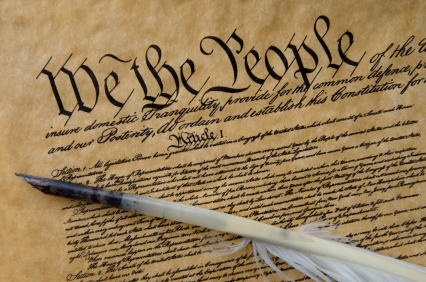 However, do we need to specifically protect it or generally protect it? Is that right absolute? Laws, by definition and the nature of entering a social compact, are restrictions on absolute liberty found in the state of nature. One of the larger disagreements at the Constitutional Convention was about whether enumerated rights would serve to unjustly limit those rights versus a failure to enumerate rights would result in rights not being properly protected. This is a valid question surrounding this issue, especially since some would advocate enumerating the right to privacy by Constitutional amendment. There are advantages and disadvantages to both approaches. While specifically defining/enumerating a right creates a foundation for arguments surrounding said right, leaving a right’s definition nebulous allows jurisprudence greater leeway to evolve around fact specific instance and questions that in the long run can result in a more nuanced understanding and application of the right without the constraints a foundational definition might impose. In this light, consider the right to privacy.
There is no denying the intimate interrelation between technology and privacy. This relationship has been long recognized by jurists. As Justice Brandies along with his law partner Samuel Warren noted in an 1890 Harvard Law Review article discussing the technology/privacy nexus, “Recent inventions and business methods call attention to the next step which must be taken for the protection of the person, and for securing to the individual what Judge Cooley calls the right ‘to be let alone.’ Instantaneous photographs and newspaper enterprise have invaded the sacred precincts of private and domestic life; and numerous mechanical devices threaten to make good the prediction that ‘what is whispered in the closet shall be proclaimed from the house-tops.'” [cites omitted] All questions of applied technology and law can be a double-edged sword; one side honed by often valid public policy concerns and legitimate purpose, the other honed by the caprice of unintended consequences. If the proposed solution to bolstering the right to privacy lay in Constitutional amendment, the wording of such an amendment would need to be very carefully made. A recently proposed EU law on its face seems to be an attempt to bolster the right “to be let alone”. Dubbed the “right to be forgotten” on the Internet and set to go into effect in 2014, this law illustrates some of these unintended and potentially dangerous consequences of either being too specific or in lacking enough specificity in defining rights. Let’s examine the scope of the issue by first looking at the EU law and its potential consequences followed by examining the contrast provided by American jurisprudence surrounding the right to privacy.
The dangers presented by the proposed EU law stem largely from the definition of privacy being overly broad. Jeffery Rosen’s excellent article, “The Right to be Forgotten” by Jeffery Rosen, 64 Stan. L. Rev. Online 88 (2012), served as introduction to the proposed legislation. Rosen clearly points out the hazards presented. “Although [. . . ] depicted [. . .] as a modest expansion of existing data privacy rights, in fact it represents the biggest threat to free speech on the Internet in the coming decade. The right to be forgotten could make Facebook and Google, for example, liable for up to two percent of their global income if they fail to remove photos that people post about themselves and later regret, even if the photos have been widely distributed already. Unless the right is defined more precisely when it is promulgated over the next year or so, it could precipitate a dramatic clash between European and American conceptions of the proper balance between privacy and free speech, leading to a far less open Internet.
In theory, the right to be forgotten addresses an urgent problem in the digital age: it is very hard to escape your past on the Internet now that every photo, status update, and tweet lives forever in the cloud. But Europeans and Americans have diametrically opposed approaches to the problem. In Europe, the intellectual roots of the right to be forgotten can be found in French law, which recognizesle droit à l’oubli—or the ‘right of oblivion’—a right that allows a convicted criminal who has served his time and been rehabilitated to object to the publication of the facts of his conviction and incarceration. In America, by contrast, publication of someone’s criminal history is protected by the First Amendment, leading Wikipedia to resist the efforts by two Germans convicted of murdering a famous actor to remove their criminal history from the actor’s Wikipedia page.
European regulators believe that all citizens face the difficulty of escaping their past now that the Internet records everything and forgets nothing—a difficulty that used to be limited to convicted criminals. When Commissioner Reding announced the new right to be forgotten on January 22, she noted the particular risk to teenagers who might reveal compromising information that they would later come to regret. She then articulated the core provision of the ‘right to be forgotten’: ‘If an individual no longer wants his personal data to be processed or stored by a data controller, and if there is no legitimate reason for keeping it, the data should be removed from their system.’
In endorsing the new right, Reding downplayed its effect on free speech. “It is clear that the right to be forgotten cannot amount to a right of the total erasure of history,” she said. And relying on Reding’s speeches, press accounts of the newly proposed right to be forgotten have been similarly reassuring about its effect on free speech. In a post at the Atlantic.com, Why Journalists Shouldn’t Fear Europe’s ‘Right to be Forgotten,’ John Hendel writes that although the original proposals a year ago ‘would have potentially given people the ability to cull any digital reference—from the public record, journalism, or social networks—they deemed irrelevant and unflattering,’ Reding had proposed a narrower definition of data that people have the right to remove: namely ‘personal data [people] have given out themselves.”According to Hendel ‘[t]his provision is key. The overhaul insists that Internet users control the data they put online, not the references in media or anywhere else.'” This is a fine distinction, but unfortunately not reflected by the final form of the legislation.
Rosen goes on to note “Hendel seems not to have parsed the regulations that were actually proposed three days later on January 25. They are not limited to personal data that people ‘have given out themselves’; instead, they create a new right to delete personal data, defined broadly as ‘any information relating to a data subject.’ For this reason, they arguably create a legally enforceable right to demand the deletion of any photos or data that I post myself, even after they’ve gone viral, not to mention unflattering photos that include me or information about me that others post, whether or not it is true.”
Citing a blog post made by Peter Fleischer, chief privacy counsel of Google, Rosen goes on to discuss the EU law in light of the three categories of take down notice Fleischer notes the legislation would effectively create. The “right to be forgotten” as discussed in Europe and proposed at the end of January arguably covers all three of Fleischer’s categories. He goes on to illustrate how each of these categories and applications pose progressively greater threats to free speech.
“The first category is the least controversial: ‘If I post something online, do I have the right to delete it again?’ This involves cases where I post a photo on Facebook and later think better of it and want to take it down. Since Facebook and other social networking sites already allow me to do this, creating a legally enforceable right here is mostly symbolic and entirely unobjectionable. As proposed, the European right to be forgotten would also usefully put pressure on Facebook to abide by its own stated privacy policies by allowing users to confirm that photos and other data have been deleted from its archives after they are removed from public display.
But the right to delete data becomes far more controversial when it involves Fleischer’s second category: ‘If I post something, and someone else copies it and re-posts it on their own site, do I have the right to delete it?’ Imagine a teenager regrets posting a picture of herself with a bottle of beer on her own site and after deleting it, later discovers that several of her friends have copied and reposted the picture on their own sites. If she asks them to take down the pictures, and her friends refuse or cannot be found, should Facebook be forced to delete the picture from her friends’ albums without the owners’ consent based solely on the teenager’s objection?
According to the proposed European Right to Forget, the default answer is almost certainly yes. [. . .] For a preview of just how chilling that effect might be, consider the fact that the right to be forgotten can be asserted not only against the publisher of content (such as Facebook or a newspaper) but against search engines like Google and Yahoo that link to the content. The Spanish Data Protection authority, for example, has sued Google to force it to delete links to embarrassing newspaper articles that are legal under Spanish law. And suits against third party intermediaries are also threatening freedom of speech in Argentina, as the case of Virginia Da Cunha shows. The Argentine pop star had posed for racy pictures when she was young, but recently sued Google and Yahoo to take them down, arguing that they violated the Argentine version of the ‘right to be forgotten.’ Google replied that it could not comply technologically with a broad legal injunction demanding the removal of the pictures, and Yahoo said that the only way to comply would be to block all sites referring to Da Cunha for its Yahoo search engines. Nevertheless, an Argentine judge sided with Da Cunha and after fining Google and Yahoo, ordered them to remove all sites containing sexual images that contained her name. The decision was overturned on appeal, on the grounds that Google and Yahoo could only be held liable if they knew content was defamatory and negligently failed to remove it. But there are at least one hundred and thirty similar cases pending in Argentine courts demanding removal of photos and user-generated content, mostly brought by entertainers and models. The plaintiffs include the Sports Illustrated swimsuit model Yesica Toscanini; when a user of Yahoo Argentina plugs her name into the Yahoo search engine, the result is a blank page.
Finally, there is Fleischer’s third category of takedown requests: ‘If someone else posts something about me, do I have a right to delete it?’ This, of course, raises the most serious concerns about free expression. The U.S. Supreme Court has held that states cannot pass laws restricting the media from disseminating truthful but embarrassing information—such as the name of a rape victim—as long as the information was legally acquired.
The proposed European regulation, however, treats takedown requests for truthful information posted by others identically to takedown requests for photos I’ve posted myself that have then been copied by others: both are included in the definition of personal data as “any information relating” to me, regardless of its source. [. . . ]
It’s possible, of course, that although the European regulation defines the right to be forgotten very broadly, it will be applied more narrowly. Europeans have a long tradition of declaring abstract privacy rights in theory that they fail to enforce in practice. And the regulation may be further refined over the next year or so, as the European Parliament and the Council of Ministers hammer out the details. But in announcing the regulation, Reding said she wanted it to be ambiguous so that it could accommodate new technologies in the future. ‘This regulation needs to stand for 30 years—it needs to be very clear but imprecise enough that changes in the markets or public opinion can be maneuvered in the regulation,’ she declared ominously. Once the regulation is promulgated, moreover, it will instantly become law throughout the European Union, and if the E.U. withdraws from the safe harbor agreement that is currently in place, the European framework could be imposed on U.S. companies doing business in Europe as well. It’s hard to imagine that the Internet that results will be as free and open as it is now.” [cites omitted]
Meanwhile, back in the United States, there is no right to privacy proper recognized in the Constitution, i.e. privacy is not an enumerated right. For this reason, many Originalists argue that there is no right to privacy protected by the Constitution. However, that is not only a reflection of the precise concern some of the Framers had about creating enumerated rights, it is also not borne out by the document itself. There are other rights specifically protected that include privacy components.
The 1st Amendment’s Free Exercise and Establishment Clauses protect the private choice of religious practice.
Congress shall make no law respecting an establishment of religion, or prohibiting the free exercise thereof; or abridging the freedom of speech, or of the press; or the right of the people peaceably to assemble, and to petition the Government for a redress of grievances.”
The 3rd Amendment protects the privacy of your home.
No Soldier shall, in time of peace be quartered in any house, without the consent of the Owner, nor in time of war, but in a manner to be prescribed by law.”
The 4th Amendment protects the privacy of your property (including your home) from unwarranted search and seizure.
The right of the people to be secure in their persons, houses, papers, and effects, against unreasonable searches and seizures, shall not be violated, and no Warrants shall issue, but upon probable cause, supported by Oath or affirmation, and particularly describing the place to be searched, and the persons or things to be seized.”
The 5th Amendment recognizes that your private thoughts cannot be compelled as evidence against you in criminal court.
No person shall be held to answer for a capital, or otherwise infamous crime, unless on a presentment or indictment of a Grand Jury, except in cases arising in the land or naval forces, or in the Militia, when in actual service in time of War or public danger; nor shall any person be subject for the same offense to be twice put in jeopardy of life or limb; nor shall be compelled in any criminal case to be a witness against himself, nor be deprived of life, liberty, or property, without due process of law; nor shall private property be taken for public use, without just compensation.”
The 9th Amendment arguably recognizes a general right to privacy.
The enumeration in the Constitution, of certain rights, shall not be construed to deny or disparage others retained by the people.”
The 14th Amendment, Cl. 1, recognizes a liberty interest (the Liberty Clause) similar to the 9th Amendment and applies that interest to the states via the Equal Protection Clause.
1. All persons born or naturalized in the United States, and subject to the jurisdiction thereof, are citizens of the United States and of the State wherein they reside. No State shall make or enforce any law which shall abridge the privileges or immunities of citizens of the United States; nor shall any State deprive any person of life, liberty, or property, without due process of law; nor deny to any person within its jurisdiction the equal protection of the laws.”
Some 10thers (i.e. people who don’t recognize/understand the precedent that has evolved around the 1oth Amendment and State’s Rights) would argue that the 10th Amendment creates a specific right to privacy because it’s not enumerated and “[t]he powers not delegated to the United States by the Constitution, nor prohibited by it to the States, are reserved to the States respectively, or to the people.” This is specious reasoning because there is a clearly a Federal interest in privacy created by the 1st, 3rd, 4th, 5th, 9th and 14th Amendments. Many if not most 1others have an expressed interest in circumventing Federal anti-discrimination laws which are largely based upon the 14th Amendment by improperly invoking the issue of State’s Rights. For the purposes of this discussion, the use of the 10th Amendment for invoking privacy is not only improper, but unnecessary. While there may be valid State’s Rights issues out there, privacy isn’t one of them. It’s a right the Founders clearly considered (and considered important) even if they were not specific in addressing it.
In addition, there is considerable precedent developed in the jurisprudence surrounding the right to privacy defining both the right and the valid Federal interest in it. For the sake of brevity, general cites to all cases referred to in the following paragraph are provided at the end of the article. Meyer v. Nebraska held that there is a privacy interest in allowing schools to teach foreign languages to children earlier than the 8th grade. The reasoning in Meyer was based largely upon a failure by the state to show a compelling interest, but it recognized a common law liberty interest in “acquiring useful knowledge” and equated that interest to free exercise interests which are protected by the 1st Amendment. Meyer and the 14th Amendment were later the basis for the ruling in finding a privacy interest Pierce v Society of Sisters in making private and/or parochial schools available and overturning a state law that would have effectively banned them. Griswold v. Connecticut held there is a privacy interest in the possession, sale, and distribution of contraceptives to married couples based largely upon the 9th and 14th Amendments. Based on the 1st and 4th Amendment, in Stanley v. Georgia, the Court unanimously held there is a privacy interest in possessing and viewing pornography even if that pornography was otherwise actionable against a manufacturer or distributor. Famously in Roe v. Wade, the Court expounded upon the 9th and 14th Amendment privacy rights found in Griswold to recognize women have a privacy right to have an abortion. Some courts have expanded the right to privacy and others have imposed limits. Using the rationales of both Griswold and Stanley in addition to protections found in the Alaska State Constitution, the Supreme Court of Alaska in Ravin v. State found constitutional protection for the right of a citizen to possess and use small quantities of marijuana in his own home. In contrast, the 14th Amendment reasoning for privacy was limited by SCOTUS in Kelly v. Johnson, where a local regulation defining proper grooming for police officers didn’t violate the officer’s 14th Amendment rights, but noted that a regulation defining proper grooming for the public probably would (baggy pants attackers take note!). Cruzan v. Missouri Dep’t. of Health found a protected privacy interest in the decision to withdraw from life prolonging medical treatments while recognizing the state had a valid interest in imposing certain conditions on the exercise of rights in such decisions. SCOTUS also reaffirmed a broad interpretation of privacy based on the 14th Amendment’s Liberty and Due Process Clauses in Lawrence v. Texas where they found Texas guilty of unconstitutionally infringing upon the rights of two gay men to their private lives and determine the nature of their private sexual lives by prosecuting them for a state law prohibiting sodomy.
Although it may seem unwieldy to prefer a case by case analysis of a nebulously defined right, it is clear that doing so does indeed allow for a more nuanced understanding of a right and allows better for unidentified challenges of that right to arise and filter through the courts where a more specific definition might prematurely terminate causes of action that could have merit and benefit greater justice for all. Consider this flexibility in light such events as the advent of HIPPA and the repeated issues that appear around the privacy and opt out policies of electronic social networks like Facebook, Google and Twitter. Clearly there is a right to privacy and that right needs to be protected as does free speech and freedom of the press. However, it seems to be just as easy to create conditions ripe for infringing upon free speech, freedom of the press and create an environment of historical revisionism as the EU law might in pursuit of privacy. Just so, it easy to not go far enough as many in the U.S. think is their current situation concerning privacy.
Would a right to privacy be better served by Constitutional amendment? Or by relying upon precedent and regulation as technology evolves? Should those protections be specific or as general as possible? Can you foresee other potentially negative consequences of specifically defining and protecting privacy? Of generally defining and protecting privacy? How should America better protect the privacy rights of citizens?
What do you think?
Source(s): “The Right to be Forgotten” by Jeffery Rosen, 64 Stan. L. Rev. Online 88 (2012), Commission Proposal for a Regulation of the European Parliament and of the Council, art. 4(2), COM (2012) 11 final (Jan. 25, 2012) (.pdf), U.S. Constitution, The Atlantic.com, Meyer v. Nebraska, 262 U.S. 390 (1923), Pierce v. Society of Sisters, 268 U.S. 510 (1925), Olmstead v. U.S., 277 U.S. 438 (1928), Griswold v. Connecticut, 381 U.S. 479 (1965), Stanley v. Georgia, 394 U.S. 557 (1969), Roe v. Wade, 410 U.S. 113 (1973), Ravin v. State, 537 P.2d 494 (Alaska 1975), Kelley v. Johnson, 425 U.S. 238 (1976), Cruzan v. Missouri Dep’t. of Health, 497 U.S. 261 (1990), Lawrence v. Texas, 539 U.S. 558 (2003), “The Right To Privacy” by Samuel Warren and Louis D. Brandeis, 4 Harvard L. Rev. 193 (1890) (reprinted by University of Louisville)
UPDATE: Shortly after I posted this story, MSNBC ran a related story about privacy and Facebook, Google and Twitter. Can legislation and precedent help address this issue or is amendment needed? General protection for privacy or specific protections?
~Submitted by Gene Howington, Guest Blogger
Blouise: “Privacy seems to have many meanings. Even if taken as “freedom from interference by others” it can be used negatively to disguise domination, degradation, perversion, and ignominy which is how I see the Catholic Church using it.”
Blouise,
I don’t see how that’s possible since the inalienable right of self-ownership necessitates the retention and preservation of individual autonomy and integrity.
“I always insist on perservering in spite of ignorance”
While I try to refrain from such activities as pissing up a rope.
Blouise and SwM,
I got mixed up on who I was answering.
Respect both of you ladies highly. So if I go over some line, just chalk it up to that.
Here’s one which will stand you well if you are at a better party in Stockholm.
Those von-oben kiss on one cheek to acknowledge that you are so fine that you are invited to the party, on two cheeks if you’re friends, and three if you’re closely related and on good terms. I learned the hard way.
Doesn’t such esoterica fascinate you?
And in your circles?
id707,
” ’60-62, so not a deserter” … message received
Have a good friend who did the same except he was stationed in Italy … ’62-’64 and liked it so much, he never came home … except to visit. He was here last summer.
Blouise,
You may address me, even cuss me—am so glad to hear you say my name.
I blush so adoringly when you do. (A bit true too).
I asked as I could not admit my ignorance as to the point of you’re not having lazy children. So lacking other choices I dithered and rambled.
As to Gene’s article, see my post (#4?). I bowed out early, admitting it was over my head. However BobEsq got me to throwing rocks. I always insist on perservering in spite of ignorance, although have tried to temper it here so as not to be boring.
Stockholm since 1968. Two years army officer service ’60-62, so not a deserter. Just rootless. But you didn’t ask
Bob,
Just loved your reductio ad nauseam point about drakes and hens vs ducks.
Do you think the misogynists would not pull the trigger anyway, just because you poínted it out with such reasoning.
Give us a meme. Not a judicial reading. We’re fighting on the streets now.
id707,
“Why address me Blouise. I just hopped in when Bob went over the top” … I’m not sure what you mean. I responded to you with my ant infested chicken dance.
As to the subject matter of Gene’s article … I have no fear of appearing stupid … I consider it one of my most endearing traits. 😉
Do you really live in Sweden?
Just had my husband who studied Con Law at Northwestern University read it since I am not an attorney. He said it was too broad and tried to cover too many issues. Now I am headed out for an appointment.
Bob,
I get where you are coming from and understand the discussion twixt you and Gene. My nature as a therapist of the Gestalt kind is to operate on a visceral level. I’m quite aware therefore that while it’s inherently important for people like JT, Gene and you to intellectually and legally define the argumenttategs, I am more interested in the meewmes and strategy.
As far as framing the argument for the misogynist to have them get it in their terms, I don’t see that as possible. They hate and fear women on a gut level and are irredeemable. The argument has to reach those that can view it with a relatively open mind and I see memes as that method rather than
rational argument. What can you expect though from a guy who cries at romantic comedies?
Mike S.,
While I agree with almost everything you said, I think you’re underestimating the position I’m advancing.
The difference between identifying and defending the inalienable right of self-ownership and the right to privacy contained therein and ‘a woman’s right to choose’ is much like the difference between a duck and a drake. Before we get to the predicates describing a drake we must first lay the groundwork and establish that we do in fact have a duck first and foremost; male or female. There’s a virtue in reducing your arguments down to the lowest common denominator.
Think about it Mike. Why do you suppose I would say that the best way to defend ‘a woman’s right to choose’ is to clarify and defend the a-sexual right to privacy? I invite you to think like a therapist here. Who are you up against in the contraceptive/abortion rights debate? What audience do you think you’re mainly attempting to persuade? Women or misogynists?
If you said misogynists, do you see the problem yet with labeling the issue ‘a woman’s right to choose’? So why would it be not only logically concise but advantageous to frame the issue in an a priori/a-sexual manner? As the misogynist holds the gun to the female’s head and says ‘I will determine what you will and won’t do with your body’ what better way to disarm him than by informing him that he actually has the gun pointed at his own crotch–i.e. that he’d be, how shall we say, castrating himself by denying himself the same right he’s denying the woman.
Moreover Mike, this isn’t so much strategy; it’s merely incidental to adhering to the strongest argument– the abstract.
You only have those rights which you can defend.
Thus you’ll find me defending a woman’s right to choose as incidental to my defending the individual’s inalienable right of self-ownership and the right of privacy contained therein.
So you could say it’s not so much about defending drakes as it is about defending all ducks first.
Bob,
Privacy seems to have many meanings. Even if taken as “freedom from interference by others” it can be used negatively to disguise domination, degradation, perversion, and ignominy which is how I see the Catholic Church using it.
An unintended consequence?
Blouise et al,
Why address me Blouise. I just hopped in when Bob went over the top. Seemed like the others were used to it. All the previous was legalese and over my head so have abstained. Gene’s post may be spoonfeeding as some accused, but many of us need that. Nobody has to produce a JD to come in here.
Mike S. repeated the point that memes are politically useful, and should not be derided. Take a look at Gene’s blog. That’s my rough take.
BobEsq, you listening I hope.
I find your method of convincing folk comparable to mine when I got mad at the stupes who brought hot silicon ICs out of the oven into a room-temperature. They said their yield was poor so far. Well,, I told them why they were idiots. Was it appreciated? Nope. Better luck using your superior knowledge. In Sweden, people just look at you like you are crazy if you show irritation. It still happens to me. You can get intensive training here as a tourist.
So as a therapist would ask: What really pissed you off today?
Don’t tell me, just think about it . It’s your skin you have to enjoy, as someone recently said.
Gene,
What do you think about this … ” if property rights are about control and privacy rights are also, then could it be that looking at privacy rights as a special form of property rights is a fruitful viewpoint when discussing the explosion of technology and its intrusions.”
Bob, (I know you are now having a grand ol’ time! 😉 )
The point I am trying to make is this … if property rights are about control and privacy rights are also, then could it be that looking at privacy rights as a special form of property rights is a fruitful viewpoint when discussing the explosion of technology and its intrusions.
(I’ll address the Catholic thing in my next post [since you went all Limehouse on me ;] ] but I want you to pay attention to what I just wrote above and tell me what you think. [Thanks for the Kant … I revisited him to order my mind which he always manages to do.] )
rafflaw,
Tussling Over Jesus
By NICHOLAS D. KRISTOF
Published: January 26, 2011
http://www.nytimes.com/2011/01/27/opinion/27kristof.html?_r=1
Excerpt:
The National Catholic Reporter newspaper put it best: “Just days before Christians celebrated Christmas, Jesus got evicted.”
Yet the person giving Jesus the heave-ho in this case was not a Bethlehem innkeeper. Nor was it an overzealous mayor angering conservatives by pulling down Christmas decorations. Rather, it was a prominent bishop, Thomas Olmsted, stripping St. Joseph’s Hospital and Medical Center in Phoenix of its affiliation with the Roman Catholic diocese.
The hospital’s offense? It had terminated a pregnancy to save the life of the mother. The hospital says the 27-year-old woman, a mother of four children, would almost certainly have died otherwise.
Bishop Olmsted initially excommunicated a nun, Sister Margaret McBride, who had been on the hospital’s ethics committee and had approved of the decision. That seems to have been a failed attempt to bully the hospital into submission, but it refused to cave and continues to employ Sister Margaret. Now the bishop, in effect, is excommunicating the entire hospital — all because it saved a woman’s life.
Make no mistake: This clash of values is a bellwether of a profound disagreement that is playing out at many Catholic hospitals around the country. These hospitals are part of the backbone of American health care, amounting to 15 percent of hospital beds.
Already in Bend, Ore., last year, a bishop ended the church’s official relationship with St. Charles Medical Center for making tubal ligation sterilizations available to women who requested them. And two Catholic hospitals in Texas halted tubal ligations at the insistence of the local bishop in Tyler.
The National Women’s Law Center has just issued a report quoting doctors at Catholic-affiliated hospitals as saying that sometimes they are forced by church doctrine to provide substandard care to women with miscarriages or ectopic pregnancies in ways that can leave the women infertile or even endanger their lives. More clashes are likely as the church hierarchy grows more conservative, and as hospitals and laity grow more impatient with bishops who seem increasingly out of touch.
**********
Women’s Health and Lives at Risk Due to Religious Restrictions at Hospitals, New Center Study Shows
National Women’s Law Center Files Complaint with Department of Health and Human Services
January 20, 2011
http://www.nwlc.org/press-release/womens-health-and-lives-risk-due-religious-restrictions-hospitals-new-center-study-sho
idealist707, I still have not had time to read Gene’s post and am getting ready to leave again. I just read Bob’s statement about “intellectually lazy children”. That is not the case in my family.
“Do you know why the phrase “a woman’s right to choose” is a load of ignorant tripe? Because rights exist a priori and are a-sexual. To say that women have a right to choose what to do with their bodies says, by negative implication, that it is contrasted with an alleged man’s right to do the same.”
Bob,
No doubt your are brilliant and I’ve conceded in the past that obviously your legal and your philosophical knowledge far exceeds my own limited knowledge of both. Please understand that I mean that statement with no irony intended. However, in that great knowledge sometimes is lodged a problematic tendency to over think a issue. I think your statement above illustrates this.
The success of the Anti-Abortion movement can be traced to the meme created by the phrase “right to life”. Adding this phrase to depictions of cute babies and ultra-sound pictures of fetuses caused many to reassess their support of abortion rights. Those favoring abortion rights, such as me, needed a meme of our own to convey the other side of the issue. “A woman’s right to choose” was just such a meme.
On both sides of the abortion coin there exists arguments and issues far more complex than the two representative memes. While I’m unreservedly pro-choice, I do recognize that the other side does preset some valid issues.
However, in political matters no issues are won or lost based on intellectual arguments, for while we humans, in our hubris, discuss issues at higher levels, we make decisions with our guts.
My gut tells me that men do not have any business deciding what happens with a women’s pregnancy. Except for medical reasons, abortions are undertaken because a woman has had an unwanted pregnancy and understands the effect carrying to term will have on her life. Should she have been smart enough to have prevented this pregnancy is not to me an issue. I don’t take a punitive view towards people’s foibles. However, my feeling and intellect tells me that she should have the right alone to choose whether to carry this fetus to term. Given this, I think using “a women’s right to choose” is a very appropriate way to frame the issue.
Gene’s article provides an intellectual framework for discussing the issue of the increased invasion of personal privacy that is occurring today. Within but a few years, if this trend continues, we will find ourselves bombarded as we walk outside of our homes by subliminal ads targeted towards what corporations know about us from our time on the internet. We will have entered the worlds of “1984” and “Brave New World” and thereby reached a point of no return. I, however, have no intellectual pretensions and so I seek some way to prevent this from occurring. If it be by amendment, so be it. My only qualifications is that it be viable.
Bob, Esq.
Thanks for giving better than I gave, but you deserved it, soooo irascible!
I still don’t know who “you” are, whom you were talking to. Certainly not the average citizen or lawyer—-possibly ones facing off in a courtroom.
Yeah, I plead to the people I know that they should inform themselves.
Nothing irritates me more than the attitude “I’ll wait until they come after me.”
How then can you vote?
I’ve just followed it all, as my early comment declared I would.
As for “womens right to choose” or whatever slogan works.
It may be inappropriate here, still looking for signs posted here.
But they sure are hell necessry when drumming up popular support.
Anyway, we see that the Repubs only support bishops, so where does that leave us? In your capable hands. Rights on!
Bob,Esq.,
“To say that women have a right to choose what to do with their bodies says, by negative implication, that it is contrasted with an alleged man’s right to do the same.”
Is anyone trying to legislate what a man does with his body? Can a man get pregnant after being raped? Can a man’s health be jeopardized by a pregnancy or a series of pregnancies?
Elaine,
That last link is a sad story. But it is very indicative of the mentality of the Catholic Church. Run by men, for men.
Medical Emergency: Catholic Hospitals Usurp Patients’ Rights (The Humanist) March/April 2011
http://thehumanist.org/march-april-2011/medical-emergency-catholic-hospitals-usurp-patients-rights/
Excerpt:
YOU CAN’T EXPECT THAT every hospital will provide all of the medical services you’ll need. Some procedures are so specialized that you might have to travel to get them done. Conversely, some procedures are so basic that any hospital should be able to perform them. And if you’re in danger of dying, it’s to be expected that any hospital would do all it could to save your life.
Sounds pretty simple, right? It should be, but thanks to the hierarchy of the Catholic Church, it’s getting awfully complex.
Last year, a nun who worked as an administrator at St. Joseph’s Hospital in Phoenix, Arizona, was demoted after she signed off on an abortion for a woman who was eleven weeks pregnant and suffering from life-threatening pulmonary hypertension. With the patient’s heart and lungs in jeopardy, doctors determined that ending the pregnancy was the only way to save her life.
Phoenix Bishop Thomas J. Olmsted was furious. Not only did he demote Sister Margaret McBride, he announced that she had automatically excommunicated herself from the Catholic Church by her actions. McBride, an Irish Catholic deeply involved in her church, is no longer eligible to receive sacraments or participate in other forms of church life.