By Mark Esposito, Weekend Contributor
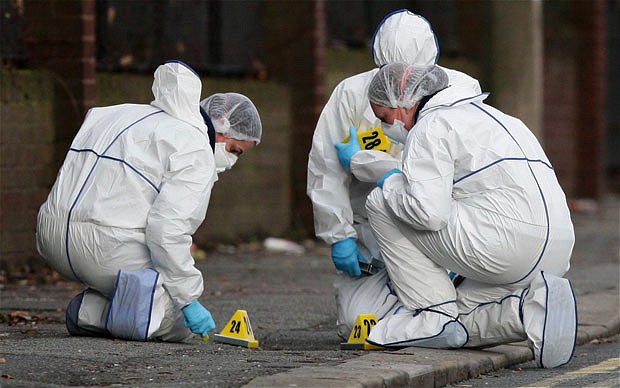 A 2009 report by the National Research Council (NRC) passed quietly into the night (except in legal and forensic circles) while barely garnering more than a ripple in the public’s psyche. It should have been a tidal wave given news last December that a 48-year-old New Jersey man, Gerard Henderson, who spent 19 years in prison for a murder he didn’t commit, was done in by faulty crime lab work. Henderson was convicted largely on “bite mark” evidence. Bite mark evidence is a process used to exam indentations and anomalies on a victim’s body and ostensibly made by human teeth which are then matched to a defendant’s dentures in an effort to prove that he/she was the perpetrator of the crime. Convicted in 1995, Henderson proved that state testing of the bite marks on the back of 19-year-old victim, Monica Reyes, was deeply flawed and conducted without sufficient safeguards to insure its reliability.
Independent forensic scientists working for Project Innocence could not reproduce findings by the state crime lab which is the gold standard for scientific verifiability. Henderson became one of the more than two dozen people wrongfully convicted of rape or murder since 2000 as a direct result of flawed bite mark evidence analysis all duly attested to as accurate by the local crime lab.
Continue reading “Think You Can Rely On Your Local Crime Lab For The Unvarnished Truth? Think Again”


