 We have yet another person arrested for recording a police officer in public. Louis Frobe felt he was wrongly stopped for speeding and decided to use his phone to videotape and record the stop and its surroundings. When he held the phone outside of the window to videotape the surrounding area, the officer proceeded to arrest him and charge him with a felony in Illinois. The arresting officer is identified in a lawsuit as Ralph H. Goar of the Village of Lindenhurst.
Continue reading “Police Arrest Illinois Man For Videotaping Traffic Stop”
Category: Politics
 Below is today’s column in The Los Angeles Times on the record of Barack Obama on civil liberties and his impact on the civil liberties movement in the United States.
Continue reading “Obama and the Decline of the American Civil Liberties Movement”

 German finance minister Wolfgang Schauble left little question about his view of the wisdom of the economic policies of the Obama Administration. Schauble called the U.S. plan to pour trillions of dollars into the bailout fund “stupid” and said it would destroy the AAA ratings for the members — precisely what occurred to the U.S. this year. There is rising criticism of the economic views of Timothy Geithner, who some view as steering the U.S. into massive and unproductive spending.
Continue reading “Germany Calls U.S. Plan To Save Euro “Stupid””
 We often criticize Saudi Arabia for its treatment of women and religious minorities under its extreme religious laws. Accordingly, we should also not hesitate to praise the country when it moves toward giving greater freedoms or embracing tolerance for minority groups. On Sunday, Saudi King Abdullah announced on Sunday he was giving women the right to vote and run in municipal elections.
Continue reading “Saudi Women Given The Right To Vote”
 Campus Republicans at the University of California Berkeley have reportedly received threats after creating a novel form of protests against California schools considering race in admissions. The students created a sale of baked goods priced according to their race: white men for $2.00, Asian men for $1.50, Latino men for $1.00, black men for $0.75 and Native American men for $0.25. All women will get $0.25 off those prices.
Continue reading “A Pinch of Satire: Bake Sale Causes Uproar at Berkeley”

Respectfully Submitted by Lawrence Rafferty (rafflaw)-Guest Blogger
When it comes to the Second Amendment and guns, it seems that President Obama can’t make anyone happy. Ever since Obama announced his candidacy for the Presidency, the NRA has screamed that Obama will be taking away the guns. This scare tactic continued when Obama defeated John McCain for the Presidency. Just what has Barack Obama done to make the NRA and gun owners frightened for their guns? The simple answer to this question is nothing. Continue reading “Second Amendment Boogey Man”
-Submitted by David Drumm (Nal), Guest Blogger

 In his 2010 book, “Fed Up,” Governor Rick Perry called Social Security a “Ponzi scheme.” A Ponzi scheme is an individual investment plan wherein investors are paid “interest” by the principal paid into the scheme by later dupes. A geometrically increating supply of new investor principal is required to pay off the “interest” to previous investors.
The WSJ calls Perry’s claim misleading and PolitiFact terms it False.
Submitted by: Mike Spindell, guest blogger
 To my mind the greatest movie satire on the idiocy of the Cold War and the fear it inspired in humanity, was Stanley Kubrick’s masterpiece “Dr. Strangelove, or How I learned to Stop Worrying and Love the Bomb”, released in 1964. The plot in brief was, “An insane general starts a process to nuclear holocaust that a war room of politicians and generals frantically try to stop”. For those unfamiliar with one of the best American movies of all time check this link: http://www.imdb.com/title/tt0057012/
Rent the movie if you haven’t seen it, for it will bring you dark laughter and present you with much to ponder. At the time of its release, some disparaged the movie as being un-credible in its characterizations and not believable in it premises. I hadn’t thought of the movie in years until I came across this article at the website Buzzflash.com titled “The Theology of Armageddon” by Robert Koehler. http://blog.buzzflash.com/node/13024 . The article is relatively brief, but well worth your time.
The article deals with a course titled “Nuclear Ethics and Nuclear Warfare” at Vandenberg Air Force Base, given under Air Force auspices. As the Robert Koehler states:
“(I)t turns out that the point of the mandatory course, which was recently canceled by the Air Force after officers of numerous faiths complained to the Military Religious Freedom Foundation about it and Truthout published an exposé in July, was to give officers in the first week of missile-launch training a Bible-verse-studded indoctrination in faux-Just War Theory (cynically known in the ranks as the “Jesus Loves Nukes” training)”.
What got me thinking of the movie Dr. Strangelove was a quote in the article from Dr. Wehrner Von Braun, which makes credible the satiric reality of the movies title character, Dr. Strangelove, hysterically portrayed as a heavily accented former NAZI, by Peter Sellers. Seller’s character was widely denounced as being unfair to Von Braun, at the time, but seeing this quote from him makes me wonder:
“We knew that we had created a new means of warfare and the question as to what nation . . . we were willing to entrust this brainchild of ours was a moral decision more than anything else,” von Braun is quoted as saying. “We wanted to see the world spared another conflict such as Germany had just been through and we felt that only by surrendering such a weapon to people who are guided by the Bible could such an assurance to the world be best secured.”
To me this is post facto justification by von Braun of his choice of the comfort of an honored life in the U.S. mirroring his NAZI lifestyle and providing a sop to detract from the truth that he was an enthusiastic war criminal. Von Braun had developed the V (I & II) guided missiles for the NAZI’s and became the head of the United States Ballistic Missile Program. Von Braun was a NAZI Party member of distinction and it seems dedication. His missiles fell upon Great Britain in the closing days of WW II as an attempt to cause terror within the British people and were random in their destruction. That he then became an honored man in the U.S., rather than a defendant at Nuremburg, is a tribute to our own hypocrisy in prosecuting the Cold War. A similar mindset seems to have infected some in our Air Force as I will show. Continue reading “As We Careen Towards a Dream of Armageddon”
Submitted by Mark Esposito, Guest Blogger
 Porn king Larry Flynt has issued a new bounty. On Thursday, the Hustler magazine publisher, offered $1 million to anyone with proof of “an illicit sexual liaison” involving Republican presidential candidate, Rick Perry. Flynt is not too particular either, he’ll accept both gay and straight encounters.
 There is an interesting controversy in Fort Worth, Texas where Dakota Ary, an honors student was suspended for turning to another student in his German class and saying that he viewed homosexuality as wrong. The teacher at Western Hills High School became angry in overhearing the comment and accused Ary of being a bully.
Continue reading “Student Disciplined For Telling Friend In Class That He Views Homosexuality As Wrong”
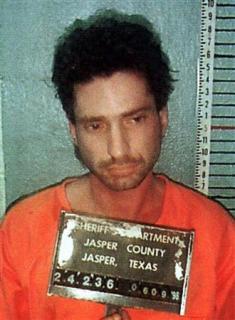 It has long been a tradition to give a dying man his last requests for dinner. Lawrence Brewer took that request to an extreme, ordering a meal fit for an entire cellblock. That produced a backlash from state Senator John Whitmire who demanded an end to the tradition in Texas. He succeeded and now death row inmates will simply get whatever is served that night at the prison.
Continue reading “Texas Ends Last Meal Tradition After Brewer Execution”

 On shows like The Daily Show, people have chuckled that former Senator Rick Santorum’s name is synonymous with a graphic sexual act. Gay columnist Dan Savage launched a campaign for people to link the name to the act on Google. This prompted Santorum to contact Google and complain that the company is “spreading filth.”
 If brevity is the soul of wit, Walter Maksym may be the most witless lawyer in practice. That may soon change if the Seventh Circuit has its way. The court slammed Maksym recently for writing a brief full of gibberish, including a 345-word sentence. The court has ordered Maksym to show cause why he should not be disbarred.
Continue reading “Seventh Circuit Slams Attorney For 345-Word Sentence and “Gibberish” — Demands Show Cause On Possible Disbarment”
 There may be need for an intervention in Congress after Rep. John Fleming, a Louisiana Republican, admitted to what appears an eating disorder. Fleming went on television to denounce Obama’s plans to tax the wealthy and explained how he really does not have a lot of income left over from earning $6.3 million a year from his string of Subway and UPS businesses. He insists that after paying taxes, salaries, and support for his businesses, he only takes home $600,000 — of which $200,000 goes to food for his family. Fleming is the father of four adult children and lives alone with his wife.
Continue reading “Eating Out of House and Home: Republican Opposes New Taxes By Noting That He Needs $200,000 a Year for Food”

 For years, we have discussed the abusive litigation by the Recording Industry Association of America in seeking obscene damages against people for downloading songs. Congress, again, caved to demands by lobbyists to allow for such lawsuits. The result has been thuggish lawsuits where industry lawyers threaten not only citizens with ruin but, in the case of the Copyright Group, those who try to help them. Now, one of the most obscene verdicts against Boston University student Joel Tenenbaum has been reinstated by the First Circuit — $675,000 for downloading and sharing 30 songs. The court, however, takes the rare step of suggesting that Congress may want to look again at the law. The problem is that these citizens do not have well-paid lobbyists and massive campaign funds to motivate many members to act. The Obama Administration joined the industry in defending the law and the original fines as not unconstitutional.